Asia Centre Expands Partnerships In Northern Thailand

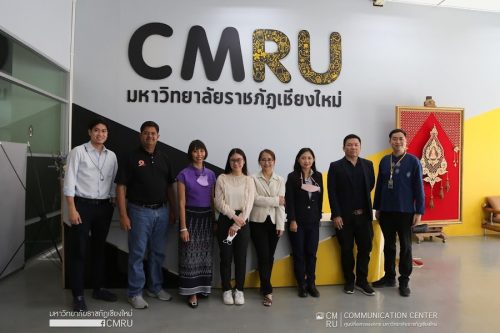
Asia Centre has expanded and strengthened its partnership into Northern Thailand following a visit from 4 to 5 August 2022 to Chiang Mai. During the visit, Asia Centre’s regional director Dr. James Gomez and Program Coordinator Nalinrat Tingoum visited Chiang Mai to co-convened several activities and discussed future activities deepening the Centre’s network with Northern partners.   During the trip, they were able to introduce the Centre’s activities and discussed concrete collaborations with a number of people and organisations including the Faculty of Mass Communication, Chiang Mai University, University Academic Service Center of Chiang Mai University (UNISERV) and the Religion, Culture, and Peace Lab (RCPL), Payap University.   One stop was at the Faculty of Mass Communication of Chiang Mai University that has previously participated in Asia Centre 6th International Conference on Covid 19 in Asia: Communication, Nationalism and Technology. Dr. Gomez discussed the Centre’s work and explored Media and Information Literacy training for faculty members and students. At a meeting with staff from the Religion, Culture, and Peace Lab (RCPL), Payap University, a seminar or conference to discuss Asia Centre’s reports on freedom of religion and belief were discussed. Created in 1995, the RCPL, formerly known as the Institute of Religion, Culture, and Peace (IRCP) is a sub-institute working with the Peacebuilding Department at Payap University on peacebuilding activities towards better inter and intra-religious understanding.  Potential collaboration on media literacy training was also discussed with Krith Karnjanakitti, Chief, Academic Services and Research Section, University Academic Service Center of Chiang Mai University (UNISERV). Operating since 1989, the organisation, under Chiang Mai University, provides academic services and helps in solving problems.  This outreach builds on a series of earlier meetings in Northern Thailand in 2021 and 2022.  In February 2022, Dr. Gomez and Dr. Ramcharan visited Chiang Mai and met with members of the Faculty of Mass Communication, Chiang Mai University, the Faculty of Information and Communication Centre of Trends and Futures Studies from Maejo University and the Faculty of Political Science and Public Administration at Chiang Mai University to discuss partnership on joint seminars in Northern Thailand.  Earlier in 2021, Dr. Ramcharan met with members of the Faculty of Mass Communication, Chiang Mai University to discuss joint projects on Asia Centre 7th International Conference on Freedom of Expression in Asia. The visit laid the foundation for cooperation on two fronts. One, it facilitated the Thailand Media and Information Literacy Master Training project between Asia Centre and Northern Thai Institutions. Two, on 25 August 2022, during Asia Centre 7th International Conference on Freedom of Expression in Asia, Asia Centre’s Dr. Gomez and Dr. Charoensri, Deputy Dean of Research Affairs at the Faculty of Political Science and Public Administration, Chiang Mai University signed an MoU, making the faculty an official partner of the Centre 2023 8th International Conference on Democracy and Elections in Asia. You can read the event article here. Overall, the trip and meetings in Chiang Mai helped Asia Centre to build on its initial engagements and strengthen its emerging network of partners in Northern Thailand.  

Asia Centre and Chiang Mai University Sign MoU

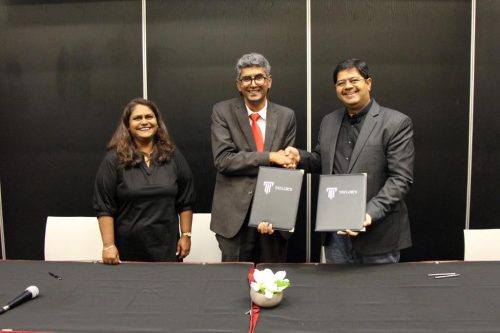
On 26 August 2022, Asia Centre and Faculty of Political Science and Public Administration, Chiang Mai University signed a Memorandum of Understanding (MoU). This MoU builds on the ongoing collaboration of both organisations and launched the formal partnership with Asia Centre’s 8th International Conference on Democracy and Elections in Asia, to be held in Bangkok, 23-25 August, 2023.   Some of the activities leading up to the MoU included Asia Centre’s Dr. James Gomez’s participation in the panel discussion titled “ASEAN in the Changing Regional Dynamics”, held on 4 August 2022 at the Faculty of Political Sciences and Public Administration, Chiang Mai University.  The panel discussion was also supported by the Taiwan Foundation for Democracy, a Taiwan-based organisation that aims to collaborate with like-minded organisations for the global promotion of fundamental freedoms.  Speakers from the panel included Dr. Nisit Panthamit, Head at the ASEAN Studies Centre, Chiang Mai University and Dr.Narumit Hinshiranan, professor at the School of International Affairs, Chiang Mai University. The panel was moderated by Dr. Narut Charoensri, vice Dean of the Political Science Faculty, Chiang Mai University The event gathered over 40 lecturers and students who debated whether ASEAN has agency to plot its own political journey given the competing influence of China and the US in the region.   Earlier this year, Dr. Narut Charoensri participated in the Asia Centre and Friedrich Naumann Foundation conference “ASEAN-EU Relations in Light of the Ukraine War” on 17 June 2022 in Bangkok. He moderated the third panel titled “Trade” which centred on the need to observe flexibility as a means to overcoming issues that were blocking the ASEAN-EU Free Trade Agreements. The above collaborations started when Dr. Charoensri visited the Asia Centre on 26 April 2022 and discussed plans for collaboration on upcoming activities including joint seminars and Asia Centre 8th International Conference. This meeting was a follow up to an earlier meeting on 25 February 2022 during which Dr. James Gomez and Dr. Robin Ramcharan visited the Faculty of Political Science and Public Administration at Chiang Mai University.  Hence, on 25 August 2022, during Asia Centre 7th International Conference on Freedom of Expression in Asia, Asia Centre Dr. Gomez and Faculty of Political Science and Public Administration  Dr. Narut Charoensri both signed a Memorandum of Understanding, to host Asia Centre’s 8th International Conference, Democracy and Elections in Asia scheduled for 23-25 August 2023. Click here to register: https://forms.gle/AL9qBToKnHDr2U9c8 This is Asia Centre 5th MoU with a Thai University. It has previously signed MOUs with other universities such as the Faculty of Social Sciences, Naresuan University, the Faculty of Political Science, Ubon Ratchathani University, the National Institute of Development Administration (NIDA), the Faculty of Law, Thammasat University and a conference partnership agreement with the Faculty of Communication Arts, Chulalongkorn University. Its other MOU in Thailand is with the Thai Media Fund.  If you like to collaborate with Asia Centre and sign and MoU email us at contact@asiacentre.org

Media Information Literacy Needed To Combat Disinformation

Media Literacy

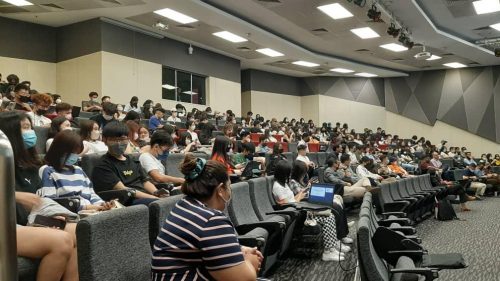
Disinformation is a major issue in Southeast Asia and Thailand is not an exception. However, media literacy education can be a good tool to tackle the negative effects of disinformation. This was the key takeaway from the panel discussion, “Media Information Literacy in Southeast Asia and Thailand” held on 5 August 2022 at Chiang Mai Rajabhat University.   The event was organised by Asia Centre in collaboration with Friedrich Naumann Foundation (Thailand Office), and in partnership with Chiang Mai Rajabhat University, Payap University, Maejo University and the Office of National Broadcasting and Telecommunications Commission (NBTC). The panel, moderated by Assistant Professor Dr. Napat Ruangnapakul from the Faculty of Information and Communication, Maejo University, consisted of Dr. James Gomez, Regional Director of Asia Centre, Assistant Professor Dr. Taien Layraman, Assistant to vice President for Administration and Finance, Payap University, Rotchanakorn Baengthit, Lecturer at the Department of Communication Arts, Chiang Mai Rajabhat University and Dr. Tri Bunchua Executive Director, Executive Director at the Broadcasting Consumers Protection Bureau, the Office of National Broadcasting and Telecommunications Commission. During the COVID-19 pandemic, there was a surge in disinformation obstructing access to accurate health information. While there have been different attempts by governments, CSOs and tech companies to counter disinformation with fact-checking initiatives, media information literacy (MIL) is increasingly seen as an effective tool against disinformation by strengthening the capacity for people to critically engage with online content and navigate the digital world. Starting the discussion, Asia Centre’s Dr. Gomez provided an overview of the current state of media information literacy in Southeast Asia. The key point made was the importance of ‘media ethics’ as a side-by-side approach to media information literacy programs given the rising number of citizen content producers. The regional overview was followed by perspectives from Thai universities and the government unit. Dr. Taien Layraman, Payap University, highlighted the importance of focusing on customer behaviour and their susceptibility to fake advertising, while Rotchanakorn Baengthit, Chiang Mai Rajabhat University and Dr. Tri Bunchua, National Broadcasting and Telecommunications Commission, emphasised collaborations among multi-stakeholders such as academic sector, media professionals and businesses. They pointed to the need to learn best practices from other countries in the region to improve media literacy for people of all ages in Thailand. Dr. Napat Ruangnapakul, Maejo University also suggested online platforms such as Co-Fact and other national fact-checking agencies as relevant tools to help regulate the flow of online false information.  Overall the panellists argued the importance of highlighting the wide use of media literacy on people’s daily life as a way to reach a larger audience and deepen partnership among multi-stakeholders.  The panel was convened in the studio at the Department of Communication Arts, Chiang Mai Rajabhat University, with a green screen, and was live streamed over Facebook with the support of the department’s student team. The event was reported on local news publishers such as Chiang Mai News and the Public Relations Department Region 3 Chiangmai. 

Asia Centre’s Report on Disinformation Attracts Strong Interest in Malaysia

Held on 8 September 2022, the launch of Asia Centre’s report Youth and Disinformation in Malaysia: Strengthening Electoral Integrity drew a crowd of over a hundred participants. It included academics, journalists, students and representatives from civil society organisations, the election commission, government agencies, political parties and youth groups. Media interest in the report was also strong. On the eve of the launch, The Vibes published an opinion piece ‘Political competition to intensify disinformation in GE15’ by Asia Centre’s regional director Dr. James Gomez. On the morning of the launch, Malay Mail published a curtain raiser article ‘Govt agencies, political parties the most active in spreading disinformation, new study finds’ – that was picked via syndication by Yahoo News Malaysia and  Borneo Post Online. There was also a report in Bahasa Melayu ‘Penyebaran Maklumat Palsu: Pemerintah dan Pembangkang Sama-sama Aktif’ in Dagannew.com.  Mashable, an online Southeast Asia news website, published an article ‘M’sian gov agencies & political parties are main culprits of disinformation, study finds’. Malaysiakini also published ‘Nearly 6m New Voters Will Be Target of Disinformation in GE15’. Earlier in the day, BFM radio’s Shazana Mokhtar interviewed Dr. Gomez for her podcast Pressing Matters:  ‘Strengthening the Media Ecosystem against Political Disinformation’ that was released on 12 September. During the event, BFM radio also additionally interviewed Dr. Gomez for the 5:30 PM news bulletin. On the following day, The Malaysian Insight discussed the report’s findings in its article ‘Youth vulnerable to disinformation in next election, says think tank’.  The report findings were also covered by Indonesian media. A couple days after the launch event, Alinea, an Indonesia online news website, published “Laporan terbaru tentang pemuda dan disinformasi di Malaysia berikan rekomendasi cara memperkuat integritas pemilu”.  A week later, Malay Mail released another op-ed written by Dr. James on “Lowering voting age does not ensure political participation”. In Singapore, The Independent also published the op-ed on “Lowering voting age does not ensure political participation” on its platform. The research for the report was supported by Google. During the opening remarks of the launch event, hosted by the School of Media and Communication at Taylor’s University, Joanne Bala, Government Affairs and Public Policy, Google, highlighted that there is a necessity to help voters access reliable sources of information, prevent disinformation and educate media and individuals on how to spot fake news and build resiliency among voters. Dr. James Gomez presented the report’s main findings, which were the 5 recurring patterns of disinformation that had occurred over 5 previous elections in Malaysia between 1999-2018. These were disinformation related to sexual orientation and promiscuity; corruption allegations; electoral integrity; attacks on women politicians; and foreign interference. These patterns of disinformation are expected to surface in Malaysia at the next general election that needs to be held by September 2023. Following the presentation, the findings were discussed by Daranee Balachander, Programme Officer, Centre for Independent Journalism; Zaidel Baharuddin, Vice President, of Malaysian United Democratic Alliance (MUDA) party; and Dr. Choong Pui Yee, Senior Lecturer, Universiti Malaya. The panel was moderated by Dr. Benjamin Loh Yew Hoong, Taylor’s University and an associate of Asia Centre. Referring to the report, Daranee accepted that the risks of disinformation are real as more people access information online. She agreed with the report’s findings that mistrust in the media and lack of reliable and timely sources of information will facilitate disinformation and manipulation campaigns. For Zaidel, he emphasised the importance of Undi18 (the ‘Vote18’ movement) and stated that he was not too concerned about disinformation as youths are able to discern between fake news and the truth. However, he agreed with the report, disinformation can be weaponised by the government to stifle legitimate opinion and freedom of expression. Next, Dr. Pui said she was pleased that the report highlighted how disinformation can be used to harass women politicians. She said sexist remarks, harassment and body shaming are prevalent in the online space. Falsehood resulting from a misogynist culture can discourage women from political participation. Dr. Gomez outlined Asia Centre’s recommendations that can be adopted by relevant government agencies, the election commission, technology companies, universities, think-tanks and NGOs to curb the spread of disinformation during elections.  In the short term, the Election Commission should update rules or regulations to combat disinformation campaigns and ensure that voters can cast their meaningful votes. Political parties should run political campaigns with accurate and verified content and stop mudslinging political rivals by deploying fake news or disinformation. Technology companies should be provocative in combating disinformation on their platforms by flagging false information and removing or taking down false information that potentially misleads voters. In the medium to long resolution, the Centre recommends the government introduce or amend any law that criminalises disinformation, that it should be compatible with international standards and refrain from curbing freedom of expression. Educational institutions should include digital literacy in the basic curriculum to ensure all students stay safe online and foster principles of democracy, human rights and elections in schools. The event ended with the recognition that the risks from political disinformation are real in GE15 and need to be tackled by stakeholders. Watch the FB livestream recording of the event here. In addition, between 20 – 21 September 2022, Dr. Gomez was invited by Google to attend the Trusted Media Summit APAC 2022 held in Singapore. In this event attended by academics, media practitioners, CSOs, government officers and tech companies, he presents key findings and recommendations from the report. Read the full report Youth and Disinformation in Malaysia: Strengthening Electoral Integrity. 

Youth and Disinformation in Malaysia: Strengthening Electoral Integrity

Download Full Report Youth and Disinformation in Malaysia: Strengthening Electoral Integrity identifies the potential risks from disinformation that youths are likely to face in the 15th General Election (GE15) to be held latest by September 2023. A review of media reports and studies that referenced the last 5 general elections, revealed 5 recurring patterns of disinformation clustering around: sexual orientation and promiscuity; corruption; electoral integrity; women politicians and foreign interference. To date, legal and non-legal measures remain largely ineffective against political disinformation. Provisions in existing laws are vague and place authority in the hands of the government who can use these laws against critics. Meanwhile, non-legal measures by government agencies, government-linked companies and politicians lack the involvement of other stakeholders. The report recommends that legislation criminalising disinformation be compatible with international standards, and not restrict freedom of expression nor silence critics. And that the development of non-legal measures, such as media and digital literacy, involve non-government stakeholders and be promoted at an early age among the youth. In turn, these recommendations can strengthen the integrity and trust in Malaysia’s electoral system.

7th International Conference (2022): Freedom of Expression in Asia

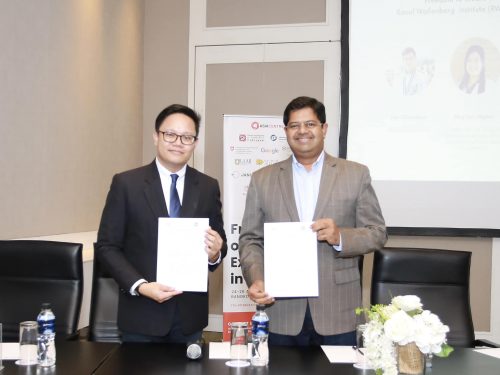
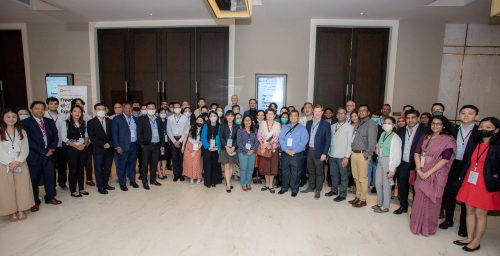
From 24 to 26 August 2022, Asia Centre convened its 7th International Conference: ‘Freedom of Expression in Asia’. Following the relaxation of COVID-19 restrictions, participants and panellists flew from different regions to join the Conference held at the Radisson Blu Plaza Hotel, Bangkok. Meanwhile, those who could not join in-person due to travel and health advisories participated remotely via Zoom. Into its 7th year, Asia Centre’s annual conference continues to grow with the 2022 Conference having 16 partners: Taiwan Foundation for Democracy; Friedrich Naumann Foundation for Freedom, Thailand; Embassy of Switzerland in Thailand; Google Asia Pacific; International Development Research Centre (IDRC); Eugene Thuraisingam LLP; International Republican Institute (IRI); Destination Justice; Raoul Wallenberg Institute of Human Rights and Humanitarian Law (RWI); Council of Asian Liberals and Democrats (CALD); Graduate School of Humanities Osaka University; University of Libral Arts Bangladesh (ULAB); Tony Blair Institute for Global Change; Expertise Agency of The Indonesian House of Representatives; Japan NGO Center for International Cooperation (JANIC) and Kyushu University. A total of 16 panels were convened with 63 speakers, of which 54 percent were male and 46 percent were female. There were 90 people joining the conference on-site and 20 online, bringing the total number of people at the Conference to 110. The conference examined the current state of freedom of expression in Asia following the pandemic which has given rise to authoritarianism in the region. Throughout the three days, the following major themes were discussed: impacts of laws that interfere with freedom of expression, commonalities that Asian governments share in suppressing simmering political discontent, personal experience and ordeal of human rights defenders from different countries, balance between freedom of expression and content regulation in cyberspace. There were also six country panels covering Thailand, Indonesia, Bangladesh, Cambodia, Japan and Korea. On the first evening, participants were welcomed by Robin Ramcharan, Executive Director of Asia Centre who introduced the first panel by the Council of Asian Liberals and Democrats (CALD). Speakers from Singapore, Cambodia and Taiwan shared cases of political persecution in their respective countries. They pointed out that their governments have – or at least used to in the case of Taiwan – employed both extrajudicial tactics, including killing, and legal means to silence their critics to maintain their grip on power. The second day started with official welcome remarks from Dr. James Gomez, Regional Director of Asia Centre, Conradin Rasi, Chargé d’Affaires a.i of the Embassy of Switzerland in Thailand, and a keynote speech from Michaela Browning, Vice President of Google APAC’s Government Affairs and Public Policy. Browning remarked that the internet has enhanced the enjoyment of freedom of expression by providing people with access to information. But to perpetuate and protect this enjoyment, there needs to be clear regulations in order to ensure safe and secure access and build trust and confidence between government, public, and internet providers. Speakers from civil society organisations, international institutions, technology corporates and universities across 7 panels addressed challenges to freedom of expression in Asia. Panellists discussed youth political expressions, challenges faced by women human rights defenders, academic freedom, legal measures on public speech, platform governance, models of internet content moderation and collaboration among Asian civil society in building a rights-friendly regulatory environment in Asia. There were attempts to lay out the responsibilities of states, technological corporations and civil society in protecting freedom of expression while ensuring privacy. On the third day, the last day of the conference, 8 panels consisting of university researchers, government units, activists and media organisations examined the development of legal frameworks on access to information and freedom of expressions in selected countries in Asia, media freedom, digital literacy and disinformation, platform governance, hate speech, impacts of COVID-19 and philosophical consideration on freedom of expression and experience of human rights activists. In the last panel of the Conference, Doreen Chen, Executive Director of Destination Justice, launched a baseline study Internet Freedoms in Thailand which is a collaboration between Asia Centre and Destination Justice. The report reviews and analyses legislation that impacts internet freedoms in Thailand. These include provisions in the Constitution, Penal Code, the Computer Crime Act, the Cybersecurity Act, and the Emergency Decree. The report can be accessed here. At the end of the conference, Asia Centre’s Dr. James Gomez, joined by Dr. Narut Charoensri, Vice Dean at the School of International Affairs, Faculty of Political Science and Public Administration, Chiang Mai University signed an agreement to co-convene the 8th International Conference: ‘Democracy and Elections in Asia’, which will be held in Bangkok from 23 to 25 August 2023. The details of the conference are available here. The conference is Asia Centre’s annual event where it brings together its partners to share the outcomes of their programmes and network for future collaborations. Over the years, the conference has become a platform for a range of actors to meet and discuss key human rights issues. Recordings of selected conference panels are available on Asia Centre’s YouTube channel and photo albums are published on the Centre’s Facebook page.

Internet Freedoms in Thailand

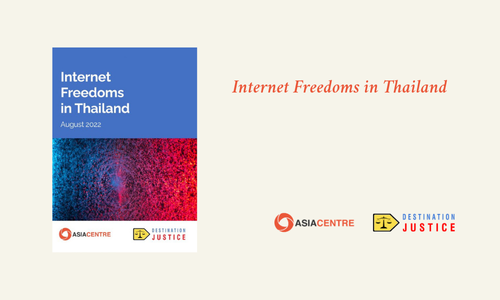
Download Full Report Internet Freedoms in Thailand reviews and analyses legislation that impacts internet freedoms in Thailand. These include provisions in the Constitution, Penal Code, the Computer Crime Act, the Cybersecurity Act, and the Emergency Decree. As this report shows, many provisions under these laws contain vague language enabling wide interpretation, impose harsh punishment, and give far-reaching power to the authorities. Today, internet freedoms in Thailand remain under threat, a product of continuous restrictions accelerated since the 2014 coup. These laws are used to justify removing or blocking content criticising the monarchy and establishment, prosecuting internet users, and harassing activists, individuals, journalists, and human rights defenders. This has led some sectors of Thai society to practise self-censorship, while others choose to defy the regime. Recommendations on upholding internet freedom in Thailand provided in this report include: to amend or repeal provisions containing vague language and imposing harsh penalties; decriminalise defamation and place it within the civil code; and limit the application of the Emergency Decree strictly as necessary.

MIL in Post-Pandemic Southeast Asia: Approaches to Measuring Effectiveness in the Academic Literature

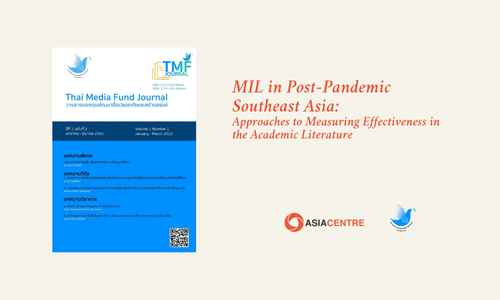
Download Full Report Dr. James Gomez and Dr. Robin Ramcharan, Directors of Asia Centre, authored an article “MIL in Post-Pandemic Southeast Asia: Approaches to Measuring Effectiveness in the Academic Literature” in Thai Media Fund Journal. The article reviews scholarship on the effectiveness of media information literacy (MIL) to distil its models and assesses its utility as a concept. Based on the review, eight questions regarding MIL are expanded upon in the article to provide a framework for policymakers, civil society programmers and researchers in their effort to design stronger MIL programmes.

Asia Centre’s New Research Hub

Asia Centre will consolidate its research work under a new Hub, as the team expands to publish more books, baseline studies, policy papers, and opinion pieces. Part of this work will involve making submissions to the UN, following the granting, in 2021, the UN’s ECOSOC Special Consultative Status. The Research Hub, housed in a 131 sqm office on the 20th floor of the Chamnan Phenjati Business Center, and located 200m away from Rama 9 MRT Station, has a mixture of open working spaces and meeting rooms. Fitted with the latest video-conferencing technology, the Hub will enable the Asia Centre Team to work collaboratively across borders and time zones. The Hub will have four separate rooms for the Asia Centre Team and Partners to meet and collaborate. The Asia Centre Team will primarily be located in the working area which will be composed of eight work stations, with a TV console and whiteboard for team meetings. Along the walls will be built-in cabinets and shelves for storage, printers, and office supplies. There will also be a pantry with a fridge, microwave, filtered water, and a coffee machine. Surrounding the working area will be four separate rooms. Meeting Room 1, composed of a table, five chairs, and a TV screen will be used to receive Asia Centre partners for face-to-face meetings and larger video conferencing calls.  Meeting Room 2, composed of a table and two chairs, will be used for smaller meetings as well as online presentations. It will also serve as a studio for podcast and video recordings. The Discussion Room, with armchairs, small tables, and a wall projector, will serve as a space for Asia Centre Team Members to engage in collaborative conversations. The Quiet Room, with a built-in desk, chair, and a separate armchair, will be used for individual phone/ WhatsApp calls, as well as a place for quiet reflection or prayer. The new office will have glass walls and partitions all around to let in natural light. The renovation began in early April 2022 and is scheduled to end in August 2022. Watch our Facebook video here and check out the renovation updates 1, 2, 3, and 4 on TikTok. While the new office will serve as a research space, the Office in Phaya Thai will be used for convening events. 

 Ukraine Challenges Do Not Damper ASEAN-EU Relations

The ongoing war in Ukraine has accelerated several key challenges to the ASEAN-European Union (EU) relationship. These challenges include the EU’s unclear role in mediating the great power relationship in the wider Indo-Pacific region, a difference in approach towards regional integration, trade negotiations hampered by the political contexts of ASEAN states, and non-aligned over human rights issues that prevented the deepening of relationships. Despite these challenges, there is a desire within both regions to work towards maintaining and strengthening this strategic partnership.  This was the primary sentiment that emerged from the conference “ASEAN-EU Relations in light of the War in Ukraine”, co-convened by Asia Centre with the Friedrich Naumann Foundation, Regional Office for East and Southeast Asia on 17 June 2022 at Radisson Blu Plaza Bangkok. The conference discussed developments since the elevation of the ASEAN-EU relationship to a “strategic partnership” in 2020. The conference had 4 thematic panels with a total of 14 speakers and was attended by over 150 people that included representatives from civil society organisations, diplomatic missions, government units, development aid agencies, the media and universities. The conference’s program can be found here.  Opening the conference, Moritz Kleine-Brockhoff, Head, Regional Office Southeast and East Asia, Friedrich Naumann Foundation argued the importance of regionalism as the foundation for peace in the EU as well as in the ASEAN. Dr. James Gomez, Regional Director, Asia Centre welcomed the participants and panelists and shared findings from the Centre’s closed doors consultations. He said the consultations revealed that 1) the majority of ASEAN states want to be neutral, 2) the peoples’ feelings and values opinion in ASEAN countries are divided over the war in Ukraine, and 3) the idea of the EU is still unclear among most people in ASEAN. The first panel, titled “Geo-Politics and Security”, discussed the value that the EU could provide to ASEAN countries in the midst of the US-China great power rivalry. The panel, moderated by Mr. Kleine-Brockoff, included H.E. Georg Schmidt, Ambassador of Germany to Thailand, Dr. Kitti Prasirtsuk, Professor, Faculty of Political Science, Thammasat University and Dr. Felix Heiduk, Asia Division, Stiftung Wissenschaft und Politik, German Institute for International and Security Affairs. Although ASEAN sees the EU as a key actor who could ease tensions over the US-China great power rivalry and support ASEAN in setting up an inclusive mechanism, the deepened relationship between EU and the US following the Ukraine war is driving the EU away from ASEAN. Given that the Ukrainian war will be protracted, it is also likely that the EU would divert its resources to secure its borders and reduce attention towards ASEAN. Hence, rather than trying to get ASEAN to side with the EU over the war in Ukraine, the panel discussion veered towards how EU leaders can help ASEAN navigate the big powers over the conflict.    The second panel, entitled “Regional Integration”, was moderated by Asia Centre Associate Dr. Kenneth Houston who was joined by Nukila Evanty, Country Director, Rights Foundation, Atena Stefania Feraru, author of “Weak States, Vulnerable Governments, and Regional Cooperation: An ASEAN Case Study” and Dr. Titipol Phakdeewanich, Director, Regional Center for Human Rights at the Faculty of Political Science of Ubon Ratchathani University. The panellists discussed the challenges faced by ASEAN and the EU regarding their respective approaches to regional integration as well as the lack of information and progress in cooperation and collaboration between the two regions which were further weakened by the War in Ukraine. The key reason why there is a stalemate is because the EU operates on a set of principled goals for cooperation, centralisation, and unity. On the other hand, ASEAN has a non-interference policy that is based on compromise as opposed to principles. As a result, the EU goals of cooperation with ASEAN will be unattainable, unless a different approach is considered. The third panel on “Trade” was moderated by Dr. Narut Charoensri, Vice Dean of the Faculty of Political Science and Public Administration, Chiang Mai University and included Robin Hoenig, Divisional Head, at Trade Policy Competence Centre; Tricia Yeoh, CEO of IDEAS; Tom Cachet, Chairman of Thai European Business Association (TEBA) Supply Chain Management Committee and Dr. Suwannarat Meesomboonpoonsuk, Lecturer, Southeast Asian Studies at Thammasat University. The panellists listed the existing issues that caused suspension of the agreements including: the ASEAN way; the lack of negotiation capacity; technical barriers; lack of political will; strong opposition from local producers as well as national regulations. Supply chain disruption as a result of the Russia and the Ukraine war, climate change and protectionism that flourished after the COVID-19 outbreak further added challenges to the agreements. To reach the ASEAN-EU Free Trade Agreements, bridging the gaps and increasing flexibility between the two regional blocs were suggested by members of the panel.    The fourth and final panel entitled “The Future” was moderated by Dr. Robin Ramcharan, Executive Director, Asia Centre, and joined by Abhisit Vejjajiva, Former Prime Minister of Thailand, Karen Gomez Dumpit, Former Commissioner, Commission on Human Rights of the Philippines, Laure Brachet, Head, Political Press and Information Section, EU Delegation to Thailand and Jonathan Head, journalist, BBC News. The panel started with introductory remarks on the need to precisely define the Indo-Pacific concept. The main argument made during the session was the need to further engage on human rights platforms and develop human rights policies to achieve mutually beneficial partnership, as both regions differed in their approaches towards the universality of human rights. Given the differences in approaches by both regions, the discussion focused on how best to find a way that might pave the way for strong future cooperation building. In summing up the fourth session and the conference, Dr. Ramcharan noted three points: 1) While both ASEAN and EU share common values, they need to acknowledge their differences in order for future EU-ASEAN relations to succeed. 2) Given the international political and economic context, future partnership building will be slow. 3) The EU’s position as a model and soft norm entrepreneur can contribute to deeper integration and help build a

© 2015 ASIACENTRE, BANGKOK, THAILAND. – INFO@ASIACENTRE.ORG