Harmony Laws in Southeast Asia: Majority Dominance, Minority Repression

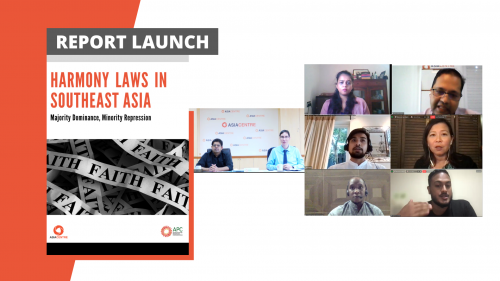
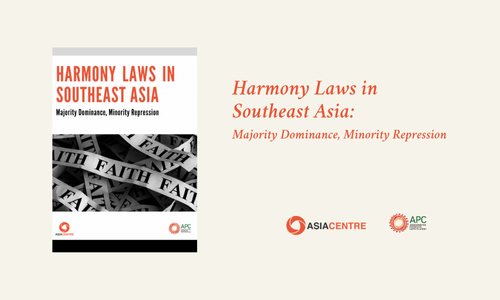
Download full report Harmony Laws in Southeast Asia: Majority Dominance, Minority Repression analyses the legal framework and the impact on Freedom of Religion or Belief (FoRB) and racial discrimination in Malaysia, Myanmar, Philippines and Singapore. Colonial era-laws are being supplemented with “harmony” and other laws to manage communal tensions. All four countries are ethnically and religiously diverse with colonial histories and primarily make use of legal provisions to maintain public order and internal stability while appeasing the ethno-religious majority. These legal measures often compromise FoRB and the airing of grievances of minority communities. In Malaysia, the divide between the Muslim majority and the rest of the country remains strong. In Myanmar, the Bamar-Buddhist nationalism contributes to the communal tension, which has been exacerbated by the 2021 military coup. In the Philippines, there is little state-mandated religious discrimination, but prejudices remain as the influence of Catholicism continues to be strong. In Singapore, appeals to social harmony and secularism obscure the privileges enjoyed by the Chinese majority even as minorities find it legally restrictive to voice their grievances. This report demonstrates how the use of legislation affects FoRB and racial equality and suggests measures to improve the situation.

Malaysian Journalists Influence Media Ethics But Need Support

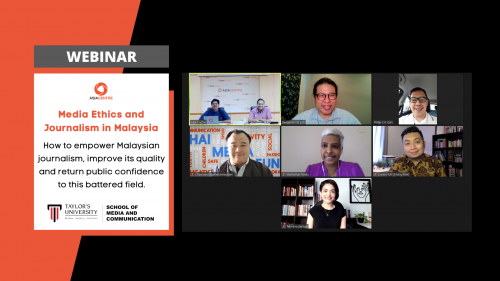
In the absence of a progressive legal framework to establish a Media Council and a complimentary Code of Ethics, the actions of journalists as influencers and their adherence to ethical standards and values are what drives quality journalism in Malaysia. While their role is admirable, their impact remains low and needs to be backed up by other stakeholders. These were the key perspectives that emerged on 12 October 2021, during the webinar ‘Media Ethics and Journalism in Malaysia’ co-convened by Asia Centre, in collaboration with the School of Media and Communication of Taylor’s University. The event, supported by the Taiwan Foundation for Democracy, aimed at giving an overview of the challenges and issues facing journalists in the country. The event started with welcome remarks by Dr. Charmnan Ngammaneeudom, Advisor at the Thai Media Fund, expressing his concerns over opinions preceding facts in mainstream media. This impacts impartiality and leads to partisanism and interferes with the  journalists’ mission of bringing out the truth. Philip Gan Chee Keat, Programme Director at the School of Media & Communication, Taylor University, Malaysia, outlined the ever–stronger need for reliable sources of information in the era of post–truth instigated by fake news. He thus noted that reporters need to hold tight to the principles of honesty and integrity in their investigations. Dr. Robin Ramcharan, Executive Director, Asia Centre, encouraged journalists to hold fast to ethics and values, especially now that big social media groups driven by profit are leading the news distribution and facilitating the spread of disinformation through their algorithms. Following the welcome remarks, and the first to speak, Wathshlah Naidu, Executive Director of the Centre for Independent Journalism, set the scene by highlighting the instability of journalists’ employment due to moving ownership of companies and lack of funds. Moreover, undue restrictions of access to media platforms during COVID–19, the crackdown on freedom of reporting and a lack of Right to Information (RTI) legislation, are compromising the independence, freedom and ethics of media companies and reporters alike  in Malaysia. Independent Broadcast Journalist, Tehmina Kaoosji, touched on female journalists, developments related to the media council and sustainability of the industry. She said the most heavily affected among journalists were women, especially during the pandemic, as they had to take on childcare duties with the closing down of schools and nurseries. They are also the target of attacks on their legitimacy as journalists. She believes strong female mentors can inspire more young women to become journalists and combat women’s underrepresentation in the media world. Dr. Benjamin YH Loh, Senior Lecturer School of Media and Communication, Taylor’s University Malaysia and Asia Centre Associate, introduced the legal framework journalism in the country. The politicization of legal prosecution has led local media to provide the bare minimum in their news coverage. He then drew from the Society of Professional Journalists’ Code of Ethics. to express his wish for Malaysian journalists: serve the role of watchdogs, give a voice to the voiceless, be sensitive in deciding what to publish or not, support civil discourse while considering the long–term implications of their publications, and be transparent in explaining their ethical choices and processes to their audience. Zurairi A. R., News Editor from Malay Mail, expressed there were ethical considerations when the media amplified social media posts, which were meant for a small circle, and reported them as news sometimes without the consent of the original contributor. This inevitably leads to privacy breach of individuals. Another issue was the practice of local media quoting non-experts, or non-stakeholders, unnecessarily making them authoritative voices affecting the vulnerable individuals such as members of the LGBTI community. After the presentations, a key focus of the Q&A session was whether the main responsibility for ethics lies with the individual, organisation, society or was it structural. The discussion pointed to an need for individual responsibility as well as an accompanying change needing to happen at the societal level to influence the institutional level. Since journalists remain in a tough position, the voices of NGOs and the public are crucial to push for stronger ethics. Their support and their demands will be the main drivers of change. Therefore, observers and readers also share a responsibility in promoting ethical reporting. In closing the webinar and thanking speakers and participants, Dr. James Gomez introduced the Asia Centre’s office in Iskandar Puteri, Johor Bahru, Malaysia. He explained that Asia Centre Malaysia is positioned as the media hub for the Centre’s creative works and communications-related projects. He also outlined key media outputs coming up next year—such as infographics, short videos and podcasts—associated with the Centre’s evidence-based research on press freedoms, building momentum to the 2022 International Conference on Freedoms of Expressions in Asia (24 to 26 August 2022, Bangkok Thailand). This event marks the beginning of the collaboration between Asia Centre and the School of Media and Communication at Taylor’s University Malaysia. A memorandum of agreement is in the making between the Centre and  Taylor’s University with plans to collaborate on a joint report on internet freedoms in Malaysia. The full recording of the event can be viewed here. Asia Centre works on issues related to freedom of expression. If you would like to collaborate with the Centre on evidence-based research, co-coveneing activities or other projects. Send an expression of interest to contact@asiacentre.org

Workshop on Tackling Disinformation

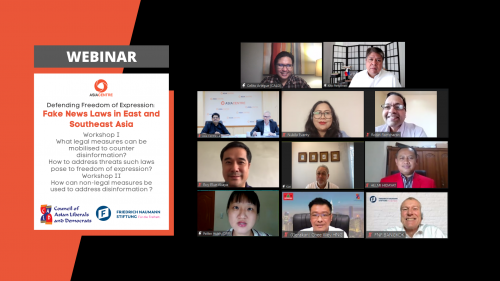
Asia Centre, in collaboration with the Council of Asian Liberals and Democrats (CALD) and the Friedrich Naumann Foundation for Freedom (FNF),  convened a two-day workshop on 25 September and 2 October 2021. These workshops,  moderated by Mr. Celito Arlegue, Executive Director of CALD, is a follow-up to Asia Centre and CALD’s baseline study, ‘Defending Freedom of Expression: Fake News Laws in East and Southeast Asia’ published in February 2021. On the first day, the main focus was on legal ways to address disinformation and how to mitigate the threats such legislation poses to freedom of expression. Hence, the participants considered the questions, “What legal measures can be mobilised to counter disinformation? How to address threats such laws pose to freedom of expression?” Chair of CALD Sen. Francis ‘Kiko’ N. Pangilinan opened the first workshop session. In his welcome remarks, he recalled how for a long time disinformation has been rampant and has been threatening democracy. He called on every participant to be a good influencer for their networks: the best countermeasure to disinformation is the truth—as long as it comes out “fast, fair and fun”. Thereafter, Dr. James Gomez, Regional Director of Asia Centre, outlined the evolution of legal measures used against disinformation. He pointed to an emerging approach known as the ‘Gateway’, which allows for a total surveillance and for shutting down the whole domestic internet system. With its very intrusive reach, it has instilled fear of surveillance and self-censorship among internet users, in particular journalists, human rights defenders and activists. To counter it, Dr. Gomez recommended the introduction of Privacy and Data Protection legislation to lessen fear of surveillance, and for the government to share information under a Right to Information Act.   Reacting to the presentation, Asst. Prof. Dr. Lasse Schuldt, Legal Expert from Faculty of Law Thammasat University, examined how fake news laws infringe on freedom of expression, and whether a distinction between facts and opinions should be made clearer. He noted that fake news legislation tends to be vaguely-worded, hence it opens up to a wide interpretation by local authorities, allowing the use of such legislation against political opponents and dissenting voices. To counter this risk, Dr. Schuldt suggested procedural safeguards. Members from the CALD network were then invited to give their input, drawing on their country’s experience with fake news. Kiat Sittheeamorn, Member of Parliament of the Democrat Party, Thailand, and Vice President of Liberal International recommended a regional or global approach rather than domestic legislation to tackle fake news and disinformation, as the issue transcends borders.   Helmy Hidayat, Foreign Affairs Directorate of the Indonesian Democratic Party of Struggle (PDIP) gave an extensive presentation of his country’s background and the various ethnic and religious communities. In Indonesia, fake news, he stated, is often disseminated as part of hate speech intended to stir up religious tensions, as well as xenophobia. During the COVID-19 crisis, hoaxes were used to question the competency of the government as well as endangered public health.   In closing the first workshop,  Cong. Francis Gerald “Blue” Abaya, Secretary General of CALD, acknowledged that laws originally aimed at fighting malicious disinformation are being used to censor critical content and protect government leaders from criticisms. The tightening of the grip on freedom of expression should be addressed by an urgent revision of laws to preserve fundamental freedoms and human rights.   On the second day the focus shifted to non-legal ways to address disinformation and the helpfulness of transparent information sharing and fact-checking from the media literacy.  Hence, on the second day, participants discussed: “How can non-legal measures be used to address disinformation?”  Starting the workshop, Dr. James Gomez, Regional Director, Asia Centre, highlighted key non-legal measures used to combat disinformation. These included: government transparency, fact-checking, technology companies filtering, quality journalism and media and information literacy. He said, non-legal measures should be prioritized over legal measures as the latter often result in violations of freedom of expression. Non-legal approach also allows for more involvement of stakeholders, creating a holistic learning curve for both audiences and the organisations that implement the aforementioned measures. Nukila Evanty, Executive Director of the Women Working Group, raised the important question of mobilizing non-legal measures against disinformation in Indonesia.  She said the country is particularly vulnerable to disinformation as 89% of its citizens use the internet. Over 1,600 hoaxes related to COVID-19 have been listed from January 2020 to June 2021, with prominent politicians, ministers, and influential figures sometimes unknowingly spreading disinformation themselves. Ms. Evanty highlighted how religious figures and influencers are being levered into fact-checking information by the government. Two representatives from CALD then brought input from their country’s experience in relation to non-legal measures. Ms. Peifen Hsieh of the Democratic Progressive Party of Taiwan, presented the Taiwan Model for combatting disinformation. Efficient government reactions that relay transparent, readable, fast responses, with regular disinformation correction broadcasts were key. Mr. Hng Chee Way of Parti Gerakan Rakyat Malaysia, presented the Malaysian government initiatives, centered around the creation of anti-fake news websites. He said, people respond well to trusted sources for combating misinformation. In the Malaysian case, the COVID-19 pandemic experience has shown, trusted sources of information can alleviate the impact of disinformation. Moritz Kleine-Brockhoff, Head of Regional Office, Southeast and East Asia, Friedrich Naumann Foundation for Freedom gave the closing remarks, outlining the main lessons from the workshops:  No fake news is good: Misinformation undermines trust systematically   We are not powerless: There are several measures we can take Fake news is ideologically and politically driven  Agreeing with the closing remarks, Dr. Robin Ramcharan, Executive Director, Asia Centre concluded that misinformation is a pressing issue that needs to be dealt with. The significance of countermeasures can not be understated. On that note, he welcomed the continued collaboration with CALD and FNF on workshop and training initiatives. You can download, ‘Defending Freedom of Expression: Fake News Laws in East and Southeast Asia’ here  Asia Centre works on issues related to freedom of expression. If you would like to collaborate

6th International Conference (2021): COVID-19 in Asia: Communication, Nationalism and Technology

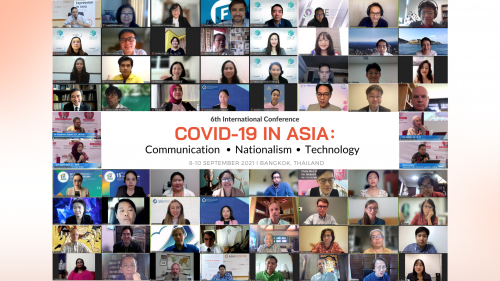
From 8 to 10 September 2021, Asia Centre convened its 6th International Conference on COVID-19 in Asia: Communication, Nationalism and Technology. Due to the ongoing travel and health advisories at the time, the conference was convened as an online event with participants using teleconferencing software to join from different locations and across international time zones. Into its 6th year, Asia Centre’s annual conference continued to grow, with 17 partners who convened 15 panels. The Centre facilitated the presentations of 51 speakers of which 57% were male and 43% were female. The Conference examined a variety of impacts the pandemic has had on different societies in Asia. One key issue that came up was that of COVID-19 ‘infodemic’ and the challenges it posed. Through the different panel sessions, there was an attempt to identify possible solutions to it such as media and digital literacy, as well as government transparency and increased collaboration with civil society groups. The first day opened with welcome remarks from conference partners: Prof. Dr. Yubol Benjarongkij, Dean of the Graduate School of Communication Arts and Management Innovation at NIDA, Ms. Varinrumpai Puntanaree, Deputy CEO of the Thai Media Fund, Mr. Frederic Spohr, Head of the Friedrich Naumann Foundation for Freedom in Thailand and Dr. Robin Ramcharan, Executive Director of Asia Centre who also acknowledged the partnership of the Taiwan Foundation for Democracy. The recording of the welcome remarks will be available on Youtube soon.  Asia Centre’s panel partners who convened the different sessions for the 2021 event were as follows:  NIDA’s Graduate School of Communication and Innovation Management, Faculty of Management Science Suan Sunandha Rajabhat University, College of Social Communication Innovation Srinakharinwirot University, Faculty of Communication Arts Chulalongkorn University, CMU, Friedrich Naumann Foundation for Freedom (FNF), Centre for Applied Nonviolent Action and Strategies, Osaka Jogakuin University, Kyushu University, Graduate School of Letters Osaka University, Harm Reduction International, Expertise Agency of The Indonesian House of Representatives (Badan Keahlian DPR RI), Internews, Council of Asian Liberals and Democrats (CALD) and International Republican Institute (IRI). On the first day, 5 Thai universities across 4 panels discussed the impact of COVID-19 on the business sector and the main communication challenges that arose in Thailand. The discussion underlined the inequality in internet infrastructure and access to information as well as the importance of developing digital literacy of the population, as every daily activity moved online. Toward the end of the day, the political dimension was discussed. Political analysts and human rights specialists from Thai government institutions and university addressed the state of democracy and human rights in Thailand under the pandemic. The most important takeaway is their call for more transparency in managing the health crisis.   On the second day of the conference, 4 panels co-convened by 3 Japanese universities put together regional and international speakers to cover the COVID-19’s impact on regional levels in education, xenophobia and politics more generally. In addition, 2 INGOs discussed the pandemic’s impact on human rights and democracy, outlining the impact of the pandemic on civil society participation as demonstrations were forbidden in many countries. They also outlined the disproportionate impact the securitisation of the COVID-19 response had on vulnerable communities. On the third day, 4 panels consisting of parliamentary researchers, political party representatives and media professionals discussed and evaluated legal, economic and political measures taken to fight the COVID-19 pandemic, with a special attention given to the role of vaccines and their manipulation to fit national interests over regional or global interests. The last panel of the conference examined the manipulation of the pandemic by governments to reduce political opposition during elections. Over the 3 days, the conference participants addressed the political, cultural, social, educational and technological aspects of the pandemic. The key focus of the conference was infodemic and misinformation during the pandemic, the decline of trust in public institutions, the lack of transparency in governments’ crisis management, and the politicisation of public health measures by authoritarian governments in the region to increase their power to the detriment of the most vulnerable groups. As the conference progressed, the links between nationalism, communication and technology became self-evident. In wrapping the conference, Dr. Robin Ramacharan, Executive Director of Asia Centre announced the next year’s 7th International Conference, ‘Freedom of Expression in Asia: Academia, Media and Internet”, in Bangkok, on 24, 25 and 26 August 2022.  Asia Centre is presently calling for expressions of interest to partner for the 2022 conference. To register your interest, please send an email to research@asiacentre.org Papers submitted will be published in the Conference Proceedings later in November 2021.  Recordings of all three days of the conference are already available on Asia Centre’s YouTube channel and Asia Centre’s Facebook page.

Data Protection Can Ease Fear in Cambodia

Internet Freedoms in Cambodia A Gateway to Control

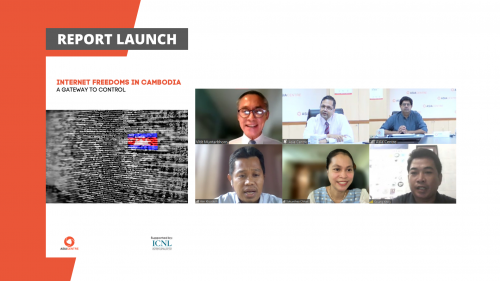
Data protection is needed in Cambodia to address self-censorship arising from the monitoring and persecution of online users. This was the key theme that emerged during the online launch of Asia Centre’s baseline study: “Internet Freedoms in Cambodia: A Gateway to Control” on 1 September 2021. In his opening remarks, the UN special rapporteur on the situation of human rights in Cambodia, Vitit Muntarbhorn stated that the government needs to comply with  international human rights standards. Given decreasing internet freedoms in Cambodia, he recommended that data protection and access to information be instituted to enable people to express their opinion without fear. Dr. James Gomez, Asia Centre’s Regional Director presented the report. He said provisions in the constitution, the penal code, the law on telecommunications, the inter-ministerial Prakas No.170, the national internet gateway and the draft of cyber crime law allow the government to monitor and persecute online users resulting in fear. Hence, people have become reluctant to express their political opinion online. This has led to acute self-censorship that has caused people to refrain from posting and sharing information, only consume online content privately, cease accessing political content and avoid online political participation. In responding to the report, Sokunthea Chhan, Media Development Director of the Cambodian Center for Independent Media (CCIM), expressed her concern over the safety of female journalists. In particular, independent female journalists who work on human rights, politics and environment issues. She pointed out that 3 female journalists have recently been jailed by the government for simply reporting the news. Him Khortieth, Research & Advocacy Manager of the Cambodian Journalists Alliance Association (CamboJA), shared that 90.65% of the journalists in Cambodia are concerned for their safety when reporting on scandals and over 80 % are similarly concerned when reporting on human rights issues. In 2021, 40 persons were arrested for questioning the government’s handling of the pandemic and 7 of the media outlets had their licenses revoked for “stealing information” and incitement over fake news. Soung Khoy, Child and Youth Empowerment Coordinator at the Child Rights Coalition Cambodia, explained the fear among the younger generation in accessing information and producing content. He said that people in Cambodia, especially children and youth, are afraid of legal charges for posting or commenting online. Some are even weary to express their own political opinion over the internet or even talk about human rights and social justice using their private platforms. Wrapping up the discussion, Dr. Robin Ramcharan, executive director at Asia Centre, emphasized the importance of data protection legislation as it can ensure people’s safety while accessing information and expressing their views online. In this context, a data protection and privacy act can shield people in Cambodia from undue surveillance and sharing of their personal information. This can prevent the use of personal data for political persecution and reduce fear among online users.    Lorem ipsum dolor sit amet, consectetur adipiscing elit. Ut elit tellus, luctus nec ullamcorper mattiThe report is already available on Asia Centre’s website here. The report launch session can be viewed here. Asia Centre works on issues related to freedom of expression. If you would like to collaborate with the Centre on evidence-based research, co-coveneing activities and briefings or other projects. Send an expression of interest to contact@asiacentre.orgs, pulvinar dapibus leo.

Internet Freedoms in Cambodia: A Gateway to Control

Download full report Internet Freedoms in Cambodia: A Gateway to Control analyses the state of internet freedoms in Cambodia, in light of recent legislation such as the 2021 National Internet Gateway Sub-Decree (NIG). Cambodia is a state-party to major international covenants and conventions, and declares it respects human rights. Yet its national laws are not aligned to international human rights standards. Instead, the government exerts tight control over all online content, and uses anti-defamation or state security provisions to stifle criticisms against it. Vaguely-worded legislation also allows intrusive monitoring of individuals, such as recording their private conversations and using it to prosecute them. As a result of these persecutions and harassment plus widespread online surveillance, Cambodians are withdrawing into self-censorship and are refraining from expressing critical political opinions online. This strong pressure on internet freedoms in Cambodia has affected democratic expression. This report highlights these issues and suggests legislative revisions to improve the situation.

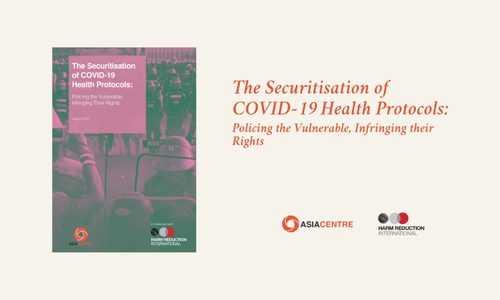
The Securitisation of COVID-19 Health Protocols: Policing the Vulnerable, Infringing their Rights

Download full report The Securitisation of COVID-19 Health Protocols: Policing the Vulnerable, Infringing their Rights analyses the impact of securitised COVID-19 health protocols on the human rights of vulnerable communities in Indonesia, Malaysia, Philippines, Singapore and Sri Lanka. The report reviews the COVID-19 temporary and emergency legislations, the role of the law enforcement agencies in implementing these legal measures, and the digital surveillance and contact tracing measures used to track people’s movements. The review shows that all these actions have impacted the human rights of vulnerable and marginalised communities. The report hence highlights the importance of integrating international human rights standards into health protocols during pandemics. It presents two specific recommendations: that the de-securitisation of health responses approach should be consistent with the protection of fundamental rights; and that the rights of vulnerable communities be supported and prioritised within public health policies and practices.

Covid-19 Policies Impact Information Rights

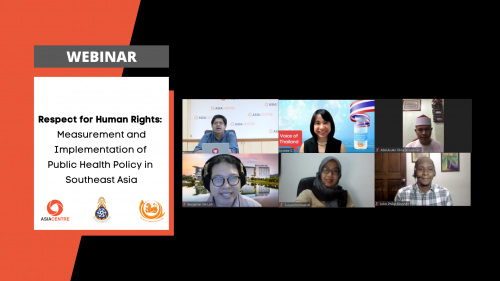
The COVID-19 related infodemic in Southeast Asia is affecting access to accurate information. This is in part caused by the implementation of the government’s public health policies for the pandemic. Censorship of information on the COVID-19 situation, propaganda from state-sponsored media to spin a positive image of the government and other policies are the key causes of disinformation. This was the major view that emerged from speakers of session two’s panel discussion, “Respect for Human Rights: Measurement and Implementation of Public Health Policy in Southeast Asia”. Six presenters from Indonesia, Malaysia, Philippines, Singapore, Thailand and Southern Thailand  provided their insights on the situation.  Dr. Arunee Santhitiwanich, Assistant Professor at the Faculty of Political Science, Ubon Ratchathani University, observed that the Thai government responded to the infodemic through the use of emergency legislation. Laws were used as tools to restrict access to content over the internet and the media. Human rights activists criticising the work of the ministry of interior’s COVID-19 center were prosecuted. This has increased distrust of government information as inequality in vaccine distribution, healthcare treatment and the overall ineffective management of the pandemic continues. Abdulsuko Dina, Columnist at Matichon weekly and Vice-President of Civil Society Council of the Southernmost Thailand said a reform of the justice system is needed. There is a need to reconcile trust and reliability between the federal and the local government, which is the main cause of the infodemic in Southern Thailand. One suggestion he made was to decentralise the vaccine import process. Dr. James Gomez, Regional Director at Asia Centre, highlighted  the situation in Singapore where the healthcare policy implementation needs to account for the high number of  foreigners. This has led to concerns among Singaporeans that they are being treated as second class citizens in their own country. Given the high rate of vaccinations, the debate centres upon the rights of the vaccinated and unvaccinated as the city-state opens up. Dr. Suyani Indriastuti from the Faculty of Social and Political Science, University of Jember, provided an insight into Indonesia. She noted the problem of data validation from separate sources of information indicate a difference in terms of statistics and reality, also pointing out the difference between culture and religion as they each influence compliance to health concerns differently. Dr. Benjamin YH Loh, Senior Lecturer at the School of Media and Communication, Taylor’s University Malaysia, explained the political instability in the country and its impact on the management of the COVID-19 pandemic. The lack of information on vaccinations has been the main cause of the influx, affecting vulnerable groups. Xenophobia has been directed at migrant workers and refugees, arising from misinformation that they are the primary virus carriers in the country. John Phillip Binondo, Assistant Professorial Lecturer, International Studies Department, De La Salle University-Manila, said the situation in the Philippines was confusing as many different regulation policies like the Enhanced Community Quarantine (EQC) and Modified Enhanced Community Quarantine (MECQ) had conflicting COVID-19 regulations. This served to cause confusion, rather than be a benefit to the Philippine population. Despite having experienced the longest community quarantine, the Philippines has continually suffered the consequences of such uncertain policy and unreliable communication. Effects of this have resulted in severe economic recession, social disruption and a reduction in the credibility of the Philippine governments. Pulling the discussion together, Dr. Robin Ramcharan, Executive Director at Asia Centre, summarised the lessons for Southeast Asia. He emphasised the need for increased information sharing between federal, local and civil society in order to deal with the infodemic. He also called for more cooperation between government and civil society to ensure the accessibility of accurate information in combating the COVID-19 infodemic. Governments are obligated to provide people with accurate and essential information, allowing criticism is absolutely necessary in fostering a transparent environment There were several questions raised after the discussion. The full details of the panel discussion session can be viewed here. The panel discussion  provided an opportunity to review the healthcare policies in Southeast Asia and their impact on accurate information during the COVID-19 pandemic. Combined with the presentation and discussion from session one “Infodemic and SDGs: Internet Freedoms in Southeast Asia”, it is clear that the COVID-19 infodemic has severely impacted internet freedoms and restricted access to accurate information.  Asia Centre’s newly released report “Infodemic and SDGs: Internet Freedoms in Southeast Asia”, can be downloaded here and is the second Asia Centre report published in collaboration with the Thai Media Fund. The first report, “Hate Speech in Southeast Asia: New Forms, Old Rules” available here was published in July 2020 and was our first collaboration. The first event writeup for session one of the event, a report launch entitled “Infodemic and SDGs: Internet Freedoms in Southeast Asia”, can be accessed here Asia Centre works on issues related to freedom of expression. If you would like to collaborate with the Centre on evidence-based research, co-coveneing activities or other projects. Send an expression of interest to contact@asiacentre.org https://youtu.be/i–LU_4fiW0

“Infodemic” Infringes Right to Accurate Information

Large amounts of false or misleading information related to the COVID-19 pandemic, referred to as an “infodemic”, and the attempts to combat it, have actually infringed on the right to accurate information. Additionally, framing the “infodemic” as purely citizen-induced, a premise that wholly excludes government accountability, further exacerbates the infringement. This critical point was articulated during the launch of “Infodemic and SDGs: Internet Freedoms in Southeast Asia”, an Asia Centre report in collaboration with the Thai Media Fund. The launch was the first of a two-part event, “Human Rights in the Time of COVID-19: Lessons Learned from Southeast Asia” held on Friday 20th August. The event was co-convened by Asia Centre and the Faculty of Political Science of Ubon Ratchathani University. It was supported by the Taiwan Foundation for Democracy (TFD), the Thai Media Fund (TMF) and the Empowering Freedom Defenders in East and Southeast Asia (EFDEA).  Dr. Robin Ramcharan, Executive Director of Asia Centre, introduced the event and speakers, and thereafter went on to outline how the United Nations Sustainable Development Goals of 9.c (Access to the Internet) and 16.10 (1&2), (Fundamental Freedoms and Access to Information) are essential indicators with which to measure the infodemic’s consequences and impacts. Dr. Titipol Phakdeewanich, Director, Regional Centre for Human Rights Study and Coordination at the Faculty of Political Science, also welcomed the speakers and guests. He pointed out the significant challenges that COVID-19 has brought about. He emphasised  that it is now all the more important to host these online sessions, so that we can continue to discuss issues that affect citizens’ human rights, particularly rights for the vulnerable and marginalised. In her opening speech, Ms. Pornprapai Ganjanarintr, Chairperson of the National Human Rights Commission of Thailand highlighted the need to set up effective national measures for human rights protections in alignment with international standards. This step should also include increased collaboration and consultations with INGOs and CSOs in order to further streamline and enforce human rights guarantees and standards. Dr. James Gomez, Regional Director of Asia Centre, kicked off the presentation of the key findings of Asia Centre’s seminal report “Infodemic” and SDGs: Internet Freedoms in Southeast Asia”. Contextualising the report, he said COVID-19 has spurred an ‘infodemic’ that impacts the right to accurate information. Further, given that information is largely being shared over the internet and social media, we need to consider internet freedoms. Gleaning examples from fact-checking initiatives and institutions, Asia Centre found that the ‘infodemic’ of false or misleading information, comprised 4 primary categories:1. Virus Origin – Unsubstantiated hypotheses, namely that the virus was bioengineered in a Wuhan Laboratory or that it originated from the U.S., and was created in exchange for material benefits, or to distract citizens from other political issues.2. COVID-19 Infection and Death Numbers – speculation of possible, unconfirmed or underreported clusters of cases or death resulting from the virus, as well as what type of person is more likely to be a virus carrier. 3. Bogus Remedies – Unproven cures for the virus. Claims concern the use of local herbs, traditional medicines, or even religious or magical rituals4. Vaccine Efficacy – False information over reactions to different types of vaccines or their long term effects. This also includes false reports of vaccine provisions by hospitals and other agencies. Contrary to the statist narrative emerging from governments across Southeast Asia, Dr Gomez brought to light how national and local governments and officials have also been key instigators of the infodemic. Authorities have consistently underreported and denied the presence of COVID-19 in their country or local area, in efforts to save face and prevent backlash from the general population. They have also overstated vaccine production and provisions. False information such as this has the real potential to seriously endanger vulnerable groups. This fact however, is not reflected in legislation, with governments enacting new laws that focus almost exclusively on citizens, disregarding the need for their own accountability. Within Southeast Asia, governments responded to this infodemic phenomenon, by utilising ‘fake news’ clauses in various legal provisions to deliver heavy collateral damage on freedom of expression. Asia Centre’s report utilises the SDGs, specifically 9.c and 16.10 relating to access to information and internet freedoms, to help measure the impact of the new legislation that has been ostensibly implemented to combat the ‘infodemic’. It found that the newly enacted laws allow incumbent parties to censor debate, criminalise and withhold access to information, severely regressing the overall state of internet freedoms in the region. Violation of these vague and broad laws, consists of arrests, harassment, and heavily disproportionate legal penalties. The net result is that the suppression of internet freedoms, has led to a suppression of accurate information. Dr. Sirinbhattra Sathabhornwong, Lecturer in Public Policy and Local Government at Ubon Ratchathani University, echoing the report, presented sobering figures highlighting the limited press and expression freedom in Southeast Asia, which COVID-19 has only served to decline. Reinforcing some of Dr Gomez’s points, and utilising SDG 16.10 (Access to Information) as the appropriate indicator, she detailed that COVID-19 and its infodemic, has exacerbated the exposure of government tendencies to punish citizens who access sensitive information. This is because they pose a threat to the state sponsored narrative. There were several questions raised after the report presentation and discussion. The full details of the report launch session can be viewed here In wrapping up the 1st session of the event, Dr Gomez stated that in his opinion, media literacy is the primary “vaccine” and solution for the infodemic. If the strengthening of media literacy can occur, individuals will be able to navigate online safely and make well-informed decisions about their veracity.  However, in advocating for media literacy, one should be mindful of those favouring their own perspectives. Asia Centre’s newly released report “Infodemic and SDGs: Internet Freedoms in Southeast Asia”, can be downloaded here and is the second Asia Centre report published in collaboration with the Thai Media Fund. The first report, “Hate Speech in Southeast Asia: New Forms, Old Rules” available

“Infodemic” and SDGs: Internet Freedoms in Southeast Asia

Download full report “Infodemic” and SDGs: Internet Freedoms in Southeast Asia, evaluates the impact of the ‘infodemic’ on internet freedoms in Southeast Asia. Using the Sustainable Development Goals as an indicator, the study analyses how the pandemic has exerted a debilitating effect on the development of internet infrastructure, fundamental freedoms and access to information as articulated in SDG 9.C (Access and Affordability of Internet) and SDG 16.10 (Fundamental Freedoms and Access to Information). The report further highlights that a suite of existing legislation and emergency measures—used by governments to silence their critics, rather than repress the infodemic—have served to regress fundamental human rights. In Southeast Asia, a key point is that governments have strived to define the infodemic as purely citizen-induced, in order to provide justification to enact repressive legislation that suppresses online debate and disregards human rights, while ignoring their role in also contributing to the infodemic. The report provides recommendations that encourage strengthening adherence to the SDGs targets, helping to combat the infodemic without infringing on internet freedoms. This report is a joint project with the Thai Media Fund.

© 2015 ASIACENTRE, BANGKOK, THAILAND. – INFO@ASIACENTRE.ORG