Quality Journalism Not Effective Against Fake News

Quality journalism has been thrown up in discussions that search for measures to combat fake news on social media. Proponents argue that if quality journalism is boosted, the proliferation of fake news and its consumption can be mitigated if not overcome. However, it is unclear if the promotion of quality journalism alone is indeed an effective answer. Emerging evidence suggests that quality journalism boosting is no match to the viral power of fake news over online platforms. In Southeast Asia, there is a trust deficit in traditional journalism or mainstream media in many countries due to government control. Even when there is media freedom, accessing quality journalism is an issue as it gets drowned out by mediocre media or political bias. With the rise of internet usage in the region, online media is consumed more than print media, television and radio. What’s more, in countries where the mainstream media is less trusted, trust in online platforms has become higher. The 2017 Global Web Index shows that the number of people accessing mainstream media across Southeast Asia has dropped significantly and media content creation and consumption has moved online especially on social media, giving rise to fake news. Responding to criticism that technology companies are complicit in the spread of fake news, several have announced measures to boost quality journalism or flag inaccurate content. Companies like Google say they fight fake news by elevating quality journalism on their platforms, in particular promoting accurate information during breaking news situations. Their solution via the search engine function is to rank news query results by relevance and authoritativeness. Facebook, on the other hand, is increasingly using local media outlets and NGOs as third party fact-checkers. Through this exercise, third party organisations flag or tag inaccurate content in the hope that readers will bypass them for quality journalism. Have elevating quality information and flagging inaccurate content over online platforms been effective in combating fake news? No, overall they fall short as these efforts are no match to the viral power of fake news. Quality journalism, while desirable, is expensive, not profitable, much slower and less sensational than fake news. Flagging and tagging inaccurate information doesn’t prevent fake news  from being shared across social media platforms. As a result, efforts to boost quality journalism and flag inaccurate content by technological companies are being reduced to nothing more than mere PR exercises to reputation manage their role in aiding the spread of fake news. Combating fake news may therefore require a hard technological solution that may impact freedom of expression. Facebook has demonstrated this approach in several instances by taking down pages and blocking content.  However, draconian restrictions, administered by technological companies and cheered on by governments, will have far-reaching consequences on freedom of expression. It is been said quality journalism will survive because there is always demand for the objective truth. However, in a post-truth environment fostered by online platforms that support niche media, it is a struggle for quality journalism to rise above fake news. Asia Centre will examine these and other issues at its upcoming conference on Fake News and Elections in Asia, 10-12 July 2019 in Bangkok, Thailand. Register online to present or participate at https://goo.gl/forms/Pef1TKvG1OYJIjxl2 Dr. James Gomez is Chair, Board of Directors of the Asia Centre. He is also the convener of Asia Centre’s upcoming International Conference on Fake News and Elections in Asia, 10-12 July, Bangkok, Thailand. For more information about the conference email: contact@asiacentre.org

Asia Centre engages with Indian Universities and Think-Tanks

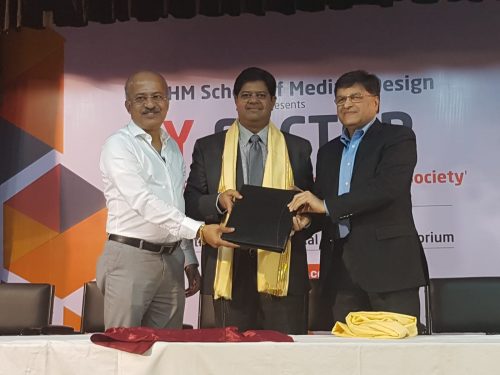
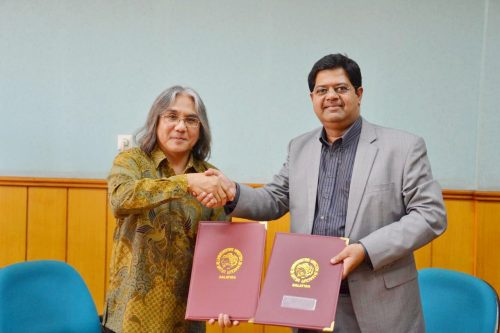
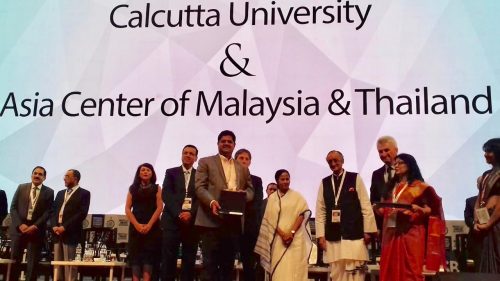
Over February to March 2019, Asia Centre will participate in several meetings organised by Indian universities and think-tanks in Kolkata. Kicking-off, Dr. James Gomez, Chair, Board of Directors, Asia Centre will be Calcutta’s University delegate to the Bengal Global Business Summit on 7th and 8th February 2019. The annual flagship event, organized by Government of West Bengal, is positioned as the business gateway to South-East Asia and North-East India. During the occasion, Asia Centre will sign an Memorandum of Understanding with Calcutta University to formalise cooperation between the two entities. A month later, from 8 to 9 March 2019, Tessa Allebas Asia Centre’s Research and Grants Officer will participate in NSHM Knowledge Campus’s International Seminar on the Media. At the Seminar, Asia Centre, is the official partner for the Technical Session “Media & Human Rights”, scheduled at 11am on 9th March 2019. During the session, Ms Allebas will highlight trends in manufactured opinion over social media. Later in March, on the 25th and 26th, Asia Centre’s Dr. Robin Ramcharan, will speak at a workshop on “Significance of the Bay of Bengal: India and South East Asia. The event is organised by the Observer Research Foundation (Kolkata) as a part of its research programme on “Proximity to Connectivity”. Dr. Ramcharan will address the session, Humanitarian Assistance and Disaster Response (HADR) and speak on the Rohingya refugee crisis. Asia Centre’s engagements in Kolkata scheduled in 2019, come on the back of a trip in late November to early December 2018, when its Chair, Dr. James Gomez, had a series of outreach engagements with Indian universities and think-tanks around building partnerships for the upcoming Fake News conferences and other joint activities and projects. Starting in Kolkata, from 26 to 30 November 2018, Dr. Gomez was a Visiting Fellow at the Centre for South and South East Asian Studies, University of Calcutta, Alipur campus. During his visit, Dr Gomez addressed the topic of ‘Thainess and the Contemporary Challenges of a Diverse Society’ during the panel discussion “Thailand in Perspective.” At Amity University, its Vice-Chancellor, Prof. Dhrubajyoti Chattopadhyay and Mr. Rajesh Sisodia, Deputy Director, School of Communication welcomed Asia Centre’s Dr. James Gomez and discussed partnership for the International Conference on Fake News and Elections in Asia. NSHM Knowledge Campus Chief Mentor Cecil Anthony and Prof. Mrityunjoy Chatterjee also discussed the International Conference on Fake News and Elections in Asia partnerships and other collaborations. During his visit, Dr. Gomez addressed the media department’s staff and students and was interviewed over 91.2 Y-FM NSHM Community Radio. Following on from Kolkata, Dr James Gomez, introduced the work of Asia Centre in Northeast India, in the cities of Guwahati, Assam and Shillong, Meghalaya in early December 2018. In Guwahati on 1 December 2018, Dr. James Gomez spoke on “Fake News and Elections in Southeast Asia” at the well-attended event at the Guwahati Press Club. The event was organised by Institute of Media and Development Studies, Guwahati. Again, at the Guwahati Press Club the next day on 2 December, Dr. Gomez spoke on Social Innovation in Action: Southeast Asian Perspective. The event was moderated and organised by Mr. Deepak Baruah, Centre of Innovation in Governance and Public Administration, Guwahati. In Shillong, Dr James Gomez joined a panel of prominent local actors to the topic “Fake News – The Menace”. The event was organised by social enterprises Jookto and Nagrik Mancha Shillong at on 4 December at Shillong Club. The discussions on fake news both in Guwahati and Shillong were reported in the local vernacular and English press. The meetings in late 2018 have set the pace for follow on activities in Kolkata, India in early 2019. Meanwhile discussions are ongoing with other partners for future joint activities. Asia Centre plans to expand its engagement with India to other states and also to other countries in South Asia. Previous Next

ASIA Centre Takes Fake News Discussion to Indonesia

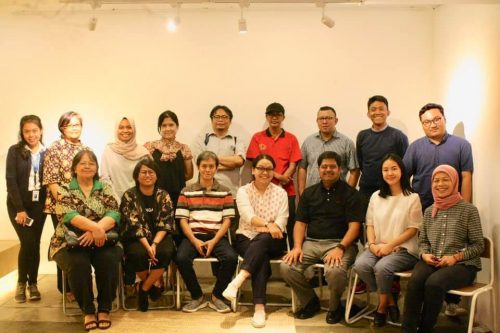
Asia Centre and local partner – Indonesian alumni of Asian Public Intellectuals – co-organised two seminars on fake news or “berita hoax” in Jakarta on 16 and 17 Jan 2019. The seminars are part of a series of activities around fake news Asia Centre will undertake with partners in Indonesia in 2019. On 16 January 2019, the first seminar entitled “Fake News and Freedom of Expression” was hosted by venue partner KineForum at a theaterette at the Tun Ismail Marzuki arts complex. Speakers included, Asia Centre’s Dr. James Gomez, Dr. Sri Nuryanti, LIPI political researcher and former Election Commissioner (2007-2012), Abdul Manan, Chair, Alliance of Independent Journalists, Dr. Hero Susetyo, Assistant Professor, Law Faculty, University of Indonesia with session moderator Resmi Setia Milawati, Social Researcher, Office of the Vice-President. During the session, speakers identified that in Indonesia in the run up to the 17 April 2019 presidential election, “berita hoax” has become more intensive. Reasons given for the motivation for producing fake news is money, to manage and counter political issues and for voter mobilisation. It was pointed out that Indonesian laws of 1946 and 2008 already make reference to fake news. However, in additional to laws, awareness programmes by election commission (KPU) was highlighted as an important step to promote fake news literacy among voters. On 17 January 2019, the second seminar entitled “Critical Thinking and Digital Media Consumption: Year of Politics and Beyond” was hosted by venue partner AKASARA at their co-working space cum bookshop at Jalan Kemang Jaya in South Jakarta. Speakers included Asia Centre’s Dr. James Gomez, Hikmat Darmawan, Chair Film Committee, Jakarta Arts Council, Aquino Hayunta, Art Activist with session moderator Arfa Suchi Ramadhon, HIVOS. During the session, the panelists discussed if media literacy and fact check efforts can help to keep fake news reined in? Several of the participants felt that people have a behaviourial tendency to “share” even though they know the content is false. When one caught in an online bubble such as a Facebook group or a WhatsApp group the option people exercise is to leave of “keluar” group, especially when they don’t like the content or think there is too my fake news circulating in it. Hence, to ensure fake news can be kept in check, one suggestion that was thrown up was to get technology companies to stop the viralisation of fake news by taking it down from their platforms. One theme that came out across the two seminars was the role of journalism. Both speakers and participants debated if critical thinking and quality journalism can be one way to combat fake news. The audience remained skeptical as there is a trust deficit in journalism in some countries in Southeast Asia due to government control. Trust in Journalism in countries with media freedom is higher and trust in online platforms is higher when the mainstream media is less trusted. Further, the number people accessing mainstream media has dropped significantly. Online media channels, while an estimate, is more than print newspapers, television and radio. Which explains why advertising has gone online now. In fact, what we are experiencing is an era of niche media. In particular, we are living in a post-truth area in a time of niche online media, hence one option is to return to analog, so as to side step the challenges of technology. Asia Centre’s plans to undertake further activities in Indonesia. The next planned activity on “Religion, Media, and Politics in Southeast Asia” is with the Center for Religious, Pluralism and Democracy Studies, Satya Wacana Christian University in Central Java, Indonesia.

4th Benedict Anderson Memorial Roundtable: Chinese Nationalism and Its Impact on Southeast Asia

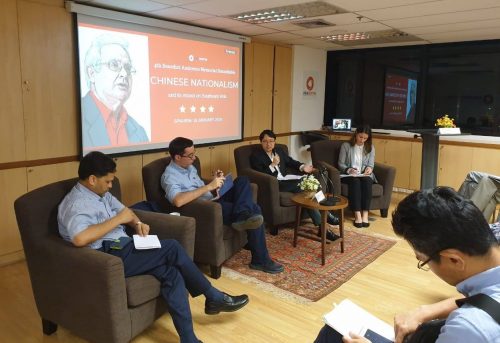
China’s rise and its increasing assertive efforts to re-shape the world order have far-reaching consequences, in particular in Southeast Asia. In the age of information and disinformation, China’s ambitions as a global power must be appreciated critically, inclusive of the fact that Southeast Asia and the Association of Southeast Asian Nations (ASEAN) are means to an end – removing China’s sense of being ‘encircled’ by its global competitors, namely the United States and its allies. To dissect China’s foreign policy and its impact on the region, Asia Centre held its 4th Benedict Anderson Memorial Roundtable entitled “Chinese Nationalism and Its Impact on Southeast Asia” on 18 January 2019. Three experts were invited to present their perspectives on the topic, and analyzed the meaning of Chinese nationalism together with an audience of around 40 people. The Roundtable was moderated by Ms. Tessa Alleblas, Research & Grants Officer at Asia Centre. Dr. Robin Ramcharan, Executive Director at Asia Centre, framed the discussion with reflections on the concept of nationalism, calling attention to fact and fiction surrounding Chinese nationalism in this age of information and disinformation. He linked this with China’s growth and rise as a global power and questioned how much of it is actually real or fake news, in terms of what we hear from China and what we hear about China. Dr. Arm Tungnirun, faculty member at Faculty of Law, Chulalongkorn University, provided some observations on contemporary Chinese nationalism, which, like all nationalist movements, is imbued with a healthy dose of mythology.  He argued that China’s nationalism is unique and distinct, and a constructed narrative. Dr. Arm Tungnirun highlighted four characteristics of Chinese nationalism: (1) China is moving towards greater technical sophistication and advancement for greater power in the global arena (“techno nationalism”), (2) Chinese nationalism is a tool used by the Communist Party to justify having a strong ruler leading the country (“Communist Party nationalism”), (3) Chinese nationalism with interventionist features shows China’s global ambition, and (4) Chinese nationalism and civilization is unique and distinct, and anti-Western. Dr. Arm Tungnirun Dr. Harish Mehta Dr. Harish Mehta, Editor-in-Chief, The Calcutta Journal of Global Affairs, discussed via Skype his research on the history of socialism with Chinese characteristics and the Chinese dream. He argued that Xi Jinping’s vision is of a China with global leadership ambitions, that will lead the world and will not play second fiddle. He noted that Chinese and many western scholars see the Communist party as the end of the imperial era. The Chinese believe that the Communist Party was successful because where there were villages in the past, now there are towns, and that there has been considerable decentralization of power at the local level. Dr. Balazs Szanto, Lecturer in International Relations at Webster University, drawing on research about contemporary  Chinese nationalism and PRC’s Senkaku/Diaoyu Islands claims, argued that nationalism in modern China, was generated in order to increase the legitimacy of the Communist Party.  China’s foreign policy advances China’s nationalist narrative that seeks to justify its territorial pursuits in the region. Dr Balazs also argued that Xi Jinping is over-reliant on nationalism as a means to boost the legitimacy of his government. Dr. Balazs Szanto The ensuing panel discussion reflected on the origins of Chinese nationalism and the Chinese dream, the relevance of Marxism in discussions about nationalism, why countries in Southeast Asia cannot turn to the U.S. when addressing China’s assertive policy in the region, how China’s policies affect the Chinese diaspora in the region, Xi Jinping’s foreign policy “Belt and Road” (BRI) initiative. It was suggested that the BRI initiative is a useful overarching vision but devoid of real content and strategy. Southeast Asian countries must be cautious in light of the experiences of African countries experiencing the ‘Chinese debt trap’. Recent surveys on perceptions of China in Southeast Asia, as confirmed by the current Chinese Ambassador to Indonesia, revealed a serious trust deficit. Asia Centre will continue to follow China and other emerging powers closely. Asia Centre hosts the annual Benedict Anderson Memorial Roundtable to honour the significance of the late professor’s contribution to studies of nationalism and South-East Asia, and to continue the debate around nationalism in its contemporary contexts. The inaugural Roundtable was held on 30 January 2016, with the theme Debating Imagined Communities: A Tribute To Benedict Anderson. The second Roundtable, held on 18 January 2017, centred on the topic Nationalism, Citizenship and Statelessness: Current Issues and Developments in Asia. The third Roundtable entitled Gender and Nationalism in Asia: from Scholarship to Leadership was held on 19 January 2018. In you are interested in issues of nationalism or the work of Benedict Anderson, Asia Centre is inviting expressions of interest to co-host the next Benedict Anderson nationalism event. Please email: contact@asiacentre.org

Asia Centre on The SDGs, Climate Change and Human Rights: The Indonesian Palm Oil Industry

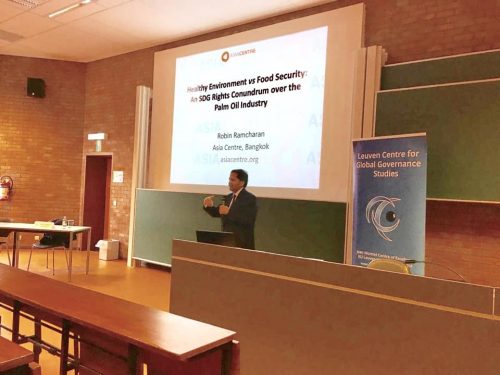
As states seek to address climate change resilience following the Paris Agreement by committing to ‘foster climate resilience and low greenhouse gas emissions development’, they appear to be willing in so far as such measures do threaten food production” (SDG Indicator 13.2.1). An analysis of the palm oil industry in Indonesia exposes a potential rights conundrum amidst the seventeen Sustainable Development Goals (SDGs). Asia Centre’s Dr. Robin Ramcharan dissected this apparent conundrum in relation to the Palm Oil industry in Indonesia in a lecture to the Leuven Center for Global Governance in Belgium on 20 December 2018. The palm oil production, which is dominated by Indonesia, followed by Malaysia, is one of the largest contributors to greenhouse gas emissions and deforestation. It is traded globally and brought in $18 billion to the Indonesian economy in 2017. At the same time it contributes to the livelihood of millions of small-hold farmer households in Indonesia and Malaysia and is healthier than other vegetable oils. This healthier vegetable oil is consumed by hundreds of millions in China, India and Pakistan and around the world as palm oil is used in many food products that we consume. The goal of a healthy environment (captured across Goals 6, 13, 14) is seemingly pitted against the right to food and food security (captured in Goals 2 and 3), which includes right to healthy and nutritious food. The SDGs seek outcomes that will advance human rights, though the goals are not framed in clear human rights terms, which is indicative of the discomfort that many states have with international human rights norms at the present time. The protection of the “environment” per se, or a “right to a healthy environment” is not articulated in international environmental law (IEL) or the SDGs, though they point to it. The international human rights regime perhaps considers the environment more amply, by recognizing the linkages between the environment and the realization of a range of human rights: life, health, food, water and housing. General Comments 14 and 15 of the Human Rights Committee have commented on Articles11 and 12 of the ICESCR, indicating that it includes access to sufficient, safe and affordable water for domestic and sanitation, the prevention and education of exposure to harmful substances including radiation and chemicals, or other detrimental environmental conditions  that directly or indirectly impact upon human health. In 2009, the UN Human Rights Council resolution 10/4 noted that “…climate change-related impacts have a range of implications, both direct and indirect, for the effective enjoyment of human rights including, inter alia,…the right to adequate food,…and human rights obligations related to access to safe drinking water and sanitation, and recalling that in no case may a people be deprived of its own means of subsistence.” This includes food security, a pre-condition for the right to food. It exists, according to the Food and Agriculture Organisation, “when all peoples, at all times, have physical, social and economic access to sufficient, safe and nutritious food that meets their dietary needs and food preferences for an active and healthy life.” The Universal Declaration of Human Rights proclaims in Article 25 that “Everyone has the right to a standard of living adequate for the health and well-being of himself and of his family, including food…” ICESCR Article 11 recognises the same. Procedurally, it recognises the duty of states to “improve methods of production, conservation and food distribute” and to “[take] into account the problems of both food-importing and food-exporting countries, to ensure an equitable distribution of world food supplies in relation to need.” General Comment 12 (1999) of the CESCR recognized “the right to adequate…is also inseparable from social justice, requiring the adoption of appropriate economic, environmental and social policies, at both the national and international levels, oriented to eradication of poverty and the fulfillment of all human rights for all.” It required States to adopt national strategies “to ensure food and nutrition security for all.” Indonesia’s palm oil industry faces this dilemma: ensuring adequate supplies of nutritious food for its peoples while addressing urgency of climate change effects. It is experimenting with measures such as moratoria on new palm oil plantations though this will not be enough. Moratoria decreed by the President have little impact on pre-existing permits and local administrations are not bound by these Presidential decrees. The EU and Norway both seek to assist Indonesia. Both seek to tackle climate change resolutely through the EU’s emphasis on renewable energy and, in Norway‘s case, by helping Indonesia offset costs of reduced deforestation. At the same time, the  EU is also a major buyer of palm oil from Indonesia, precisely for use in biofuel. Fortunately, oil palm requires less land, has higher yields, has a quick turn-around and requires lesspesticides. Palm oil cultivation is here to stay and its impact on the environment will continue, hopefully at a reduced pace. All measures to tackle the impacts on the climate must be balanced against the livelihoods and food security of millions in Indonesia and abroad.   Asia Centre will continue its exploration of human rights aspects of the SDGS and human rights and looks forward to future collaboration with the Leuven Centre for Global Governance.

Asia Centre Develops Partnerships in New Zealand

Asia Centre has built two partnerships around impact projects on Fake News and the Rohingya refugee crisis in Southeast Asia during its New Zealand outreach from 21-31 October 2018 to seek out collaboration opportunities. Dr. James Gomez, Chair, Board of Directors, Asia Centre, kicked off the first leg of the trip as an Activist-in-Residence at the Massey University-Center for Culture-Centered Approach (CARE) on October 23rd-26th. One focus during this residency was to collaborate with CARE on “Communication, Democracy and Freedom in Asia” highlighting the “Fake News” challenge to democracy. The issues were delivered in the form of a public lecture and around a co-authored CARE White Paper with Professor Mohan Dutta, Director of CARE. Dr. Gomez was also a keynote speaker on “Fake News” and its impact on diversity at Inclusive New Zealand Conference on 30-31 October 2018.  The conference entitled “Our Space – Mauri Tū, Mauri Ora” centred around creating vibrant and inclusive communities. The conference brought together community organisations, academics, local authorities and individuals with lived experience to share their experiences, build networks and strengthen partnerships. Michael White,  CEO of Inclusive New Zealand and an Asia Centre associate facilitated the opportunity.  Both CARE and Inclusive New Zealand have agreed to be partners for Asia Centre’s International Conference on Fake News and Elections in Asia, 10-12 July 2018. In relation to the Rohingya refugee project, on 23 October 2018, Dr. Gomez, during his activist-in-residence at CARE, Massey University, conducted a workshop on developing an advocacy strategy at the ASEAN level on the issue. On October 31st, Dr Gomez gave a well-attended talk titled the “Rohingya Crisis: Is Human Rights Advocacy Working?” to the Political Science and International Relations Programme of Victoria University of Wellington. During his time there, Dr Gomez was interviewed by Lynda Chanwai-Earle, a researcher from Asia Media Centre at the Asia New Zealand Foundation. The article entitled Key Issues: Rohingya Crisis featured the role of ASEAN in the refugee crisis. Dr. Gomez also interacted with Dr Murdoch Stephens of the Doing Our Bit campaign to double the quota of Rohingya refugees to New Zealand. Dr. Gomez also took time on 29 October 2018 to engage with Pacific issues by attending the Council for International Development, Pacific Reset: How will it change the way we work? Asia Centre will be building on these partnerships and projects and will be announcing details of progress as things develop.

Asia Centre Reaches Out to Australian Networks

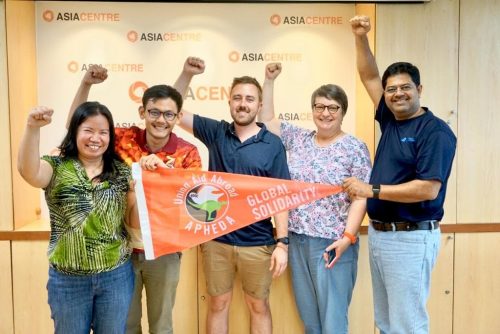
15 November 2018 – The return visit by Union Aid Abroad (APHEDA) Jill Biddington and Tom Addy to discuss collaboration marks Asia Centre successful outreach to activist networks in Australia.  Dr. James Gomez, Chair, Board of Directors of Asia Centre visited Sydney and Canberra from 16 to 21 October 2018 where he gave several public talks and engaged with academics and activists to build solidarity as well as identifying opportunities for policy advocacy in Australia for issues affecting Southeast Asia. At the University of Sydney, co-hosted by Sydney Southeast Asia Centre and Malaysia and Singapore Society of Australia (MASSA), Dr Gomez spoke on developments in Singapore during the session  the joint seminar in Political Contestations in Malaysia and Singapore.  At the Sociology Department of Macquarie University, he gave his insights on “Fake News and Social Media: Freedom of Expression in S.E. Asia” At the Forum “Human Rights and Labour Rights in Singapore: Forum”  hosted at Unions NSW Auditorium, Dr Gomez spoke on the need for international solidarity. Out in Canberra, Dr Gomez visited the Parliament of Australia with Luke Whitington, of SEARCH Foundation and Dr Nicholas Harrigan, Macquarie University, and had several informal meetings with senators.  Asia Centre’s outreach Down Under, comes on the back of the Centre’s engagement in the last few years with academics from universities in Australia who have regularly participate in the Centre’s activities. This includes a Roundtable on the Rohingyas Crisis which was co-hosted by both Asia Centre and Monash University. This, in part, is connected to Dr. Gomez’ own association with Monash University first as a PhD student and latter as its Deputy Associate Dean (International Affairs) and Head of the Public Relations Department, Faculty of Arts. More recently,  Asia Centre was the recipient of its first New Colombo Plan Scholar – Elise Schuster an undergraduate from the University of Queensland in Brisbane. Her internship at Asia Centre was supported by the through the Australian Government’s Department of Foreign Affairs and Trade (DFAT). Asia Centre will have a second incoming New Colombo Scholar, Oliver Thompson, will start its internship in 2019. Asia Centre, will continue engage with its Australian networks as part of its efforts increase the Centre outreach beyond Southeast Asia. ***

Asia Centre Participates in Workshop on Freedom of Religion or Belief

  3 November 2018 – Dr. Robin Ramcharan analysed the role of youth interaction with religious leaders in constraining religious extremism during a workshop on freedom of religion or belief (FoRB), organised by the Rule of Law Program of the Konrad Adenauer Stiftung and its partners in Singapore, from 29 to 30 October 2018.  He noted analysis worldwide that showed the impact of marginalization and of religious-dissonance on the progression of youth from their regular lives towards extremist thoughts  and sometimes violence. Research has shown that religious leaders can play a vital role in youths’ search for theological consistency in their particular environments and in critically thinking about their own faiths, especially in a world awash with fake news on the internet.   Globally, the international community’s peacebuilding experience has led to calls for the integration of religious leaders in post-conflict peacebuilding and in sustaining peace. The mere instrumentalisation of religious leaders in support of liberal goals is seen to be insufficient for laying the foundations for peace. Asia Centre thus continues to engage in regional discussions and with emerging networks on FoRB in Southeast Asia. It aims to produce an updated regional analysis on FoRB in the Universal Periodic Review process as revealed in the third cycle. FoRB and fake news is also set to feature in the Centre’s conference on Fake News and Elections in Asia, to be held from 10 to 12 July 2019 in Bangkok. Email contact@asiacentre.org to submit abstracts or to partner for the conference. ***  

IFC #4: Asia Centre marks UN Day with debate on “Rice before Rights”

International Faculty Club (24 October 2018) – The argument that development priorities take precedence over civil and political rights threatens to upend the international human rights movement, which has advocated for the indivisibility of economic, social and cultural rights (ESCRs) and civil and political rights (CIVPOL).  This argument is advanced by China and those attracted by its model of governance and growth. However, as Canadian Ambassador Donica Pottie noted pointed out during the roundtable on ‘Rice before Rights”, held on 24 October 2018, western countries share responsibility for this situation, as they chose to emphasize civil and political rights over ESCRs in their foreign policies.  Experts at the event, held on UN day, noted the contributions of the UN but noted major challenges of defending human rights in the contemporary geopolitical context of a rising China, the disengagement of the US  and Europe, and a resurgent Russia. In addition to the above normative challenge above, it was noted that the rules-based multilateralism required for advancing international human rights standards is also under threat. Furthermore, civil society faces a difficult task as it faces shrinking space for advocacy as well as financial constraints. Its ability to effect progressive change was questioned.       The need for a reinvigorated humanism was noted, with all participants calling for a ‘new mandala’ that placed the well being and emancipation of the person at the centre of all thought and action.     The roundtable discussion, attended by some 40 guests, took place during Asia Centre’s International Faculty Club (IFC) and featured Ambassador Pottie, as well as Dr. Imtiaz Ahmed from the Centre for Genocide Studies, University of Dhaka, Dr. Latifa Laghzaoui, Webster University Thailand and Mr. Dipendra K C, School of Global Studies, Thammasat University. The event enjoyed the support of the Taiwan Foundation for Democracy.     Asia Centre will continue to engage on human rights and contemporary development, human rights and peace issues during the IFC, which is an innovative mechanism that brings together academics, civil society, graduates students, policy makers and other stakeholders together to share ideas and forge collaborations.

Asia Centre’s Japan Outreach

As part of Asia Centre’s regional outreach, Dr. James Gomez, Chair, Board of Directors, Asia Centre visited Tokyo, Japan during the first week of October 2018. This visit builds on a series of activities over the last three years the Centre has undertaken with Japanese academia, civil society and other supporting institutions.    During the visit, on 2 October, Dr. Gomez was invited by Professor Yasushi Katsuma to lecture on “Fake News and Elections in Southeast Asia” for the graduate students at the Graduate School of Asia-Pacific Studies, Waseda University in Tokyo. One of the main discussion points was around the question “should mainstream media and it’s journalists be held legally accountable rather then getting away with apologies for publishing fake news?” The public lecture was part Asia Centre’s efforts to engage with Japanese academia on the issue of fake news in the run up to its 2019 conference.   On the civil society front, 3 October, Dr. Gomez met with Mr. Hideki Wakabayashi, Executive Director, a tokyo-based Japan NGO Center for International Cooperation, and discussed Asia Centre’s participation in the G20 NGO summit for April 2019.       Asia Centre is also a host to its first Japanese intern, Kasumi Shiraishi,  a postgraduate student in International Relations at Waseda University, Japan who is undertaking a review of fake news and cyber security legislation in East Asia and corresponding with Japanese university on the Centre’s Fake News conference.                Other visitors included Dr. Junko Nakajima, a dentist from Nagano, who wrote to Dr. Gomez about Singapore’s longest serving political prisoner Dr. Chia Thye Poh. Dr. Nakajima and her sister visited Sentosa some 27 years ago and had tea with Dr. Chia at his house in Fort Siloso. A poignant story, Dr. Nakajima shared her photos and letter with Asia Centre.      Asia Centre’s outreach in Japan, comes on the back of its cooperation in 2017, with the Japan Foundation in Bangkok to host an intellectual exchange programme on Japan-ASEAN Relations which featured academic Dr. Takashi Tsukamoto and lawyer and Asia Centre Associate Akiko Sato.      Earlier in the year, the Centre representatives visited and held discussion with the Japanese Society for the Promotion of Science Bangkok Director, Dr. Kunaiki Yamashita.          In 2016, Asia Centre’s Dr. Robin Ramcharan facilitated a Focus on Life discussion and networking session New York-based Japanese photographer and anti-death penalty activist Toshi Kazama. The Japan outreach is part of a series regional activities undertaken by the Asia Centre to highlight its work and build partnerships.

© 2015 ASIACENTRE, BANGKOK, THAILAND. – INFO@ASIACENTRE.ORG