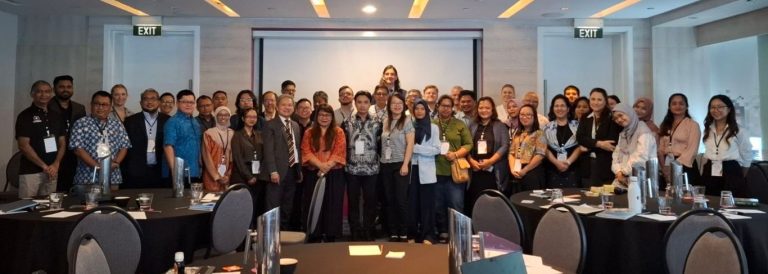
With the 9th Southeast Asia Freedom of Religion or Belief (SEAFORB) Conference, which took place from 27 – 28 November 2025 in Jakarta, Indonesia, the Network continues to serve as a key regional mechanism for coordination, knowledge-sharing and joint advocacy. Guided by its 2024–2026 Strategic Plan, the SEAFORB Conference brought together 48 members and partners from across the Southeast Asian region and also from certain countries beyond the region to examine emerging FoRB challenges, develop collective strategies, and reinforce solidarity in an increasingly restrictive environment.
The SEAFORB Conference is the annual regional gathering of the SEAFORB Network, a civil society–led platform established to promote and protect freedom of religion or belief across Southeast Asia. Since its inception in 2017, the SEAFORB Network have served as a platform to strengthen the capacity of human rights defenders, document FoRB violations, and build cross-border alliances to address rising threats to religious and civic freedoms.
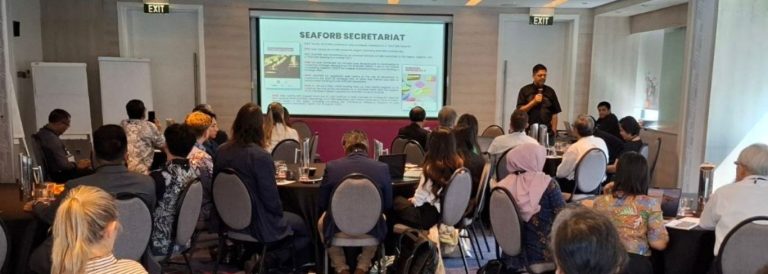
The conference program commenced with welcome remarks by Dr. James Gomez of Asia Centre, who also serves as a member of the SEAFORB Network Steering Committee (SC) and Head of Secretariat. During his remarks, Dr Gomez informed that Asia Centre began participating in SEAFORB conferences in 2016, became a Steering Committee member in 2020 and was appointed as SEAFORB’s first Secretariat in 2024. As the Secretariat, Asia Centre supports the Steering Committee to realise the SEAFORB Network’s mission across Southeast Asia and beyond.
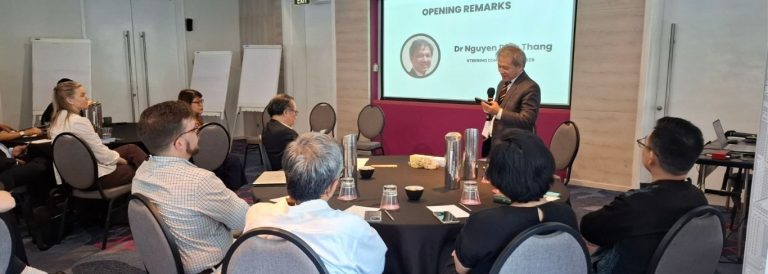
This was followed by the opening remarks by other SC members, Dr. Nguyen Dinh Thang and Eugene Yap, who both set the FORB context and scene in the region. Dr. Nguyen Dinh Thang reflected on the origin of the SEAFORB Conference, recalling its first convening in Bangkok a decade ago that concluded with the Bangkok Declaration committing advocates to defend individuals and communities facing discrimination or persecution based on religion or belief. Eugene Yap traced SEAFORB’s evolution from a fully sponsored conference in 2015 to an established regional network by 2018, and eventually to a Secretariat structure to ensure better coordination, information-sharing, and support for members, noting that a network cannot function effectively without a dedicated coordinating body, which led to the appointment of Asia Centre as the Secretariat.
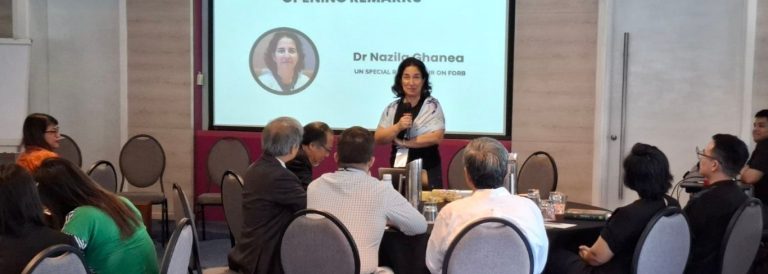
Prof. Nazila Ghanea, UN Special Rapporteur on Freedom of Religion or Belief, emphasized the vital role of civil society in supporting the UN FoRB mandate, noting that it relies on civil society for reality checks, reporting, and submitting allegations. She stressed that freedom of religion or belief is a core human right, saying it “gives meaning; it’s worth sacrificing everything else for it,” and highlighted the importance of coordination among UN agencies, governments, and civil society, as well as recognizing and accommodating diversity in religious practices. The opening session set the tone and shaped the momentum for the two-day discussions.
The first day of the conference featured two panel discussions, two workshops, and group sessions addressing key FoRB issues in Southeast Asia. The day began with the “Reality Check for 2025 & Beyond” workshop, where participants mapped trends and identified the top five thematic priorities. The first panel discussion focused on constitutional, legal frameworks, and extra-judicial measures in Cambodia, Laos, Myanmar, Thailand, and Vietnam, followed by a second panel covering Brunei, Indonesia, and Malaysia, with open Q&A sessions highlighting national and regional FoRB concerns.
After lunch, the “People on the Move & Transnational Repression” session examined vulnerabilities of displaced persons, refugees, and diaspora communities, while the “National ID Cards and FoRB Restrictions” session explored exclusion and discrimination arising from national ID systems. In the afternoon, participants engaged in group discussions on thematic issues at country and regional levels, followed by consolidations presenting national trends, regional challenges, and strategic priorities.
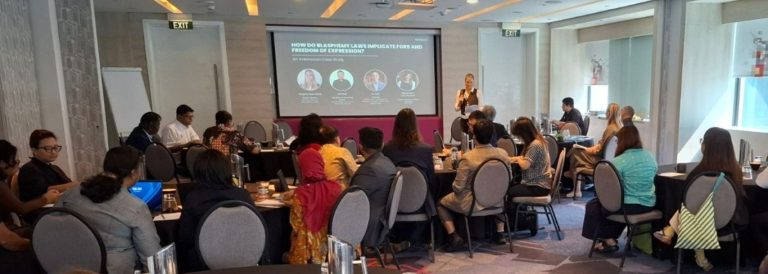
On the second day of the conference, 28 November 2025, participants engaged in four main sessions addressing key FoRB issues and strategic actions. The day began with a Recap and Guidance session, followed by the first session, “How do Blasphemy Laws Implicate FoRB and Freedom of Expression? An Indonesian Case Study,” which examined blasphemy laws, proselytisation, hate speech, and digital restrictions on FoRB. After the tea break, the “Intersectoral Engagements: Building Partnerships for Advancing FoRB” session explored practical approaches to engage religious leaders, media, political representatives, academia, students, and technology partners, identifying opportunities for collaboration and sustainable advocacy.
Following lunch, “Action Planning: Identifying Future Actions in the Region” involved group discussions to review past FoRB actions, address gaps, and develop action plans for national, regional, and international advocacy, networking, and capacity building. After a short tea break, the Open Plenary on International & Regional Advocacy Engagements focused on leveraging international and regional mechanisms to inform SEAFORB’s future programming.
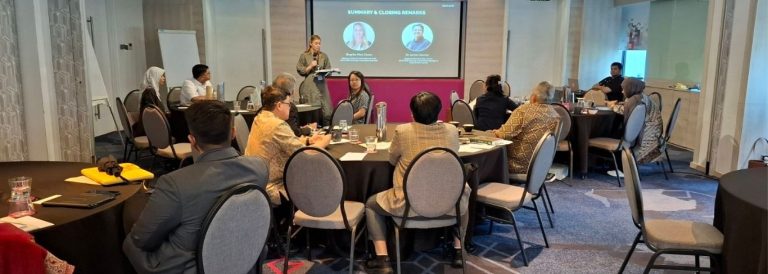
The Conference concluded with a Summary delivered by Birgitte Moe Olsen, Steering Committee Member. She highlighted key insights, outcomes, and next steps for advancing FoRB in the region. Birgitte reflected on the need to balance universal rights language with local contexts, noting, “Those who are mostly in need of FoRB are those who will kind of lose out if we divert away from using FoRB and the rights language.” She also emphasized that adopting a human rights–based approach is essential to effectively protect the rights of minorities, ensuring that advocacy for freedom of religion or belief remains inclusive, equitable, and grounded in internationally recognized standards. The point being, “if we do not stand for the human rights, the first victims are the minorities”.
In the Closing Remarks Dr. James Gomez of Asia Centre, Steering Committee Member and Head of Secretariat, thanked everyone for making the 9th SEAFROB conference productive. He then proceeded to have a conversation with UN Special Rapporteur for Freedom of Religion or Belief, Prof. Nazila Ghanea, asking for her key takeaways. She highlighted that this year’s SEAFORB Conference was energetic, realistic, and creative, with participants proposing imaginative ways to mainstream freedom of religion or belief across society. She added that the discussions left her feeling highly energised. Watch the conversation between Prof. Nazila Ghanea and Dr James Gomez about the 9th SEAFORB Conference 2025 here.
Attendees similarly also noted that this year’s SEAFORB Conference, returning after a two-year hiatus, was particularly unique and energetic. Building on the foundations of previous gatherings, participants praised the dynamic discussions, practical workshops, and collaborative approach.
Read about the previous SEAFORB Conference here.