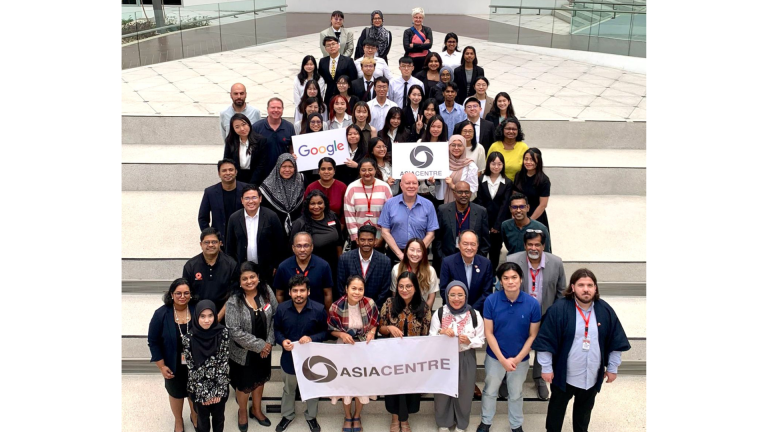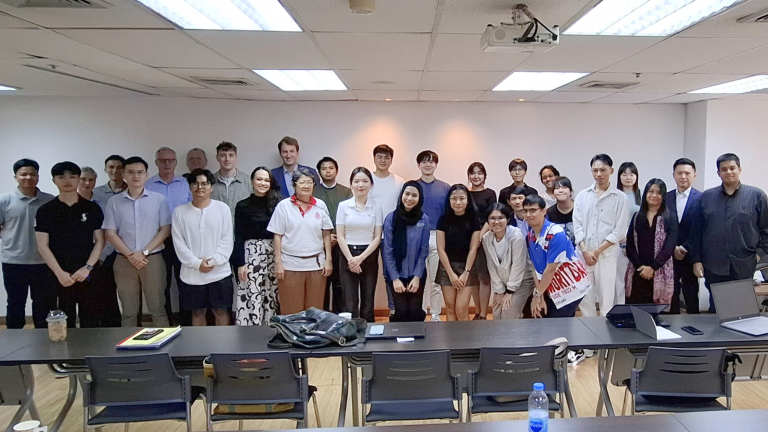
Indigenous Peoples’ (IPs) rights in India are being subverted and this is aided by climate disinformation. This was the thrust of the findings communicated at the national convening that reviewed the preliminary outcomes of Asia Centre’s forthcoming report, “Climate Disinformation in India: Subverting Indigenous Peoples’ Rights”.
The meeting, organised in partnership with International Media Support (IMS) and School of Communication, Fine Arts and Design, Sister Nivedita University (SNU), took place on 9 December 2025 at the SNU Auditorium, Kolkata.
The convening brought together journalism students, media academics and journalism professionals to discuss how climate disinformation intersects with national development narratives and the rights of Indigenous communities in India.
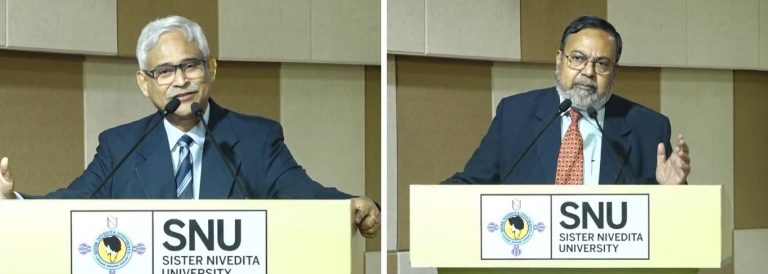
The event began with welcome remarks from Prof. Dhrubajyothi Chattopadhyay, Pro-Chancellor, SNU. Dr. Snehasis Sur, President of the Kolkata Press Club. Prof. Chattopadhyay fondly recounted the 10 year engagement he had with Asia Centre and announced the MOU signing between the two organisations after the event. Dr. Sur focused on explaining how climate disinformation, especially regarding the rights of Indigenous Peoples in India, undermines their livelihoods and well-being, and that awareness of this misinformation is the first step to addressing it. The welcome session established the tone and programme for the day.
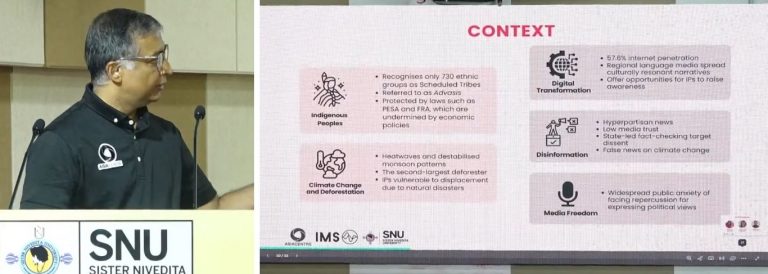
Following this, Sanjay Gathia, Programme Manager at Asia Centre, presented the key findings of the draft India report, outlining how climate disinformation spread through both online and offline channels. He explained that such disinformation undermines the existing rights and legal protections of Indigenous Peoples in India. As the country prioritises development, it criminalises communities as “encroachers,” fuels forced evictions and represses environmental defenders. His presentation provided the basis for the discussions and Q & A session.
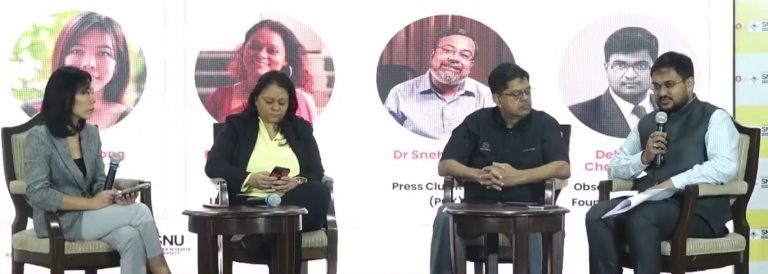
The convening then moved into a Roundtable Discussion, moderated by Vanessa Chong, Programme Manager, IMS. She kicked off the session by highlighting IMS’s collaboration with Asia Centre on climate disinformation, which forms part of a broader global programme focused on amplifying Indigenous voices to counter climate disinformation worldwide.
Discussants included Dr. Minal Pareek of SNU, who saw the report as highly relevant for raising awareness among media students and journalists. She said, compared to some other countries, media literacy efforts in India are lagging behind. Given the rise of AI and the increasing exposure of young people to digital media, she emphasised the urgent need to prioritize media literacy in India to better equip students and society to navigate information critically.
Dr James Gomez, Regional Director, positioned the report as a practical “toolbox” for journalists and media students. He said the report featured case studies and guidance on countering disinformation which can be used to generate story ideas. He also noted that disinformation has evolved from entirely false information to manipulations and half-truths. While fact-checking and media literacy were necessary to respond to false news, Dr. Gomez noted these actions took up resources, resources that can be used to shore up the truth instead.
Mr. Debajyoti Chakravarty, Research Assistant at the Observer Research Foundation, Kolkata, emphasized on the report’s value in examining the impact of climate disinformation on Indigenous Peoples and the limitations of existing laws in addressing it. He emphasized the need for AI-driven solutions tailored to Indian and Indigenous languages. Among a range of ideas, he also stressed the potential of local, context-specific solutions to combat disinformation effectively, highlighting innovative initiatives like multilingual apps that provide real-time, trustworthy information.
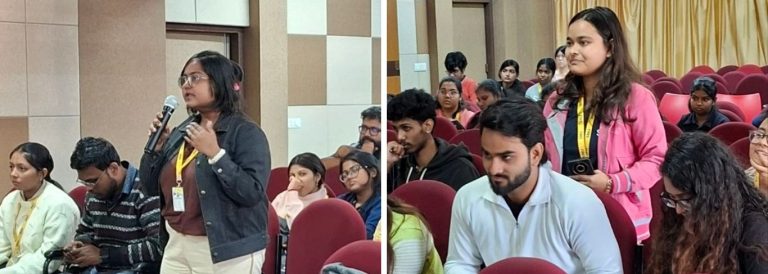
The day moved on with a brief interaction with the participants. In one intervention, a media student shared that climate misinformation and broader social injustices are causing entire Indigenous groups in India to disappear, along with their culture, knowledge systems, and languages.
In another interaction, the question centred on how young people, students, or content creators can contribute to debunking climate disinformation on social media platforms like YouTube, Instagram, and Twitter. The discussants emphasized that awareness, fact-checking, and responsible sharing are key, advising that users verify information through certified portals, avoid sharing content impulsively, and use constructive formats to engage audiences effectively. They also highlighted the importance of creating catchy, targeted content that translates in-depth research into formats suitable for different audiences.
A final question regarding the role of local and community-based media, was answered by several discussants. Dr. Gomez stressed the need to empower Indigenous media to report the truth about their communities while providing them with skills, resources, and training. Mr.Chakravarty highlighted the role of mainstream media in amplifying local stories, showing that Indigenous peoples are not just victims of climate change but also contributors to climate action through good practices on the ground. Ms Chong responded by suggesting that constructive journalism, focusing on solutions practiced by Indigenous communities, can safely engage audiences while showcasing effective, on-the-ground practices.
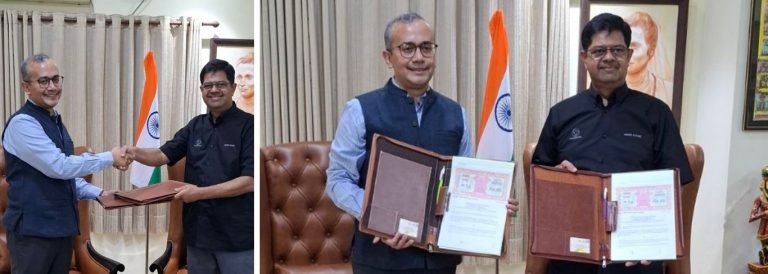
Following the event an MOU between Asia Centre and Sister Nivideti University was signed. The formalisation of the partnership is expected initially to yield more joint activities and pave the way for SNU students to apply for internships at Asia Centre.
Asia Centre’s next report is on climate disinformation in Malaysia, “Climate Disinformation in Malaysia: Appropriating Indigenous Peoples’ Rights”. The findings will be presented at a dedicated national convening on 7 January, where stakeholders will once again gather to review the report, validate insights, and discuss collaborative actions moving forward.
For highlights of the National Convening on Climate Disinformation in India: Protecting Indigenous Peoples’ Rights, visit Asia Centre’s TikTok : https://tinyurl.com/jbtnwa9s