FICA, One Year On: Impacts and Developments

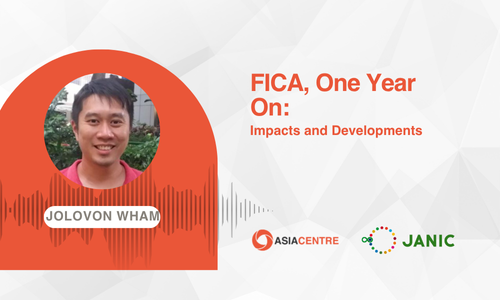
In 2021, Singapore enacted the Foreign Interference (Countermeasures) Act, known as FICA. On paper, it aims to protect Singaporean politics from foreign interference with two sets of provisions. The first provision targets information campaigns. This provision empowers the government to shut down organisations deemed to communicate “on behalf of a foreign principal” with the aim of manipulating Singapore’s domestic political discourse. The second provision concerns measures to counter local proxies or politically significant persons (known as PSPs). Under this provision, personalities suspected of being foreign agents can be monitored. The bill has raised several concerns, primarily due to its vague and broad definition of what constitutes foreign interference, which may be used to suffocate the country’s civic space and curb critical political engagement. In this podcast episode, Jolovan Wham discusses the impacts and developments of FICA after its introduction in 2021.   Jolovan Wham is a social worker and activist who works on issues concerning migrant workers, the death penalty, and civil and political rights. This podcast episode is part of the Foreign Interference Laws in Southeast Asia series, in partnership with the Japan NGO Centre for International Cooperation. To learn more about foreign interference laws, read Foreign Interference Laws in Southeast Asia: Deepening the Shrinkage of Civic Space.

State-sponsored Disinformation To Impact Thailand’s Election Integrity

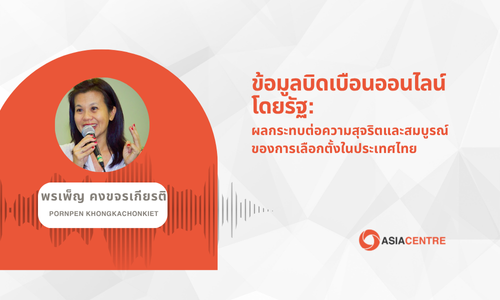
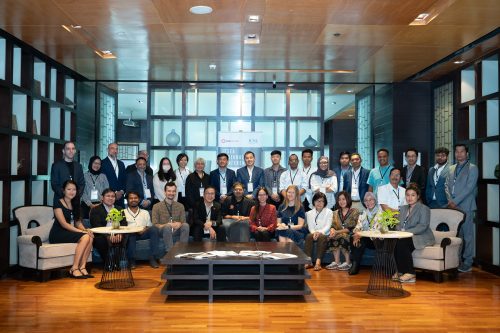
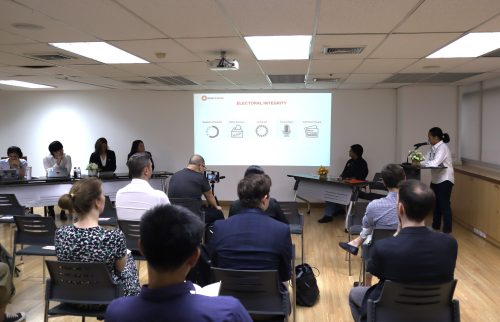
On 28 April 2023, Asia Centre held a discussion panel for the launch of its latest report “State-Sponsored Online Disinformation: Impact on Election Integrity in Thailand”. The discussion panel assesses how state-sponsored disinformation or Information Operations (IOs) impact Thailand’s electoral integrity. A week after releasing, Bangkok Post, an English-language daily newspaper, published an opinion piece,  State Lies Hurt Election Integrity written by Dr James Gomez and Korbkusol Neelapaichit.  Besides, the key research findings were also promoted via an online campaign with infographics posted on Asia Centre’s social media platforms, Facebook, Linkedin, Instagram, and Tiktok. The event, at the Centre’s Meeting Hub, was attended by representatives from diplomatic services, civil society organisations, human rights activists, lawyers, journalists and those from the tech sector.  Korbkusol Neelapaichit, Researcher, Asia Centre who led the research for the report, highlighted four key impacts of state-sponsored disinformation on Thailand’s electoral integrity.  First, using state resources to promote a positive image of the establishment undermines the integrity of elections since the government uses its incumbent advantage over opposition parties for positive electoral messaging. Second, IOs are weaponised to harass politicians and activists from marginalised groups such as women, LGBT+ and ethno-religious minorities, obstructing their meaningful electoral participation. Third, they distort information related to the electoral process and discredit selected political parties and their policies, depriving voters of verified alternative information for their decision-making. Fourth, state-sponsored disinformation stir hatred and exacerbate existing ideological divisions within society leading to extreme political polarisation.  Moderated by Asia Centre’s Dr James Gomez, the findings were further discussed by Kunthika Nutcharut, Attorney from Krisadang Law and Accounting Office, Dr. Sipim Sornbanlang, Lecturer from Srinakharinwirot University, Akarachai Chaimaneekarakate, Legal Fellow from Thai Lawyers for Human Rights (TLHR) and Pornpen Khongkachonkiet, Director of Cross-Cultural Foundation. Kunthika Nutcharut pointed out how disinformation campaigns have been sponsored by the state from time to time to stir hatred in society. In the past, disinformation campaigns were disseminated via state-owned radio stations. Today, IOs are carried out online especially to attack human rights defenders and political activists.  From a cyber security perspective, Dr. Sipim Sornbanlang provided insight into why the state sponsors IOs. She explained that the state agencies, especially the military, run IOs as part of their mission to protect the monarchy and state institutions. This stems from a perception that democratisation threatens national security.   In line with the report findings, Akarachai Chaimaneekarakate described that IOs are strategised to attack both individuals and organisations. He validated his statement by sharing several legal cases, where there was evidence of state-supported information operations. However, he noted, there is no attempt to hold the state to account.  Using examples from Thailand’s South where there is ongoing ethno-religious conflict, Pornpen Khongkachonkiet explained that IOs form part of state suppression of expression in the South. Such actions, she said, curtail meaningful political participation.    In the report, Asia Centre recommends relevant stakeholders take the following key actions: restrain from undertaking information operations; identify state agencies and report the type and targets of information operations; focus on providing voters with reliable and verified electoral information; and take measures to ensure electoral integrity through free and fair elections. These and other measures will help cast a light on state-sanctioned information operations with a view to addressing their impact on election integrity and political participation. Read the full report here. You can also watch the TikTok video of the report launch event here.  This report is Asia Centre’s third baseline study on Thailand. In June 2022, the Centre released its first report entitled Thailand Computer Crime Act: Restricting Digital Rights, Silencing Online Critics which reviews the provisions of the 2007 Computer Crime Act (CCA) and its 2017 amendment, as well as their impact on digital rights in Thailand. Later in August 2022, the Centre released its second report on Internet Freedoms in Thailand which reviews and analyses legislation that impacts internet freedoms in Thailand.  Asia Centre is a civil society research institute in Special Consultative Status with the United Nations Economic and Social Council. It serves as a knowledge partner and undertakes evidence-based research as well as provides capacity-building training for end beneficiaries. If you would like to collaborate with the Centre, please send an expression of interest to contact@asiacentre.org. 

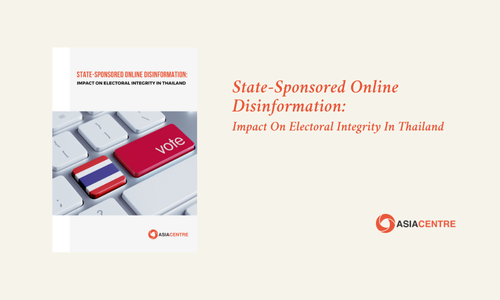
State-Sponsored Online Disinformation: Impact On Electoral Integrity In Thailand

Download Full Report State-Sponsored Online Disinformation: Impact On Electoral Integrity In Thailand examines government-backed disinformation campaigns, known as information operations, and assesses their impact on the integrity of elections. The report identifies the actions of key domestic and international state actors that contribute to the false information campaigns. Based on the evidence of the existence of information operations in Thailand and the absence of effective legal and non-legal measures to address them, the 2023 Thai General Election is expected to experience its share of state-sponsored disinformation over social media platforms. The report identifies four types of information operations in Thailand that stand to impact electoral integrity: 1) using of state resources to create and disseminate pro-establishment content which promotes a positive image of the government, army and monarchy; 2) weaponising disinformation to harass politicians and activists from marginalised groups such as women, LGBT+ and ethno-religious minorities which obstructs their meaningful electoral participation; 3) distorting information related to the electoral process and discrediting selected political parties and their policies thereby depriving voters of alternative information for their decision-making; and 4) stirring hatred and exacerbate existing ideological divisions within society leading to extreme political polarisation. Given these issues, Asia Centre recommends relevant stakeholders take the following key actions: restrain from undertaking information operations, identify state agencies and report the type and targets of information operations, focus on providing voters with reliable and verified electoral information, and take measures to ensure electoral integrity through free and fair elections. These and other measures will help cast a light on state-sanctioned information operations with a view to addressing their impact on election integrity and political participation.  

Asia Centre Engages Timor-Leste’s Political Leadership Over Internet Freedoms

From 13-17 February 2023, Dr. James Gomez, Asia Centre’s Regional Director, visited Dili, the capital city of Timor-Leste to engage with Timor-Leste’s political leadership, parliament and other stakeholders on the findings from Asia Centre and International Center for Not-for-Profit Law (ICNL)’s report Timor- Leste: Internet Freedoms Under Threat and to boost future collaboration with local stakeholders. Dr. Gomez kicked off his visit on 13 February 2023 with a bilateral meeting with President of the National Parliament, Aniceto Guterres Lopesthe. He handed over the report and discussed how the parliament had a role in improving Timor-Leste’s internet freedoms.  While at the Parliament, Dr. Gomez was pleasantly surprised to learn from Pinto Cardoso, Director of Parliamentary Research and Advisory Office that the Asia Centre and ICNL report and Asia Centre’s op-ed in the Jakarta Post, “Timor-Leste’s Internet Freedoms at Risk”, was cited in a briefing note on the cyber security law to Parliament. From 14-16 February 2023, Dr. Gomez called on MP Antonio Tilman, Deputy-Secretary of the Board and member of the Kunto Party, Isabel Maria B.F. Ximenes (President of the Bench, Frente Mudanca), Antonio Benevedious, (President of the Bench, United Party for Development and Democracy (PUDD) and David Dias Ximenes, President of the Revolutionary Front for an Independent East Timor (FRETILIN) to discuss Asia Centre’s report on internet freedoms in Timor-Leste. The message was political parties and parliamentarians have a role in improving internet freedoms.  The highlight of the trip was a meeting with the President of the Republic, Dr. José Manuel Ramos-Horta, at the Presidential Palace. The meeting was a closed-door meeting in which several issues were discussed including the findings from the Asia Centre and ICNL report. Following the meeting, Dr.Gomez addressed a media door-stop, in which he shared with journalists some public information on Asia Centre’s plans to engage with Timor-Leste’s universities and think-tanks. The meeting with President Ramos-Horta was widely covered over local media. During this trip, Dr. Gomez also visited Universidade da Paz (UNPAZ), a local private university and discussed with its representative possible future activities. Other stakeholders, Dr. Gomez met Virgilio da Silva Guterres Lamukan, Ombudsman, on 16 February 2023. All in all, Asia Centre’s engagement with the political leadership of Timor-Leste and other stakeholders set the framework of future cooperation with political parties, parliamentarians, the parliamentary secretariat and its research and policy unit, the government ombudsman, and representatives of Timorese think-tanks and universities. The report, in partnership with International Center for Not-for-Profit Law (ICNL), analyses the state of internet freedoms against the background of emerging national legislation pertaining to online content and privacy of data. Read the full report here.  Asia Centre is a civil society research institute in Special Consultative Status with the United Nations Economic and Social Council. It serves as a knowledge partner and undertakes evidence-based research as well as provides capacity-building training for end beneficiaries. If you would like to collaborate with the Centre, please send an expression of interest to contact@asiacentre.org.

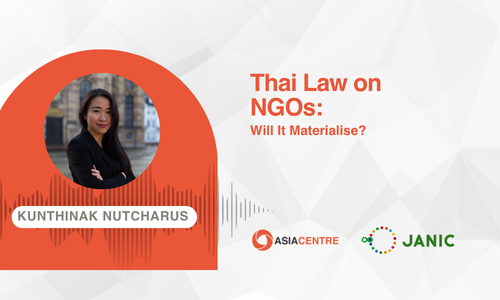
Thai Law on NGOs: Will It Materialise?

In February 2021, the Thai Cabinet approved in principle the draft Act on the Operation of Not-for-profit Organisations. This law would enable Thai officials to unilaterally order the temporary or permanent closure of non-profit organisations that, through their actions, adversely affect Thailand’s relations with countries. The international community has condemned the draft law since it would systematically violate fundamental rights like freedom of association and freedom of expression of non-profit organisations. Additionally, its provisions would restrict the collaboration between local and foreign CSOs. After resistance and pushback from both domestic and international stakeholders, the draft law was temporarily put on hold. In this podcast episode, Kunthika Nutcharut talks to Asia Centre about what drove the momentum of this draft law and forecasts its future after the 2023 general election. Kunthika Nutcharut has been a lawyer since 2015. She moved back from abroad and chose to become a lawyer who helps young Thai political activists with cases related to freedom of expression. She is best known for her role as a criminal defense attorney, where she represents many of the leading political cases in Thailand at the moment. This podcast episode is part of the Foreign Interference Laws in Southeast Asia series, in partnership with the Japan NGO Centre for International Cooperation. To learn more about foreign interference laws, read Foreign Interference Laws in Southeast Asia: Deepening the Shrinkage of Civic Space.

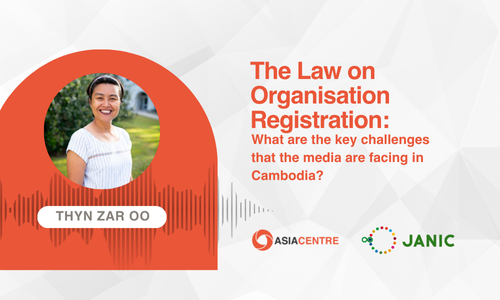
The Law on Organisation Registration: its impact on Myanmar CSOs

In 2022, the Myanmar Junta enacted the new Law on Organisation Registration, repealing the previous Registration of Organisation Law 2014. This law regulates the registration of NGOs and INGOs. It affects, primarily, the latter. With the new law, at least 40% of the executive membership of an INGO must be made up of Myanmar citizens. Furthermore, it also expands the requirements an INGO must meet in order to operate in the country, such as obtaining approval of the relevant authorities regarding its intended programmes and activities. Observers believe that the law is part of the Junta’s attempt to restrict CSOs’ advocacy on human rights and reimplement the “4 cuts strategy” to undermine ethnic militias by cutting their access to food, funds, information and recruits. In this podcast episode, [name] talks to Asia Centre about the impact that the Law on Organisation Registration has for Myanmar CSOs’ advocacy on human rights. Thyn Zar Oo is a Resident Scholar at The Public Law Center (TPLC) at the Tulane University School of Law. Oo is the Co-Founder and Program Director of the Public Legal Aid Network (The PLAN) in Myanmar (Burma). With background in Industrial and Labor Relations, Project Administrations, Access to Justice and Rule of Law, Oo had more than twenty five years of private and public sector legal experience in Myanmar and Asia-Pacific. This podcast episode is part of the Foreign Interference Laws in Southeast Asia series, in partnership with the Japan NGO Centre for International Cooperation. To learn more about foreign interference laws, read Foreign Interference Laws in Southeast Asia: Deepening the Shrinkage of Civic Space.

Rhetoric of Foreign Interference in Cambodia’s 2023 General Election

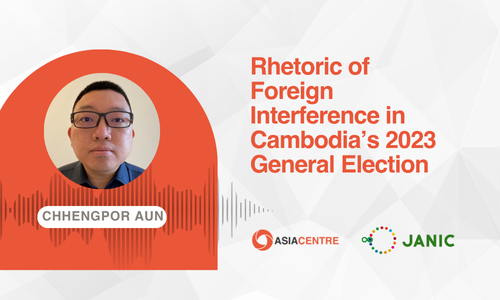
The Royal Government of Cambodia has regularly used rhetoric of foreign interference to accuse members of civil society organisations and opposition political parties of collaborating with international actors to corrupt Cambodian society. For example, in 2017, Kem Sokha, former leader of the opposition party CNRP – which was dissolved by the Supreme Court in the same year – was arrested for treason, and accused of colluding with the United States to topple the Cambodian government. The ruling party has implemented several measures such as amending the constitution to ban Cambodians holding dual nationalities from holding high-ranking political positions, citing the need to strengthen national loyalty and restrict foreign interference. Against this backdrop, will the foreign interference bogeyman continue to be a central campaign rhetoric by the ruling party CPP in the upcoming general elections in July 2023? In this podcast episode, Chhengpor Aun talks to Asia Centre about foreign interference, elections, and politics in Cambodia. Chhengpor Aun is a graduate student at the Hertie School in Berlin, studying international relations and security. Until 2022, he was the deputy bureau chief for the Voice of America in Phnom Penh, Cambodia. A journalist for eight years, he covered Cambodian and Southeast Asian politics, China-U.S. competitions in the Indo-Pacific, and human rights. This podcast episode is part of the Foreign Interference Laws in Southeast Asia series, in partnership with the Japan NGO Centre for International Cooperation. To learn more about foreign interference laws, read Foreign Interference Laws in Southeast Asia: Deepening the Shrinkage of Civic Space.

Asia Centre Launches Report on Internet Freedom in Malaysia

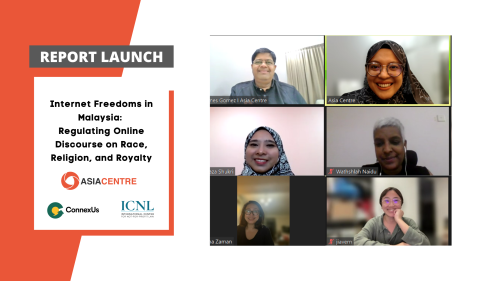
On 1 March 2023, Asia Center held a virtual launch and discussion of its latest report Internet Freedoms in Malaysia: Regulating Online Discourse on Race, Religion, and Royalty. The event drew over 60 participants and included members of academic institutions, representatives from civil society organisations, human rights activists, lawyers and journalists.  The report was first released online to the public and the media on 16 January 2023. The next day, the Malay Mail published an article, Study: ‘Ultranationalist’ groups gaining traction in Malaysian online space following Umno’s defeat in 2018 polls | Malay Mail by Keertan Ayamany. In the afternoon, it also published an opinion piece, Internet freedom, an essential human right — James Gomez | Malay Mail by Dr James Gomez. The Vibes, published another opinion piece, Race, religion, and royalty to shape M’sian politics – James Gomez | Opinion | The Vibes also by Dr James Gomez. There were also two podcasts on the report. On 25 January 2023, Dr Gomez recorded a podcast discussion with Dina Zaman (a Malaysian commentator) moderated by ABC News journalist Ali Moore. The podcast was for a programme, Ear to Asia, produced by the Asia Institute, Melbourne University, that is also syndicated to the Jakarta Post. Similarly, on questions related to the findings of the report, on 28 January 2023, Dr. Gomez recorded a podcast interview with journalist Philip See for BFM’s podcast Pressing Matters: BFM: The Business Station – Podcast How Has Online Discourse Shaped Conversation On Sensitive Topics In Malaysia? that was published on 30 January 2023.  The key research findings were additionally promoted via an online campaign with infographics posted on Asia Centre’s social media platforms, Facebook, Linkedin, Instagram, and Tiktok. This included an animated infographic video summarising the key arguments and recommendations of the report, and it was premiered during the report launch. When presenting the report during the launch, Dr. Gomez outlined Asia Centre’s recommendations that can be adopted by relevant government agencies, parliamentarians, the Human Rights Commission of Malaysia and NGOs, as well as tech companies to mitigate the obstruction of internet freedoms in Malaysia.  While the government is strongly urged to review, repeal and amend laws that are detrimental to internet freedoms, parliamentarians, human rights advocates and NGOs have an active role to monitor and report the infringement of rights by the state. Tech companies are also urged to increase their transparency in dealing with the state to mitigate the biased removal of content on their platforms. Following the presentation during the report launch, the findings were discussed by Tham Jia Vern, Independent Researcher, #TrackerBenci Lead, Dr Syaza Shukri, Assistant Professor, IIUM, Dina Zaman, Co-founder, Iman Research, and Wathshlah Naidu, Executive Director, Center for Independent Journalism. The panel was moderated by Lina Sakina Salim, the centre coordinator of Asia Centre Malaysia. Tham Jia Vern discussed how approaches towards curbing hate speech online should be diversified beyond activating legal measures. By introducing her work in developing #trackerbenci, an AI-driven tracker identifying hate speech on Twitter, Jia Vern shared how technologies can be used positively to counter dangerous narratives online. Next, Dr Syaza elaborated on how GE15 was impacted by the different ideological views held by the Malays, namely – conservatism and populist Islam. She further added that while freedom of expression in the country has progressed over decades after Malaysia’s independence, it does not guarantee internet freedom for all.  In her elaboration, Dina Zaman provided insights towards understanding the voting patterns of the majority Malays. Although social media has both negatively and positively mobilised the community during the election period, she opinionated that curbing dissenting voices through legal mechanisms may pose more significant harm than good. Sharing the results of CIJ’s social media monitoring of GE15, Wathshlah Naidu, showcased how hate speech and disinformation can be manifested in various forms online and addressed the need to provide better digital literacy which is accessible by all members of society. The report, in partnership with International Center for Not-for-Profit Law (ICNL), aims to provide a baseline study on the state of internet freedoms in Malaysia, and how socio-political developments related to race, religion and royalty has impacted the freedom of expression of its citizens. Read the full report here. Watch the Zoom recording of the event on our YouTube channel here. Asia Centre is a civil society research institute in Special Consultative Status with the United Nations Economic and Social Council. It serves as a knowledge partner and undertakes evidence-based research as well as provides capacity-building training for end beneficiaries. If you would like to collaborate with the Centre, please send an expression of interest to contact@asiacentre.org.

Asia Centre and National Human Rights Commission of Thailand Sign Cooperation Agreement

Sign Cooperation Agreement On 23 February 2023, Asia Centre and 4 other Southern Thailand academic institutions – Fatoni University, Thaksin University, Faculty of Humanities and Social Sciences, Prince of Songkla University (Pattani Campus), Faculty of Law, Prince of Songkla University – each signed a Memorandum of Cooperation (MoC) with the National Human Rights Commission of Thailand (NHRCT). Held at the Science Park, Prince of Songkla University and coordinated by NHRCT’s southern region office, the joint signing ceremony was witnessed by Assistant Professor Suchart Setthamalinee, National Human Rights Commissioner of Thailand and Professor Sirirurg Songsivilai, Permanent Secretary of the Ministry of Higher Education, Science Research and Innovation.  The event was attended by key stakeholders in the southern of Thailand such as students, faculty members, media, Internal Security Operations Command (ISOC) and the Southern Border Provinces Administrative Centre (SBPAC).  Asia Centre was represented by its regional director Dr. James Gomez, Centre Manager Patcharee Rattanarong, who was a witness to the MoC signing and Researcher Korbusol Neelapaichit who interpreted and coordinated the Centre’s participation at the event. All signatories, including Asia Centre, hosted a booth that showcased their work. After the signing ceremony and to kick-off the MoC implementation, a panel discussion was held with all the signatories to brainstorm possible ways of collaboration. All panellists agreed to utilise their strengths and capacities to drive the collaboration on promoting human rights works. Speaking for Asia Centre, Dr. James Gomez said the Centre can use its Southeast Asian expertise and networks to provide a regional perspective to addressing issues both in Southern Thailand and the country in general. Dr. Gomez, additionally announced that the Centre will be prepared to sign bilateral agreements with the other signatories to further strengthen cooperation in Southern Thailand. The MoC was signed following several years of prior collaboration between Asia Centre and NHRCT. In 2021, Asia Centre’s representatives participated in “The Official Launch of the Regional Center for Human Rights Study and Coordination” at the Faculty of Political Science, Ubon Ratchathani University. As a follow up, Dr. Gomez paid a courtesy call on Ms Prakayrat Tonteerawong, the National Human Rights Commissioner to exchange views on possible collaborations. As part of Asia Centre-NHRCT continued engagement, Ms. Pornprapai Ganjanarintr, Chairperson of the National Human Rights Commission of Thailand spoke at the Centre’s report launch of “Infodemic and SDGs: Internet Freedoms in Southeast Asia”. In October 2022, Asia Centre held a consultation session with the Office of NHRCT Southern Region office to understand the key human rights issues affecting Southern Thailand. These activities led to the signing of the MoC between Asia Centre and NHRCT. Given the strong interest, it is expected that the Centre will also sign further MoUs with other partners in Southern Thailand. A video of the signing ceremony is available on Asia Centre’s Facebook Page. Asia Centre is a civil society research institute in Special Consultative Status with the United Nations Economic and Social Council. It serves as a knowledge partner and undertakes evidence-based research as well as provides capacity-building training for end beneficiaries. If you would like to collaborate with the Centre, please send an expression of interest to contact@asiacentre.org.

Moving Beyond COVID-19 Restrictions in South Asia: Pushing Back Against Authoritarian Pandemic Governance

Download In South Asia, governments tended to adopt two approaches to contain the spread of the pandemic. The Maldives and Sri Lanka declared state of emergencies, while Bangladesh, India and Nepal relied on temporary health emergency laws. Regardless of the differences between these two approaches, all these measures restricted people’s civic freedoms, thus curbing democracy in the region. The policy brief “Moving Beyond COVID-19 Restrictions in South Asia: Pushing Back Against Authoritarian Pandemic Governance” makes an assessment of the impact of anti-COVID-19 legal measures on people’s fundamental rights in South Asia.  

© 2015 ASIACENTRE, BANGKOK, THAILAND. – INFO@ASIACENTRE.ORG