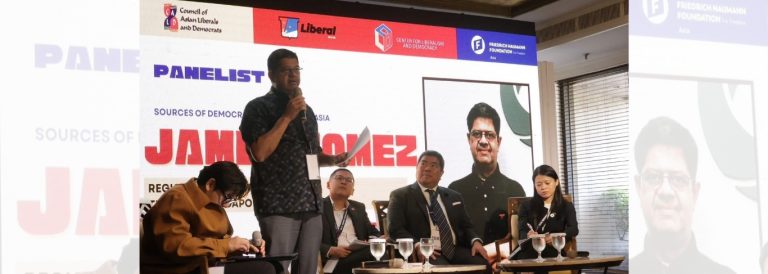
In his remarks on “Sources of Democratic Resilience in Asia,” Asia Centre’s Regional Director, Dr. James Gomez, underscored the role of civil society as a key pillar in sustaining democratic systems and said this is best done in partnership with democracy supporting political parties. He made this point during the Policy Roundtable on Democratic Resilience in Southeast and East Asia, as a speaker in Panel I: “Analyzing Democratic Resilience: Sources and Challenges,” on 27 March 2026.
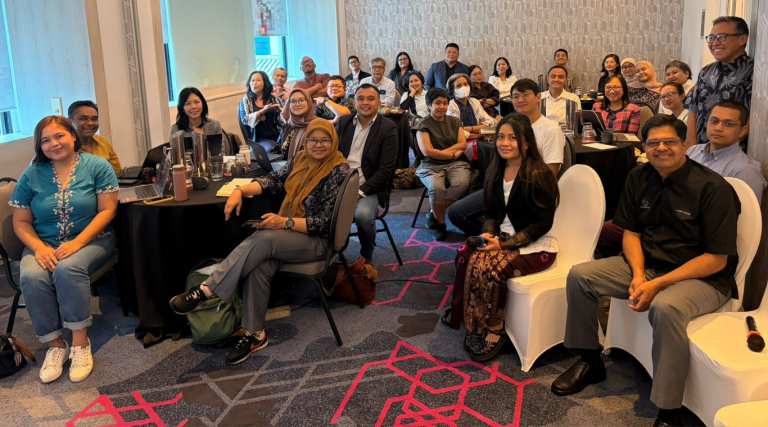
From 26 to 28 March 2026 in Manila, Philippines, Dr. Gomez participated in a multi-day programme convened by the Council of Asian Liberals and Democrats (CALD). The event brought together political party leaders, policymakers, and civil society actors, featured leadership engagements, thematic discussions, policy dialogues, and strategy planning aimed at strengthening democratic governance, resilience, and regional cooperation.
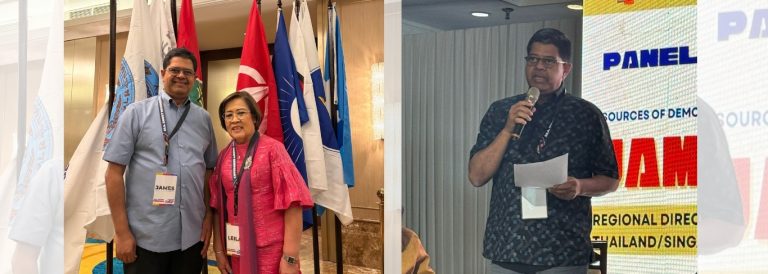
Dr. Gomez noted that across Asia, democracy promoting-political parties and civil society networks often operate in isolation rather than in partnership. He said that efforts to bring them together are frequently met with hesitation and discomfort from both sides internally and dissuaded externally by others who do not want this partnership to emerge. He emphasised that both camps need to recognise these pressures and actively move beyond this divide to normalise democracy collaboration between civil society and political parties.
Drawing on regional experiences, he highlighted that such interactions already occur in practice, with civil society actors joining political parties during periods of political change, including elections and politicians transitioning into civil society roles after public office. These transitions demonstrate that movement between both spheres is not uncommon. As such, he underscored the importance of recognising and reinforcing these “transitons” to establish civil society–political party collaboration as a regular and accepted feature of democratic systems in Asia.
Among the key highlights of the roundtable were Dr. Gomez’s three policy recommendations. He suggested that CALD, as a network of political parties, should consider the following:
- Actively invite civil society organisations to become associate members.
- Expand its current regional base in East and Southeast Asia to include South and Central Asia.
- Evolve from a single-donor model to a multi-donor one to ensure organisational sustainability.
Dr. Gomez’s suggestions were well received in the meeting and were referred to constantly over the next two days.
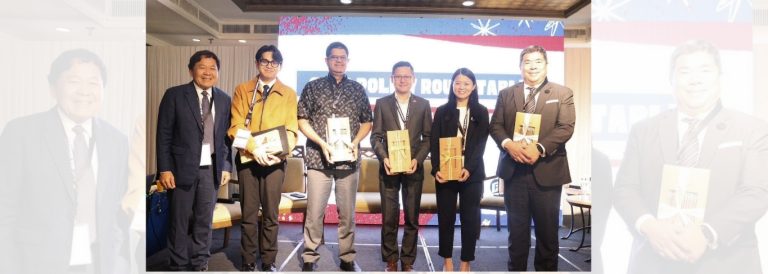
On 28th March, during the strategy meeting, Dr. Gomez went further to propose a practical approach to advancing collaboration between political parties and civil society. He suggested that if CALD member parties are not yet ready to push forward with associate membership for civil society organisations, an initial step could be to organise a one-day conference or workshop that brings together representatives from both sectors. Such an event would enable open dialogue and exchange views on civil society–political party partnerships, help to build mutual understanding and reduce any existing hesitations. He noted that this type of engagement could serve as an entry point to gradually foster trust and, over time, contribute to normalising closer cooperation and potential institutional collaboration between political parties and civil society.
Overall, Dr. Gomez’s key message was democratic resilience can be reinforced through stronger collaboration across sectors, in particular, between civil society and political parties to widen their networks and become a more broadbased movement.
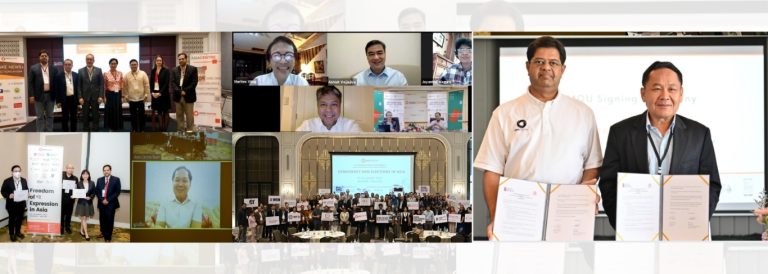
Asia Centre and CALD have been formally working together since 2019 since the signing of their first MoU. CALD’s participation in Asia Centre’s Annual International Conferences is well known. From 2019-2024, starting with the 4th International Conference (2019), CALD convened the opening panel on responses to disinformation, while in the 5th (2020), its speakers addressed political hate speech and regulatory challenges. This engagement continued in the 6th International Conference (2021), where CALD participated in discussions on COVID-19, communication, and the use of technology in governance. In the 7th International Conference (2022), CALD convened discussions on political persecution and democratic resilience, and in the 8th International Conference (2023), it further contributed as a panel partner, supporting regional dialogue on digital rights and democratic challenges. In the 9th International Conference (2024), it served as a panel partner on the criminalisation of civic actors. The 2024 conference also marked the renewal of the Memorandum of Understanding (MoU) between both organisations, originally signed in 2019, reaffirming their long-standing partnership and shared commitment to strengthening civic space across Asia.
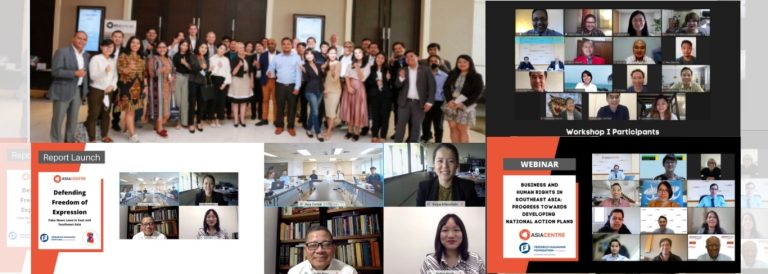
CALD has also actively engaged in Asia Centre’s broader programme activities, extending beyond conferences into research, training, and policy dialogue.
In 2021, Asia Centre led the research and co-published with CALD the report “Defending Freedom of Expression: Fake News Laws in East and Southeast Asia”. The report examined legal frameworks affecting freedom of expression in the region and informed subsequent regional engagements. This was complemented by a series of regional workshops on disinformation (September-October 2021), organised by Asia Centre in partnership with CALD and supported by the Friedrich Naumann Foundation for Freedom, bringing together policymakers, legislators, legal experts, and civil society actors to explore both legal and non-legal responses to disinformation.
In 2022, CALD joined Asia Centre’s Business and Human Rights training (2022), where CALD representatives joined lawmakers from across Asia to strengthen understanding of international standards and national implementation in the context of democratic governance. In 2024, CALD also participated in Asia Centre’s Digital Rights Programme Regional Meeting, which convened over 60 participants to address internet freedoms, disinformation, and democratic resilience. Together, these engagements reflect CALD’s sustained involvement in Asia Centre’s research-driven and capacity-building programmes.
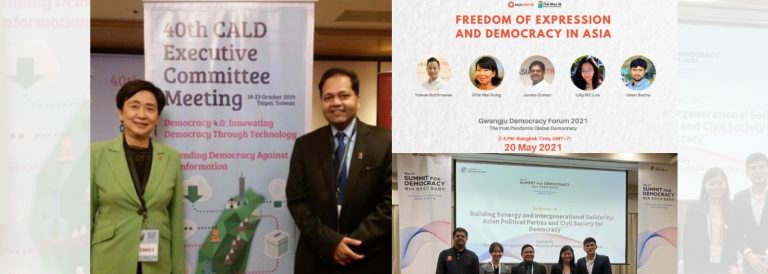
Asia Centre has likewise contributed to CALD’s activities, reflecting the reciprocal nature of the partnership. Asia Centre’s expertise was tapped by CALD to lead discussions on disinformation, AI, and civil society-political party partnerships. This form of engagement began in 2019, when Asia Centre presented its research on disinformation in Southeast Asia at the CALD 40th Executive Committee Meeting in Taipei, highlighting risks posed by fake news laws to democratic accountability.
These knowledge contributions formed Asia Centre’s core inputs to CALD-led initiatives, including participation in election observation efforts linked to CALD Executive Committee Meetings, such as the Thailand election observation mission (11-15 May 2023), where Asia Centre’s Regional Director, Dr. James Gomez has contributed to regional discussions on democratic processes and governance. On another topic, on 10 September 2023, Dr. Gomez chaired the panel “Global and Regional Liberal Networks and China’s Rise” at the CALD 30th Anniversary Regional Networks Meeting in Taipei.
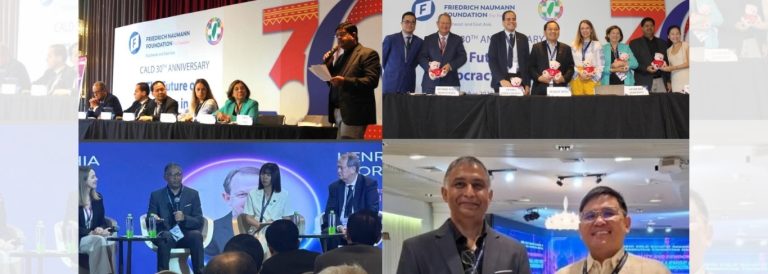
This collaboration further extends to emerging policy areas, including the 15th CALD General Assembly on Artificial Intelligence held on 30 October 2025 in Bangkok, where Asia Centre’s Programme Manager, Sanjay Gathia, participated as a panel member in the session “AI, Rising Inequality and Democratic Decay”, contributing to regional debates on artificial intelligence and its implications for democracy and inequality. In 2026, Asia Centre’s Regional Director, Dr. James Gomez participated in a suite of CALD events on democracy in Manila, where he provided policy insights on strengthening democratic resilience and advancing collaboration between civil society and political actors.
Together, these engagements demonstrate Asia Centre’s sustained role as an intellectual partner in CALD activities.
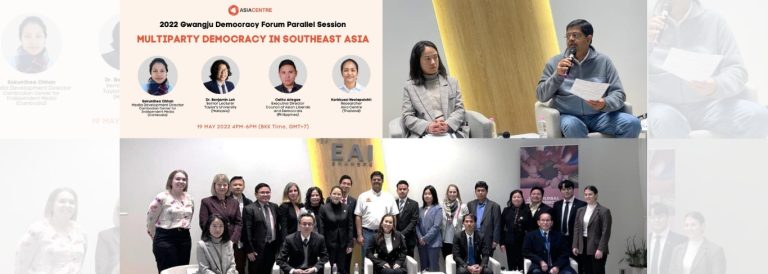
Both organisations have also collaborated on broader regional initiatives on democratic governance primarily in South Korea. In 2022, Asia Centre and CALD jointly engaged in online discussions at the Gwangju Democracy Forum contributing to dialogue on electoral reforms and democratic resilience in Southeast Asia. This collaboration continued in 2024, where key messages on shrinking civic space and the need for stronger democratic cooperation were advanced in an Asia Centre-CALD panel discussion “Narratives and Strategies for Democracy in Asia” at the Summit for Democracy in Seoul, funded by the Global Democracy Coalition (GDC). In 2026, both organisations will continue this collaboration at the GDC Asia-Pacific Regional Forum from 10-11 June 2026, further strengthening joint efforts to advance democratic governance across Asia.
In sum, these engagements reflect a partnership that has spanned reciprocal participation in each other’s activities, joint research, capacity-building, policy dialogue, and regional convenings, pointing to a multi-dimension cooperation. Both organisations have consistently advanced shared priorities on democracy and human rights and have pledged to continue working together.