Dissecting the 2018 Election in Malaysia: The End of Cronyism?
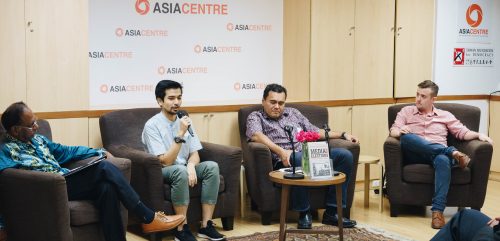
The key challenge of undoing six decades of cronyism, patronage and money politics was a central point highlighted during Asia Centre’s roundtable discussion on the Malaysian elections held in May 2018. Despite the political earthquake, the end of Barisan Nasional’s (BN) rule in Malaysia after 61 years and the defeat of former Prime Minister Najib’s government, fundamental change is not guaranteed. All speakers at the roundtable, held on 22 June 2018 at Asia Centre, observed this critical point. It remains to be seen if the new government of Pakatan Harapan (PH) can usher out the politics of ‘money, race and patronage’. After all, PH is led by a member of the old guard, 92-year old PM Mahathir, who had mentored former PM Najib and helped to build up that system. PM-in-waiting, 70-year-old Anwar Ibrahim, has forged an alliance of convenience with his former mentor and tormentor, Mahathir. Should Anwar be designated PM, is he likely to bring fundamental change? The desire for change among a large percentage of the youth was raised as a factor tipping the balance in favour of PH, which appeared on the political scene at the perfect time. Another key immediate factor was the disaffection of voters with the well-documented corruption scandals rocking former PM Najib, which resulted in a drift towards authoritarianism and harassment of political opposition to his Government. Creeping authoritarianism, including recent attempts to stifle freedom of expression through hastily passed ‘fake news laws’ prior to the election, was a noticeable feature of the Najib’s rule over the past decade, amidst other longer term factors affecting the election. Already in the 2013 election, it became apparent that minority groups, notably Malaysian Chinese,were less willing to accept the national affirmative action plan that has privileged the Bumiputra. Indigenous peoples, such as the Orang Asli, also have become wary of their routine treatment by politicians as ‘second class’ citizens. Splits in the BN coalition had begun to appear well before May 2018. In addition, the new administration will need to contend with an economy that has featured rising costs of living in recent years. Resolute action to tackle these deeper problems will be a drawn out affair, especially in the uncertain leadership transition that is set to take place in two years, with Anwar assuming the mantle of Prime Minister, while his family presumably gives way as he succeeds. The rich discussion was moderated by Dr. Robin Ramcharan of Asia Centre. The discussion was animated by expert commentators from Malaysia and the UK: Dr. Mohd Azizuddin Mohd Sani (PhD), Professor of Politics and International Relations at the School of International Studies, Universiti Utara Malaysia (UUM); Mr. Lutfi Hakim, independent consultant and an associate of IMAN Research, where he was previously a research lead; Dr. Victor Karunen, lecturer and former UN official with UNICEF; and Mr. Scott Edwards, doctoral candidate at the University of Birmingham’s Institute for Cooperation, Conflict, and Security (ICCS). The roundtable set the scene at Asia Centre’s third anniversary celebrations, where Asia Centre announced its new branch in Malaysia. The second Centre in Johor Bahru will be rolled out over 2018-2019. All expressions of interest for collaboration in Malaysia can be sent to contact@asiacentre.co.th. Left to Right: Asia Centre co-founder and Chairman, Board of Directors Dr. James Gomez; Dr. Victor Karunan; Mr. Lutfi Hakim; Prof. Dr. Mohd Azizuddin bin Mohd Sani; Mr. Scott Edwards; Asia Centre co-founder and Executive Director Dr. Robin Ramcharan Photos from the event are available here. This event was held with the support of the Taiwan Foundation for Democracy.
Asia Centre announces Malaysia branch

Asia Centre has initiated plans to establish a second branch in Johor Bahru, Malaysia. The new branch will complement and extend the reach of programmes currently organized by Asia Centre Thailand in Bangkok. The announcement of Asia Centre Malaysia was made by Dr. James Gomez, Chairman, Board of Directors of Asia Centre, on the occasion of the Centre’s third anniversary in Bangkok. He noted that the timing for a second Centre in Malaysia is ripe, as the political developments in the country point to opportunities for more robust conversations. Johor Bahru was selected as the preferred location for the Centre’s second branch because of its strategic location, 330 kilometers from Kuala Lumpur and 18 kilometers from Singapore’s Second Link Bridge. Within Johor Bahru, the new branch will be situated less than two kilometres from EduCity at Iskandar Puteri, four kilometers from Puteri Harbour, and 25 kilometres from the old city centre and the Woodlands Causeway to Singapore. By locating in Johor Bahru, Asia Centre Malaysia aims to be part of the ecosystem of higher education institutions in EduCity, Kuala Lumpur, and Singapore, as well as the not-for-profit sector in both Malaysia and Singapore. Asia Centre Malaysia will be housed in a new shop lot complex in the Medini township of Iskandar Puteri in Johor Bahru. The three-storey building has a total floor area of 300sqm, and sports a contemporary design and large balcony on the third floor. Prospective plans for Asia Centre Malaysia include a café, bookshop, co-working spaces, a meeting room and an administrative hub to support the organising of conferences, seminars, workshops, exhibitions and film screenings. Dr Gomez noted that the hard infrastructural developments in Johor Bahru were insufficient for establishing a truly international city, and that a social dimension with robust intellectual conversations is needed. He said that Asia Centre intends to contribute to the intellectual and cultural life of the city through regionally-themed activities and working with local, regional and international partners. Asia Centre Malaysia will be established over the next two years. From July to December 2018, work will involve registration and associated legal compliance. In 2019, outreach in Malaysia will be undertaken, a concept note will be developed, some advisers will be appointed and an interior design firm will be contracted to begin work. Renovation work is expected to continue through into 2020 with the start of some activities to roll out the Centre. This will lead to the appointment of a coordinator and a regular activities at the Centre in Malaysia. While independent, with its own programme of work and governance structure, Asia Centre Malaysia will work with Asia Centre Thailand for economies of scale to further the organisation’s long-term goals of serving as a Think-Tank, Meeting Space, Project Partner and Social Enterprise in the region. The establishment of a second branch in Malaysia signals strong, steady growth for the Asia Centre social enterprise brand first established in 2015. We welcome expressions of interest for collaboration and partnership for activities in Malaysia, Thailand and elsewhere in the region. To explore avenues for potential collaboration, do reach out to us at info@asiacentre.org Front side First floor 2nd floor 3nd floor
Asia Centre recruits new talent at Webster University’s Career and Internship Fair

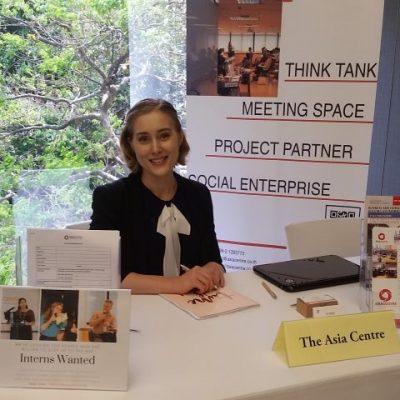
Asia Centre had the opportunity to showcase its internship programme at the annual Webster University Thailand Career and Internship Fair on 4 April 2018. Asia Centre offers two forms of internship: Research, which focuses on researching and preparing evidence to inform reports, articles and conference papers; and Communications, which involves social media promotion, business planning, and creating marketing strategies. Both kinds of internship were met with enthusiasm, and several Webster University students submitted applications at the Fair. Further information on the programme, including the application form, is available here. Students from the Master of Arts in International Relations and Master of Business Administration showed a keen interest in pursuing internships at Asia Centre and in learning more about its work on human rights in Southeast Asia. Our Conference Manager, Elise Schuster, from Australia, was Asia Centre’s representative at the Fair. She introduced the Centre to the students, explained its ongoing human rights program, highlighted its forthcoming events, and emphasised the key role that both research and communications interns play in undertaking all these activities. Elise is herself a research intern, and was able to share her own experiences with potential applicants, including her research and planning for the upcoming International Conference on Business & Human Rights: Holding Governments Accountable in Asia, to be held on 12-13 July 2018. Asia Centre thanks Webster University Thailand for once again hosting a highly successful and enjoyable Career and Internship Fair.
The Rohingya Crisis: Asia Centre Deliberates Solutions to the Crisis at Conference in Bangladesh

Asia Centre contributed to the search for solutions to the humanitarian crisis in Myanmar and Bangaldesh during the International Conference on the Rohingya Refugee Crisis: Towards Sustainable Solutions, held in Dhaka from 2-3 April 2018. The conference revealed Bangladesh’s pressing search for assistance with the humanitarian crisis, its concern over the implications – economic, ecological, political and social – of hosting over one million Rohingya for the long term, and its search for durable solutions (e.g. safe repatriation), which ultimately lie in Myanmar. In this context, Dr. Robin Ramcharan examined the role of ASEAN in the crisis. He noted the challenges for ASEAN in addressing the humanitarian tragedy that has unfolded as over 700,000 Rohingya have fled Myanmar into neighbouring Bangladesh since August 2017. He noted that while some ASEAN leaders were quite concerned with the plight of the Rohingya, ASEAN’s response has been timid, limited to statements at ASEAN Summits and hosting some of the refugees. He noted that for ASEAN to make more decisive contributions to resolving the crisis, it needed to overcome its adherence to non-interference, to move towards a new decision-making model for such crisis situations, and to live up to the norms adopted in the ASEAN Charter, namely, good governance, rule of law and human rights. The Bangladeshi government, think-tanks and civil society representatives at the conference all raised the issue of compensation to the host state occasioned by hosting large-scale refugee movements. One Bangladeshi legal scholar sought to make the case for ‘State responsibility for compensation’ to the host state resulting from such large scale refugee movements. Additional salient points made by participants at the conference were: 1) The right of return of the Rohingya will likely remain unfulfilled for a long time since the conditions for safe return to Myanmar are not present; 2) The Rohingya in the camps need full assistance from the international community; 3) Bangladesh also needs full support as they deal with the massive influx of refugees, their various needs and the environmental impact; 4) A full understanding of the crisis requires an appreciation of the geopolitics of the region, featuring competition between China and India for influence in Myanmar; 5) The need to address the root causes of the crisis, among which is the issue of citizenship for the Rohingya; and 6) The need for accountability for violations of human rights in Myanmar. Asia Centre contributed to the drafting of the Dhaka Declaration issued at the end of the Conference on 3 April, which was organised by the Centre for Genocide Studies of the University of Dhaka, the Centre for Peace and Justice at BRAC University and ActionAid Bangladesh. It called for, inter alia, the “UN and the international community to use diplomatic channels to provide sufficient humanitarian assistance and other support to ensure protection and rights of Rohingya women, children and other vulnerable groups”. The Declaration also called on the international community to comprehensively investigate the ongoing acts of genocide, mass atrocities, crimes against humanity and ethnic cleansing in Myanmar. It called for the prosecution and punishment of those offenders responsible for such violations. Asia Centre will continue to address the above issues during its forthcoming conference, The Rohingya Crisis: A Multidimensional Tragedy, on 24 August 2018. Researchers at this conference will examine the deeper roots of the current crisis in Myanmar.
3rd Benedict Anderson Memorial Roundtable: Gender and Nationalism in Asia

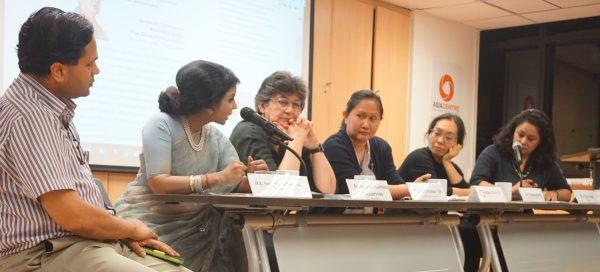
In discussions on contemporary South-East Asian politics, a gap exists between the growing discourse on nationalism and national leadership and the gendered perspective on Benedict Anderson’s narrative on nationalism. To address this gap, a diverse and experienced panel, together with an audience of around 35 attendees, held a ‘conversation’ on multiple interconnected issues surrounding feminism, nationalist expression, political control, and women’s leadership in the post-modern political landscape. The occasion was the annual Benedict Anderson Memorial Roundtable, held on 19 January 2018. Asia Centre hosts the annual Benedict Anderson Memorial Roundtable to honour the significance of the late professor’s contribution to studies of nationalism and South-East Asia, and to continue the debate around nationalism in its contemporary contexts. The inaugural Roundtable was held on 30 January 2016, with the theme Debating Imagined Communities: A Tribute to Benedict Anderson. The second Roundtable, held on 18 January 2017, centred on the topic Nationalism, Citizenship and Statelessness: Current Issues and Developments in Asia. The third Roundtable, entitled Gender and Nationalism in Asia: from Scholarship to Leadership, provided the forum to articulate and critically examine the separation of discussions on nationalism and Benedict Anderson’s work on nationalism, as seen through a gendered lens. The event was moderated by Ms Puja Singh, a teacher, speaker and doctoral candidate. She opened with a gendered reflection on Imagined Communities, Benedict Anderson’s landmark work on nationalism, inviting the audience to consider women’s identity in relation not only to men, but also to ‘nation’. Ms Emerlynne Gil, the senior international legal advisor on South-East Asia at the International Commission of Jurists’ Asia and Pacific Regional Office, argued that in post-colonial contexts, women’s political emancipation often lags behind emancipation from foreign oppression, despite the efforts of feminists within anti-colonial struggles. She argued that this disconnect remains an ongoing feature of the Congress of the Philippines, where the relatively high proportion of female politicians obscures the patriarchal forces that place them in positions of leadership and, thus, hinders the promotion of a feminist agenda. Dr Duanghathai Buranajaroenkij, a professor at Mahidol University’s Institute of Human Rights and Peace Studies, discussed her research on the growing political activism of pro-monarchist women in Bangkok and Muslim women in Thailand’s Deep South. While their entry into the political sphere is facilitated by the adoption of identities “approved” by male leaders and family members, such as overt patriotism or conservative Islamic dress, women continue to find new ways to exercise power and agency in creating space for their political participation. Dr Rosalia Sciortino Sumaryono, Associate Professor at Mahidol University’s Institute for Population and Social Research, highlighted the absence of a gendered perspective in not only Benedict Anderson’s work, but in national governments, human rights agendas, and discourses on power and nationalism. She argued that the election of more female leaders is insufficient to further the feminist agenda; these female leaders must also possess a new vision for the future, while democracy and women’s leadership within the family must be promoted. Her Excellency Saida Muna Tasneem, Ambassador of Bangladesh to the Kingdom of Thailand, noted that although numerous female leaders in South-East Asia are elected through their family connections, many have inherited nationalist sentiments from their fathers and husbands, who had themselves used nationalism to mobilise public opinion against imperial powers. She highlighted the success of Bangladeshi Prime Minister Sheikh Hasina, daughter of Bangladesh’s founding father Sheikh Mujibur Rahman, in balancing nationalism and ethnic identity through encouraging ethnic minorities to use their own languages but to use Bangla in schools. In the following discussion, the panel debated the symbolism of the hijab, its contested meaning in the context of pan-Islamic fundamentalism, and its exemplification of a broader equation of nationalism with an imposition of ‘sameness’ and growing intolerance of diversity. The panel reflected on the contributions of women in leadership roles to the promotion of feminism and women’s rights. They explored and emphasised the importance of ensuring that gender perspectives are not crowded out by emerging issues, such as the Rohingya crisis or the urgency of post-conflict statebuilding, but are instead utilised to examine these issues in greater depth. Through this continued application of a feminist agenda, the gap between discourses on rising nationalism, gendered understandings of national identity and women’s leadership can be bridged. This year’s Roundtable continued Asia Centre’s ongoing commitment to facilitating gender-centred discussion and debate around the human rights agenda. Previous events have focused on Entering Femininity: Reporting Rituals and Violations, which examined practices of female genital mutilation, and Celebrating Women in Law, featuring a panel of female lawyers who discussed access to justice in Southeast Asia. .