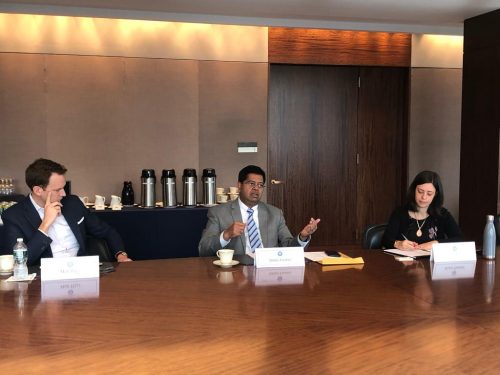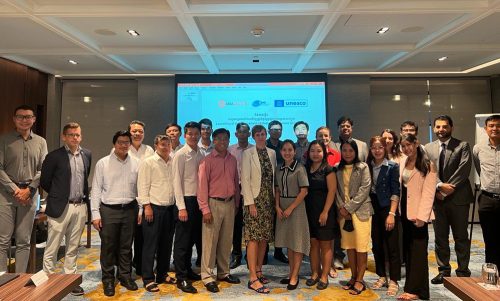
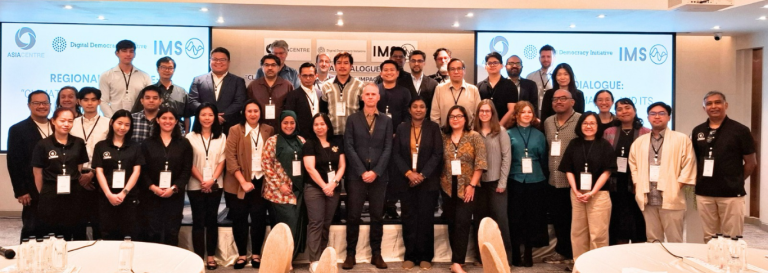
Climate disinformation in Asia is not only shaping public debate around climate policies and environmental accountability, but it is also creating an urgent need for stronger, more inclusive responses that place Indigenous Peoples (IPs) at the centre of climate action, policy and governance. In addressing this, a multi-stakeholder partnership is required to strengthen information integrity while safeguarding Indigenous rights.
This was the key message of the regional dialogue “Climate Disinformation and its Impacts on Indigenous Peoples in Asia” convened by Asia Centre in partnership with International Media Support (IMS) on 20 May 2026 in Bangkok, Thailand. The dialogue brought together 43 representatives spanning journalists, media organisations, researchers, civil society actors, Indigenous representatives, technology experts and international partners from across Asia and beyond.
The regional dialogue was convened at the end of a broader research and engagement process led by the Asia Centre since March 2025. The project has produced six country-level studies – and in that process, convened six national convenings. The initiative has sought to examine how climate disinformation, both online and offline, restrains Indigenous voices, discredits their knowledge and legitimises harmful environmental practices.
As of 25 May 2026, the climate disinformation country reports had been collectively downloaded nearly 10,000 times, reflecting growing regional interest in the issue.
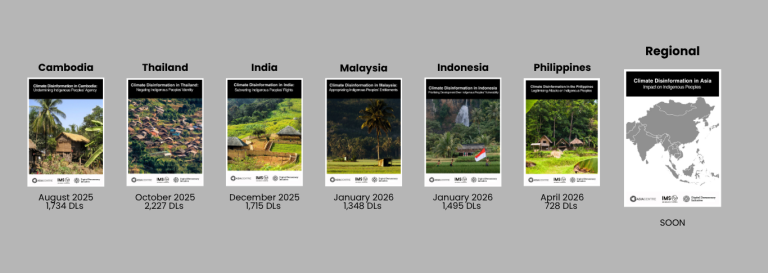
The dialogue also served as a platform for validating findings from the regional report Climate Disinformation in Asia (to be published soon), which identifies and analyses the situation at the regional level to highlight opportunities for stronger regional responses.
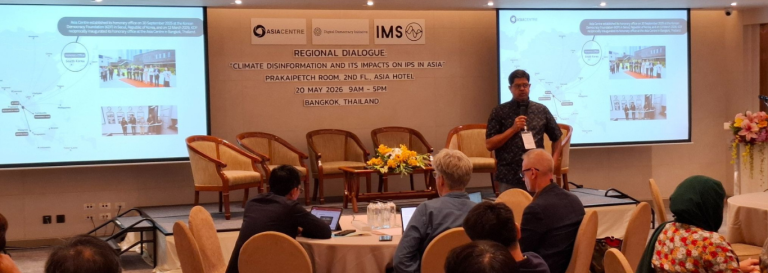
The 1-day event opened with remarks from Dr James Gomez, Regional Director of Asia Centre, situating the dialogue within Asia Centre’s broader work on democracy, human rights, civic space and information integrity. His remarks framed the dialogue not only as a moment to present research, but as an opportunity to directly listen to communities, IPs and partners whose experiences are central to understanding how climate disinformation operates on the ground.
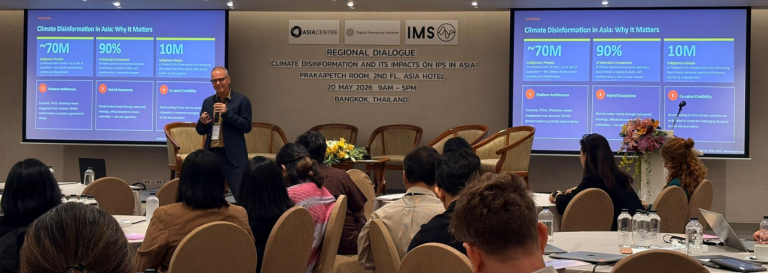
The opening was followed by keynote remarks on the “Landscape of Climate Disinformation” by Lars Bestle, Regional Director Asia, IMS. He framed climate disinformation as a challenge that goes beyond false claims. As he noted, some narratives present forests as being protected while, in reality, they are being taken and communities are being displaced.
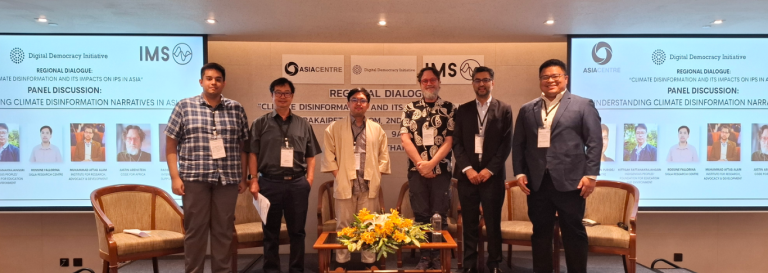
The first panel discussion, “Understanding Climate Disinformation Narratives in Asia,” was moderated by Paco Pangalangan, IMS. The panel contextualised the meeting by examining climate disinformation narratives across the region. The panellists made the following remarks:
- Ekmongkhon Puridej, Asia Centre, mentioned that climate disinformation in Asia reflects long-standing efforts to undermine Indigenous Peoples’ (IPs) rights, now increasingly repackaged in “green” language. He stressed the need to centre Indigenous perspectives in public debate and critically examine official and corporate environmental narratives;
- Muhammad Aftab Alam, Institute for Research, Advocacy and Development (IRADA); shared examples from Pakistan, where climate disinformation reflects broader regional trends while also appearing through sensationalism, alarmism and religious framings such as divine judgement. IRADA led the research for Pakistan, the seventh country study in the Climate Disinformation in Asia series.
- Kittisak Rattanakrajangsri, Council of Indigenous Peoples in Thailand and former Chair of Asia Indigenous Peoples’ Pact (AIPP), stressed that Indigenous Peoples are already among those most affected by climate change, facing displacement, environmental degradation and threats to their livelihoods and traditional ways of life, while increasingly being blamed for environmental destruction despite their long-standing role in protecting natural resources.
- Rossine Fallorina, SIGLA Research Centre, warned that climate disinformation may evolve into an economy driven by political and corporate interests, bots and coordinated information operations.
- Justin Arenstein, Code for Africa, connected patterns across Asia and Africa, arguing that climate disinformation should be understood as an organised system that undermines accountability, weakens public understanding and restricts the enjoyment of Indigenous Peoples’ rights.
The discussion highlighted the need for stronger regional collaboration and rights-based responses that place IPs’ voices, knowledge and rights at the centre of efforts to address climate disinformation.
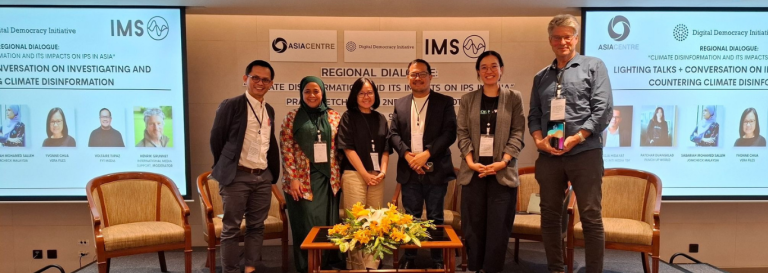
The second session, “Lightning Talks + Conversation on Investigating and Countering Climate Disinformation,” was moderated by Henrik Grunnet, IMS. Through five-minute lightning talks, speakers shared field experiences on investigative journalism, fact-checking, verification tools, data storytelling, prebunking and constructive journalism approaches. The panellists made the following remarks:
- Yvonne Chua, Vera Files, highlighted the need for comprehensive training and support for journalists to report on climate change, critically analyse information, propose solutions and seek accountability beyond conventional reporting;
- Sabariah Mohamed Salleh, JomCheck, validated the findings from Asia Centre’s Malaysia report and discussed the role of fact-checking in strengthening evidence-based information within the media ecosystem.
- Bagja Hidayat, PT Tempo Inti Media Tbk, introduced Tempo Witness as a platform for Indigenous Peoples to share information and stories that help journalists highlight on-the-ground realities.
- Patchar Duanglkad, Punch Up, emphasised data-driven and fact-based storytelling as a way to support journalists and strengthen the broader journalism ecosystem.
- Voltaire Tupaz, FYT Media, presented crowdsourcing, civic technology and AI-enabled tools as part of a pipeline connecting storytelling to civic action.
The session highlighted the need to move beyond reactive responses. While fact-checking, verification, investigative reporting and prebunking remain essential, participants stressed that media responses must also strengthen public understanding, improve climate reporting, support community voices and build trust in credible information sources.
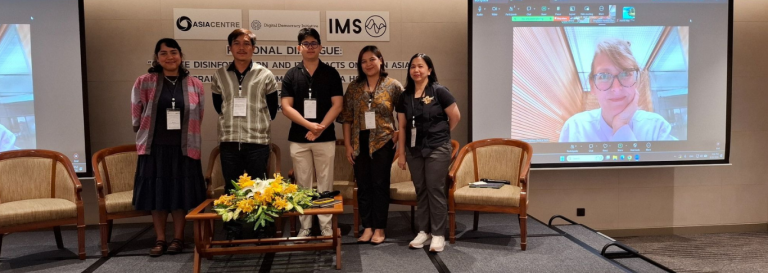
Thereafter, it was the Community Roundtable: “Local Voices and Public Engagement”, moderated by Eva Danayanti, IMS. The session centred the experiences of communities, youth and local knowledge holders as active participants in countering climate disinformation and advancing climate accountability. The panellists made the following remarks:
- Bank Vath, Impact Hub Phnom Penh, emphasised the need to strengthen socio-economic, educational and media literacy support so Indigenous media can better amplify community experiences;
- Bianca Pabotoy, Balay Mindanaw, reflected on Mindanao’s experience, where collaboration among government, media, communities and journalists is key to advancing climate and disaster accountability;
- Phnom Thano, Indigenous Media Network, highlighted how Indigenous media can counter bias and stereotyping while working with neutral actors to strengthen evidence and credibility;
- Siti Parhani, Magdalene.co, brought attention to underrepresented women’s perspectives, stressing their importance in conversations on IPs, climate change and disinformation;
- Astrid Bolinget, Cordillera Peoples Alliance (CPA), underscored the importance of community-led advocacy and Indigenous solidarity in challenging harmful climate narratives and protecting Indigenous rights.
In this session, speakers connected climate disinformation to rights, governance, media integrity and accountability, while highlighting the role of community-led media, data journalism and civic technology in supporting more credible climate communication.
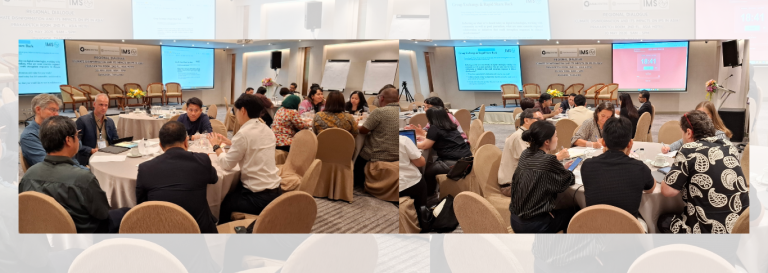
The final session was a facilitated discussion, “Building Regional Collaboration,” led by Vanessa Chong, IMS. The session invited participants to share reflections, exchange solutions, identify practical solutions and explore opportunities for future cooperation. Through small group discussions and networking exchanges, participants proposed a range of collaborative responses to climate disinformation, including Indigenous-led journalism initiatives, cross-border investigative reporting, fact-checking and prebunking networks, and regional partnerships to strengthen evidence-based climate reporting. Several groups proposed creating a regional information hub or observatory to centralise research, verification resources, training materials and community-led initiatives across Asia.
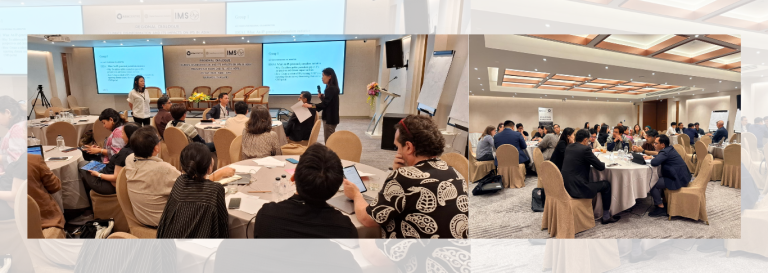
Participants further stressed the importance of strengthening media literacy, data-driven storytelling and accessible communication of climate research, particularly for youth and local communities. Discussions also highlighted the role of civic technology, AI-assisted tools and crowdsourcing initiatives in countering online disinformation, alongside stronger legal protections and support mechanisms for journalists, climate advocates and Indigenous communities affected by environmental reporting and activism.
Across the sessions, participants emphasised that climate disinformation cannot be addressed through isolated interventions alone. Instead, the dialogue highlighted the need for sustained multi-stakeholder and regional collaboration among journalists, researchers, fact-checkers, civil society organisations, Indigenous communities, media development actors, technology experts and policy advocates. By connecting regional learning with community-led solutions, the discussion reinforced the importance of placing Indigenous Peoples’ rights, voices and knowledge at the centre of climate action, governance and information integrity efforts across Asia.
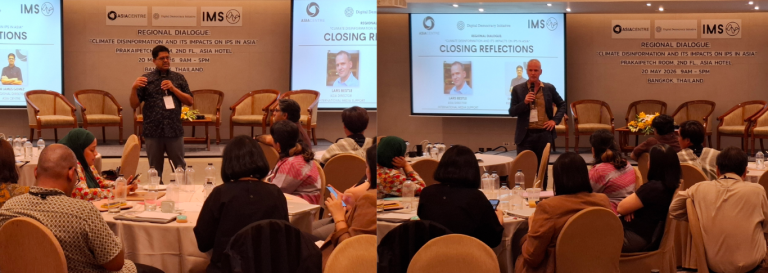
In closing reflections, Lars Bestle, IMS, and Dr James Gomez, Asia Centre, thanked speakers and participants for their contributions and reaffirmed the importance of continued regional cooperation. The country and regional reports generated throughout the course of the project will continue to contribute to interventions to mitigate climate disinformation. In particular, they will guide engagement with media and civil society actors to strengthen networks working on climate accountability, Indigenous Peoples’ rights and information integrity across Asia.