In the Philippines, attacks against Indigenous Peoples (IPs) are increasingly legitimised by climate disinformation which falsely labels their environmental defence as terrorism, enabling the continued use of ancestral lands for industrial expansion.
This was the central finding presented at a national convening reviewing the preliminary outcomes of Asia Centre’s forthcoming report Climate Disinformation in the Philippines: Legitimising Attacks on Indigenous Peoples.
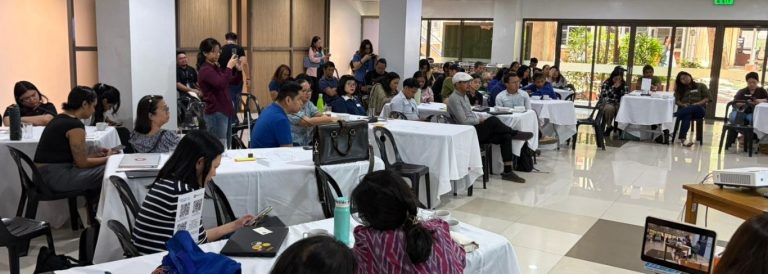
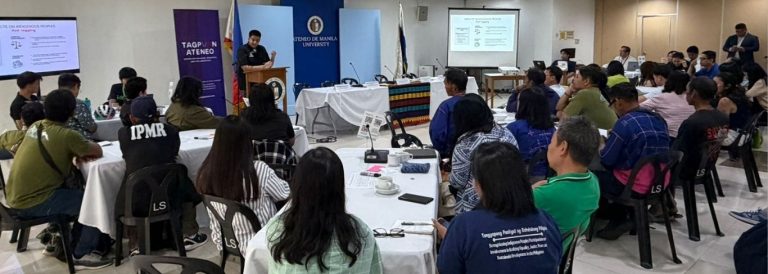
Attended by over 70 people, the convening took place on 24 March 2026 and was organised by Asia Centre, in partnership with International Media Support (IMS) and the Center for Dialogue, Research and Collaboration (Tagpuan Ateneo) at Ateneo de Manila University. Bringing together journalists, civil society actors, Indigenous rights advocates and policy experts, the event examined how climate disinformation operates in the Philippines, assessed its impact on Indigenous communities, and gathered expert and community feedback to strengthen the report prior to its finalisation and publication.
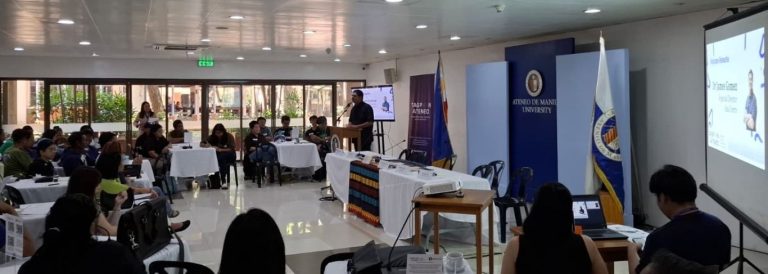
The session opened with remarks by Dr Jowel Canuday, Director, Tagpuan Ateneo, who stressed that climate disinformation obstructs constructive dialogue and undermines inclusive engagement among stakeholders. In the context of digital democracy, he stressed the importance of constructive journalism in ensuring that Indigenous voices are heard. Vanessa Chong, Programme Manager from International Media Support went next to situate the initiative within broader efforts to strengthen journalistic capacity in digital democracy, highlighting climate disinformation as a critical but under-addressed issue. This was followed by the opening remarks of Dr James Gomez, Regional Director of Asia Centre, who emphasised that the Philippines’ intense securitisation makes the effects of climate disinformation particularly hazardous. He said, this form of disinformation acts as an intensifier of the deep-seated, structural violence already faced by IPs.
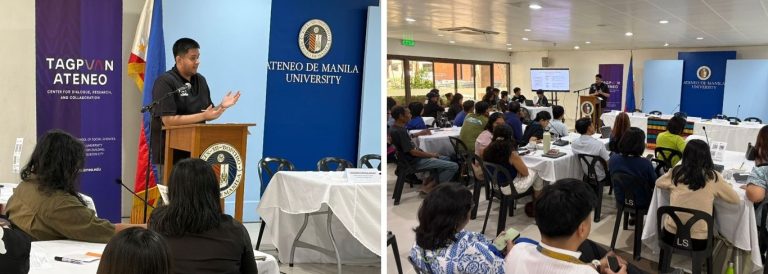
The presentation of key findings was delivered by Ekmongkhon Puridej, Research Coordinator at Asia Centre. He identified three interrelated dynamics in the Philippines. First, narratives that credit the state and corporations with compliance to sustainability standards, while labelling IPs as “terrorists”, facilitate the exploitation of ancestral lands. Second, climate disinformation reinforces state-led violence against IPs, including militarisation, forced evictions, red-tagging and extrajudicial killings. Together, these dynamics pose severe risks to Indigenous rights, identity, security and survival.
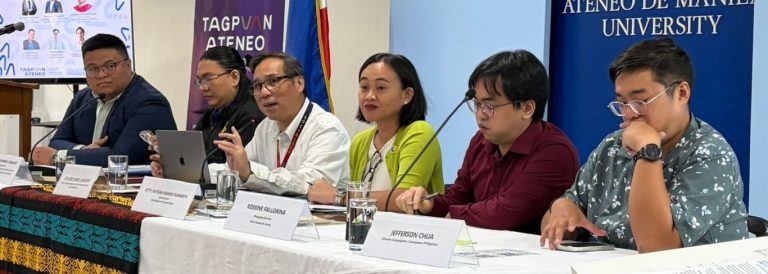
Following the presentation, the discussants reacted and offered comments to the report’s findings. Atty. Faydah M. Dumarpa, Commissioner of the Commission on Human Rights (CHR), noted that these findings align with the CHR’s monitoring of disinformation targeting IPs, particularly where it undermines their right to Free, Prior, and Informed Consent (FPIC). She emphasised the state’s obligation to establish mechanisms to monitor and counter climate disinformation, alongside strengthening Media and Information Literacy (MIL) across sectors.
Atty. Raymond Marvic (Ice) Baguilat of the University of the Philippines College of Law framed the report’s core concern as one of justice. He called for a deeper examination of what justice entails for IPs within a securitised environment, particularly in relation to the impacts of climate disinformation and the appropriate responses to it.
Rossine Fallorina of the SIGLA Research Center analysed climate disinformation within broader structural attacks on IPs. He highlighted two areas requiring further scrutiny: the political economy of disinformation, including its role as a revenue-generating activity often sustained by public relations firms, and its operational dynamics, including the expanding role of AI. He argued that understanding the disinformation economy is essential for designing targeted interventions.
Jefferson Chua of Greenpeace Philippines examined the increasing prominence of “green” initiatives, identifying the green transition and carbon markets as key sites of contestation. He warned that climate disinformation is likely to be deployed in these domains to undermine FPIC and misrepresent corporate and state actors as environmentally responsible. He also identified the framing of climate mitigation as primarily an individual responsibility as a form of misleading narrative that requires critical engagement.
Paco Pangalangan of International Media Support observed that climate change discourse often remains highly technical, neglecting its intersection with human rights and the spread of disinformation. He argued that disinformation saturates the information environment, marginalising the perspectives of IPs and their advocates. He further noted the role of algorithmic amplification and coordinated networks in shaping the disinformation landscape in the Philippines.
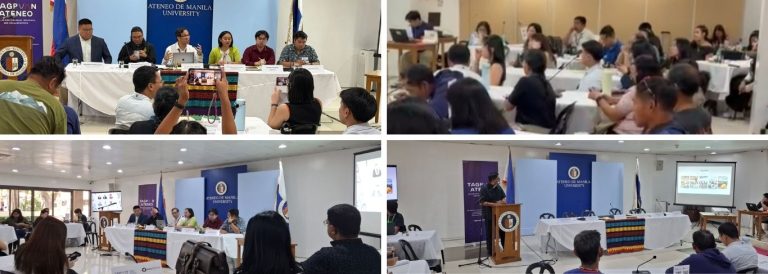
An open discussion with participants followed, during which critical issues were addressed, including village-level intimidation and violence and community incidents. The prevalence of deceptive consultations that participants experienced were also shared where approval of IPs were fabricated or presented as genuine. Participants also queried how the report findings into on-the-ground strategies to the media does not engage in disinformation.
The convening concluded with remarks by Arthur Tanggara from Tagpuan Ateneo. He expressed his gratitude to the panellists and participants for their significant contributions and valuable insights. He emphasised that the event serves as an example of how the Tagpuan Ateneo facilitates conversation, expressing his hope that the discussion on the underreported impacts of climate disinformation will prove useful.
For highlights of the National Convening on “Climate Disinformation in the Philippines: Legitimising Attacks on Indigenous Peoples”, visit Asia Centre’s TikTok channel.
The published reports on this series thus far includes:
- Climate Disinformation in Cambodia: Undermining Indigenous Peoples’ Agency
- “Climate Disinformation in Thailand: Negating Indigenous Peoples’ Identity”
- “Climate Disinformation in India: Subverting Indigenous Peoples’ Rights”
- “Climate Disinformation in Malaysia: Appropriating Indigenous Peoples’ Entitlements”
- “Climate Disinformation in Indonesia: Prioritising Development Over Indigenous Peoples’ Vulnerability”
Collectively, these reports examine how misleading narratives distort public understanding of climate issues, undermine Indigenous rights, and shape policy debates, highlighting the regional and cross-cutting nature of climate disinformation.
Upcoming final report:
This report will draw from the findings of the country reports to shed light on the dynamics of climate disinformation at the regional level.