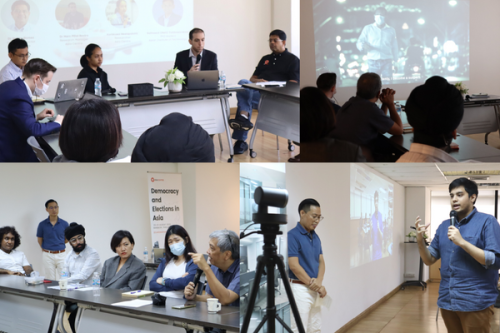
The Digital Security Training programme aimed to strengthen digital resilience across the Asia-Pacific region by equipping vulnerable communities with the knowledge, skills, and practical tools required to navigate an increasingly complex digital environment. From June 2024 to May 2026, Asia Centre and its partners delivered 250 Digital Security Training sessions across the region, reaching a total of 9,226 direct and indirect beneficiaries.
Over the two-year implementation period, the programme expanded its reach across Southeast Asia, South Asia, East Asia, and the wider Asia-Pacific region, engaging a diverse range of participants including civil society organisations, human rights defenders, journalists, educators, youth groups, women’s networks, researchers, lawyers, and community leaders. Through targeted training sessions, participants developed stronger awareness of digital risks, improved their ability to adopt safer online practices, and strengthened their capacity to protect themselves and their organisations from evolving cyber threats.

During the first year of implementation (June 2024 – February 2025), Asia Centre and its partners delivered 42 Digital Security Trainings, reaching 1,225 participants across the region. The programme established a strong foundation through country-level engagement across Southeast Asia, South Asia, and East Asia, as well as through regional activities. In the second year (June 2025–May 2026), the programme significantly expanded its reach, delivering 204 sessions across 17 countries and reaching 7,634 direct and indirect beneficiaries, representing substantial growth in both geographic coverage and community engagement.
Throughout the full two-year programme period, Southeast Asia represented one of the largest areas of engagement, reaching communities across Cambodia, Indonesia, Malaysia, Myanmar, Thailand, Timor-Leste, and Vietnam. The region’s high level of participation reflected continued demand for digital security capacity-building among civil society groups, community organisations, youth networks, and rights-based actors operating in diverse digital environments.

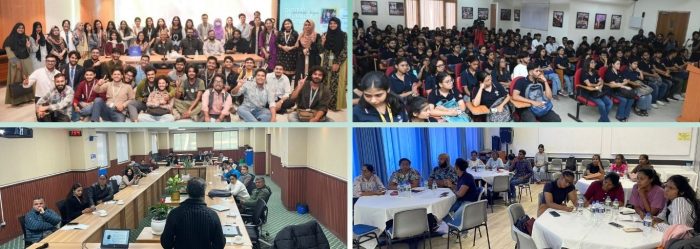
South Asia also demonstrated strong engagement, with trainings delivered across Bangladesh, India, Nepal, and Sri Lanka. The programme supported participants from both urban and rural communities, adapting delivery approaches to account for different levels of digital literacy, infrastructure access, and local challenges. In India, Master Trainers and facilitators worked across multiple states and communities, tailoring sessions to address context-specific concerns, including scams, privacy risks, and digital threats affecting vulnerable populations.
In East Asia, Digital Security Training expanded engagement among participants in Japan, South Korea, and Taiwan. Trainings supported civil society actors, youth groups, women’s organisations, and human rights defenders in strengthening awareness of emerging cybersecurity challenges. In Japan, particularly, increased engagement demonstrated growing demand for continued digital resilience-building efforts, with participants highlighting the importance of ongoing training to respond to evolving threats such as artificial intelligence-related risks and ransomware.

India was given special focus, where, from June 2025 to May 2026, 81 Digital Security Trainings were conducted in India, reaching 2,762 participants through end-beneficiary sessions and Training-of-Trainers programmes, strengthening both digital security awareness and local trainer capacity. Training sessions were delivered through a combination of onsite and online formats, including in Delhi and Kolkata, as well as across Mizoram, Jharkhand, Andhra Pradesh, Telangana, Karnataka, and Tamil Nadu. Participants represented a wide range of digitally vulnerable and high-risk communities, including civil society organisations, educators, journalists, youth leaders, community representatives, marginalised communities, and human rights advocates. The India programme highlighted the importance of adapting training approaches to diverse local contexts, including differences in language, digital infrastructure, and community-specific risks, ensuring that digital security knowledge remained accessible and practical for participants across both urban and rural settings.

The broader Asia-Pacific regional activities contributed to strengthening cross-border learning and collaboration through training conducted in Singapore, Thailand, Malaysia, Nepal, and Sri Lanka. These sessions created opportunities for participants from different countries and sectors to share experiences and build collective approaches to addressing common digital security challenges.
Across the programme period, participant engagement reflected strong gender diversity. From the 2024–2025 programme year, participation consisted of 49.3% female participants, 49.6% male participants, 0.7% non-binary participants, and 0.4% participants preferring not to disclose gender. The programme continued to prioritise inclusive participation and accessibility throughout its expansion.
Throughout implementation, Asia Centre and its partners emphasised context-sensitive and community-driven approaches to digital security training. Sessions addressed a wide range of issues, including online harassment, privacy protection, phishing, account security, misinformation, surveillance risks, artificial intelligence-related threats, and other emerging cybersecurity challenges.
The programme demonstrated that digital security awareness is most effective when connected to participants’ lived experiences. Many participants entered training with familiarity with digital platforms and terminology but lacked awareness of how specific threats could directly impact their safety, work, and communities. For example, participants gained a clearer understanding of how everyday digital practices, such as using online accounts, managing passwords, and protecting personal information, could expose them to risks if proper security measures were not applied. Others were able to connect broader concepts such as phishing, online threats, and privacy protection with challenges they had encountered personally or within their communities. By linking technical concepts with practical examples, Digital Security Training sessions helped participants build confidence in recognising, preventing, and responding to digital risks.

A significant achievement of the programme was the development of a growing network of trained individuals and Master Trainers who continued sharing knowledge within their own communities. Participants consistently highlighted the value of peer learning and knowledge-sharing, noting that the skills gained through Digital Security Training sessions could be applied beyond their own digital practices and shared with colleagues, organisations, families, and wider networks. Participant feedback showed that many attendees planned to strengthen their own digital protection practices, while others intended to share knowledge with students, community members, and colleagues. One participant highlighted that the training would allow them to “apply these knowledge towards school students to make them aware of these threats and hazards,” demonstrating the potential for training outcomes to extend beyond direct participants. Others identified specific practical lessons, such as understanding available security tools within commonly used platforms, with one participant noting that although they had used Google services for years, the training provided a clearer understanding of its security features and protection methods.
The programme also reached groups operating in higher-risk environments, including journalists, human rights defenders, and civil society actors facing increased exposure to digital threats. In these contexts, Asia Centre and its partners implemented more context-sensitive approaches to participant engagement and data collection, ensuring that training delivery remained safe and responsive to local realities.
Across two years, the Digital Security Training programme strengthened digital resilience among thousands of participants throughout Asia-Pacific and established a foundation for continued regional capacity-building. The delivery of 250 sessions and engagement of 9,226 beneficiaries demonstrate the growing importance of digital security awareness in supporting safer and more resilient communities.
Looking ahead, demand for continued engagement remains strong, particularly around emerging challenges such as artificial intelligence, algorithmic risks, digital ethics, data protection, and evolving cybersecurity threats. Asia Centre remains committed to building upon the achievements of the Digital Security Training programme and supporting communities across the region in developing sustainable digital resilience and safer online environments.