From 17 to 21 November 2026, Asia Centre, as part of its Building Bridges Initiative, facilitated dialogues between Sao Phal Niseiy, Editor-in-Chief of Cambodianess, based in Phnom Penh, Cambodia, and Pravit Rojanaphruk, Senior Staff Writer and Columnist at Khaosod English, based in Bangkok, Thailand with stakeholders in Kuala Lumpur, Malaysia.
The cross-border dialogue consisted of discussions with ASEAN Parliamentarians for Human Rights (APHR), Malaysia’s Representative to the ASEAN Intergovernmental Commission on Human Rights (AICHR), Malaysiakini, The Tiger Show Podcast and public seminars at Kuala Lumpur and Selangor Chinese Assembly Hall (KLSCAH) and Sunway University.
The aim was to raise awareness of the ongoing Cambodia–Thailand border tensions in Malaysia and explore how Malaysian stakeholders can contribute to depolarisation in Cambodia and Thailand.
The engagements revealed, although there is low awareness of the conflict in Malaysia, all actors were willing to support depolarisation initiatives in both countries. This positive outcome in Malaysia also pointed to the potential of engaging with other Southeast Asia countries. In this way, civil society and independent media initiatives can be broadened to both raise awareness and engage stakeholders in depolarisation efforts beyond Cambodia and Thailand.
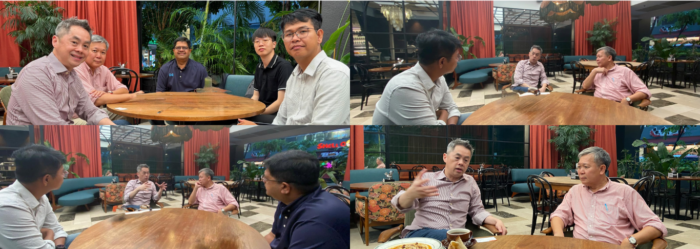
Top Left (from left to right): Edmund Bon, Malaysia’s Representative to the ASEAN Intergovernmental Commission on Human Rights (AICHR); Pravit Rojanaphruk, Senior Staff Writer and Columnist at Khaosod English; Dr James Gomez, Regional Director of Asia Centre; Natthachai Khampeerapap,Research Associate at Asia Centre; Sao Phal Niseiy, Editor-in-Chief of Cambodianess.
On 17 November 2026, the delegation met with Edmund Bon, Malaysia’s Representative to the ASEAN Intergovernmental Commission on Human Rights (AICHR). The discussion explored Malaysia’s potential role in facilitating neutral cross-border dialogue for peacebuilding and depolarisation, alongside regional human rights developments and opportunities for CSOs and independent media collaboration under Singapore’s upcoming ASEAN Chairmanship.
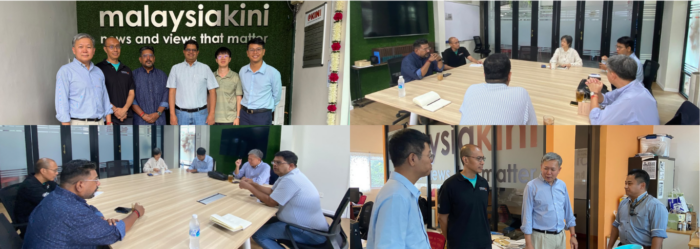
Bottom Left (from left to right): Sheridan Mahavera, Editor at Malaysiakini; R K Anand, Editor at Malaysiakini; Ai Lian Lim, Media Coach at Malaysiakini; Sao Phal Niseiy, Editor-in-Chief of Cambodianess; Pravit Rojanaphruk, Senior Staff Writer and Columnist at Khaosod English; Dr James Gomez, Regional Director of Asia Centre.
On 18 November 2026, Sheridan Mahavera and R.K. Anand, Editors, and Ai Lian Lim, Media Coach at Malaysiakini, welcomed the delegation to their office. The editorial team expressed openness to publishing opinion pieces from Asia Centre, Cambodianess and Khaosod English on the Cambodia–Thailand border tensions. This potential collaboration would help broaden regional perspectives, raise awareness among Malaysian audiences and provide greater visibility to voices advocating dialogue and peaceful engagement.
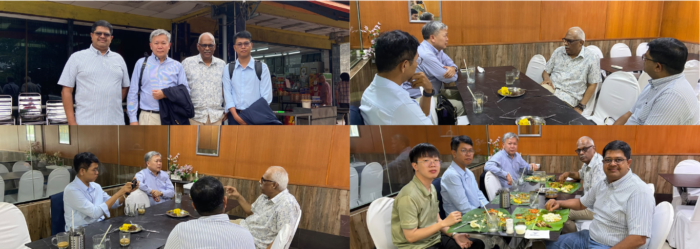
Top Left (from left to right): Dr James Gomez, Regional Director of Asia Centre; Pravit Rojanaphruk, Senior Staff Writer and Columnist at Khaosod English; Charles Santiago, Chairperson of ASEAN Parliamentarians for Human Rights (APHR); Sao Phal Niseiy, Editor-in-Chief of Cambodianess.
The delegation also met with Charles Santiago, Chairperson of ASEAN Parliamentarians for Human Rights (APHR). He expressed his willingness to contribute Malaysia’s perspectives to articles by Asia Centre, Cambodianess and Khaosod English, and to support, where relevant, discuss the issue in APHR’s future events and engagements. This opened opportunities for continued collaboration in promoting regional dialogue, strengthening cross-border understanding and advancing depolarisation efforts among parliamentarians in the region.
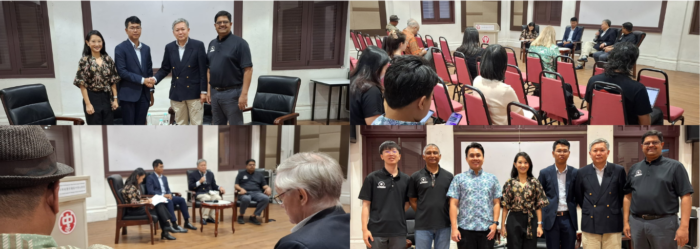
Bottom Right (From Left to Right): Natthachai Khampeerapap, Research Associate at Asia Centre; Sanjay Gathia, Programme Manager at Asia Centre; Kelvin Lee See Kiang, Chairperson, KLSCAH Civil Rights Committee; Chong Kar Yan, Briefing Moderator & Lawyer/Member, KLSCAH Civil Rights Committee; Sao Phal Niseiy, Speaker, Editor-in-Chief of Cambodianess; Pravit Rojanaphruk, Speaker, Senior Staff Writer and Columnist at Khaosod English; Dr. James Gomez, Speaker, Regional Director of Asia Centre.
A public briefing was held on 19 November 2026 in collaboration with the Kuala Lumpur and Selangor Chinese Assembly Hall (KLSCAH), opened by the Chair of the Civil Rights Committee – Kelvin Lee See Kiang, bringing together 15 participants that included diplomatic representatives, media organisations and civil society stakeholders. During the discussion, Emma Roberts, First Secretary of the Australian High Commission Kuala Lumpur from the Australian Embassy asked the speakers for their take on the United Nations Convention on the Law of the Sea (UNCLOS) maritime negotiations between Cambodia and Thailand. All speakers expressed a cautiously optimistic view, acknowledging that while negotiations are ongoing, the outcomes face challenges of legal enforceability and risks triggering nationalist backlash. Nevertheless, the speakers noted that Australia holds diplomatic influence in the process to help normalise relations between the two nations.
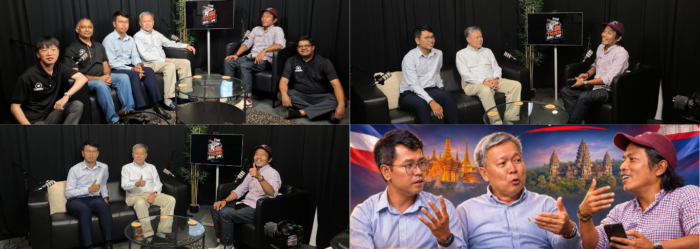
Top Left (from left to right): Natthachai Khampeerapap, Research Associate at Asia Centre; Sanjay Gathia, Programme Manager at Asia Centre; Sao Phal Niseiy, Editor-in-Chief of Cambodianess; Pravit Rojanaphruk, Senior Staff Writer and Columnist at Khaosod English; Amin Iskandar, Host of The Tiger Show Podcast & Journalist and Writer; Dr James Gomez, Regional Director of Asia Centre.
Asia Centre also facilitated the journalists’ participation in The Tiger Show Podcast’s episode “Thailand vs Cambodia: Can the media stop the hatred?”, hosted and moderated by Amin Iskandar, Malaysian journalist and writer, and host of the show, where they discussed the border tensions and resulting social polarisation. During the podcast it was noted that newsrooms and journalists need a national standard of reporting regarding language and certain topics. This is to ensure there is no further polarisation and the media does not profit from sensationalism. In the case of the Cambodia-Thai border conflict, the role of the media is to rebuild trust between journalists from both countries, to form collaborative partnerships, and engage in peace journalism. The importance of neutral third-party facilitators, such as Asia Centre, in creating a space for cross-border dialogue and connecting journalists from both countries was strongly emphasised and pointed out as a necessity for depolarisation and conflict resolution.
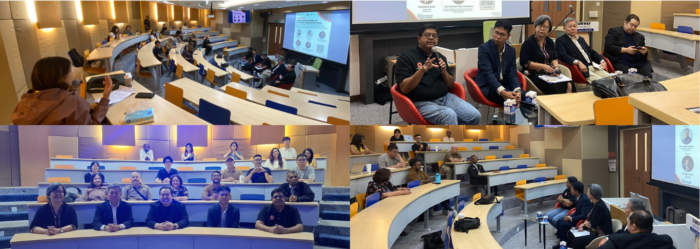
Top Right (from left to right): Dr James Gomez, Panellist & Regional Director of Asia Centre; Sao Phal Niseiy, Panellist, Editor-in-Chief of Cambodianess; Dr. Pauline Pooi Yin Leong, Panel Moderator & Head of the School of Communication and Media Studies, Faculty of Arts and Social Sciences at Sunway University; Pravit Rojanaphruk, Panellist, Senior Staff Writer and Columnist at Khaosod English; Norman Goh, Panellist & journalist at Nikkei Asia in Kuala Lumpur.
The second public discussion was held on 20 November 2026 in collaboration with Sunway University, opened by Professor Mayco Axel Santaella, the Dean for the Faculty of Arts and Social Sciences at Sunway University, bringing together 17 participants to discuss conflict-sensitive reporting. Among the issues discussed was the future of independent media and the impact of AI. With dropping revenue, cuts in development funds, legal threats, and shrinking staff size the ability for newsrooms to generate news and attract eyeballs is continuing to dip. Hence, it is unclear whether truthful fact based reporting would exist in its present form in the future.
Over 3 days, Asia Centre Building Bridges Initiative’s Malaysia engagement created awareness and attracted support for depolarisation efforts in Cambodia and Thailand. It was also a first step towards an initiative where civil society and independent media can come together as important actors in conflict transformation in the region. Rather than waiting for governments, civil society and independent media actors can themselves begin building bridges through sustained dialogue, regional solidarity and people-to-people engagement.