
Climate Disinformation in Asia: Trends and Challenges
Coming Soon In Asia, climate disinformation is a tactic that deliberately reinforces existing power imbalances between dominant actors and Indigenous Peoples (IPs). Drawing from country studies on Cambodia, India, Indonesia, Malaysia, Pakistan, the Philippines and Thailand, this regional brief outlines how these disparities reinforce extractive development policies that consolidate state
Climate Disinformation in Malaysia: Appropriating Indigenous Peoples’ Entitlements
Download Full Report In Malaysia, climate disinformation aids the appropriation of Indigenous Peoples’ (IPs) entitlements. Although IPs are legally classified as “Bumiputera”, this category centres Malay-Muslim dominance by conflating the broad national category of Malay-Muslim as “Indigenous” with the international human rights concept of “Indigenous Peoples” reserved for non-dominant groups.
Climate Disinformation in India: Subverting Indigenous Peoples’ Rights
Download Full Report In India, both online and offline climate disinformation stands to dispossess the protected rights of Indigenous Peoples (IPs) who constitute 8.6% (104 million) of the population. False narratives in the media and social media legitimise the subversion of laws like the Forest Rights Act (FRA) intended to
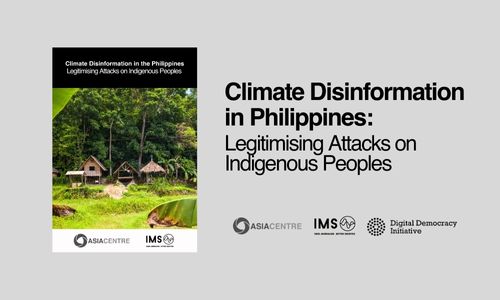
Climate Disinformation in the Philippines: Legitimising Attacks on Indigenous Peoples
Coming Soon In the Philippines, climate disinformation is being used by state and corporate actors to legitimise attacks on Indigenous Peoples (IPs). By labelling those in opposition, such as IPs, as “terrorists”, some of the most vulnerable in these communities are subjected to extractive and ecologically destructive mining, the building
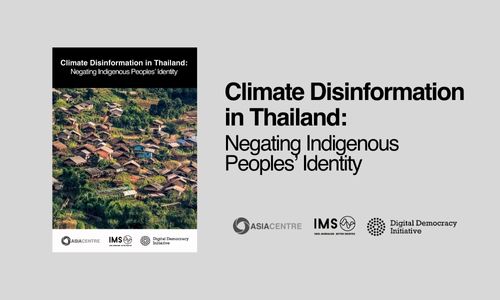
Climate Disinformation in Thailand: Negating Indigenous Peoples’ Identity
Download Full Report In Thailand, the rapid digitalisation of media and widespread use of social media since the early 2000s have accelerated the spread of climate disinformation. This has reinforced the systemic negation of Indigenous Peoples’ (IPs) identity. Climate disinformation disproportionately affects IPs, who make up nearly 14% of the

Climate Disinformation in Cambodia: Undermining Indigenous Peoples’ Agency
Download Full Report In Cambodia, the rise of digital media and social media platforms since the mid-2010s has intensified a surge in climate disinformation. It affects Indigenous Peoples (IPs), who make up about 3% of the population and live in forests highly vulnerable to climate change and deforestation. From false