In spite of global democratic backsliding, social divisions, AI-induced acceleration of disinformation and the significant drop in international development aid, there is a rise in the number of Asian organisations and networks seeking to advance the cause of democracy. However, to harness this proliferation of democracy promoters in Asia, some of whom are in a hibernation or semi-hibernation mode due to funding cuts and staff layoffs, strategic coordination and optimal resource mobilisation are needed.
Asia Centre, a civil society research institute, operates in the heart of this democracy “flux”. From 10 to 11 June 2026, it brought together members of the Global Democracy Coalition (GDC) Asia network and other democracy promoters to the GDC Asia Regional Forum 2026 (GDC ARF 2026), “Navigating Democratic Transitions: Emerging Gaps & Opportunities”.
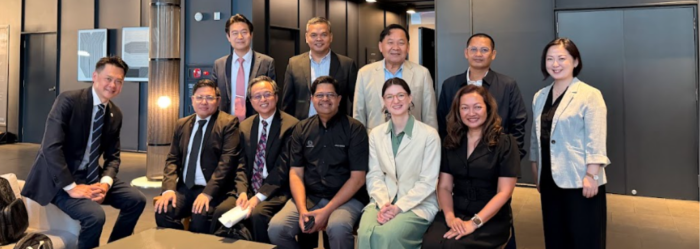
The two-half-day forum was held in partnership with the Korea Democracy Foundation (KDF) at the National Museum of Korean Democracy in Seoul, South Korea. This was in conjunction with the KDF Global Forum (11 June 2026) to commemorate the 39th Anniversary of South Korea’s 10 June Democratic Uprising.
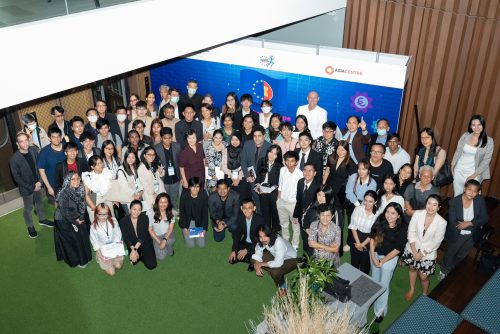
The GDC ARF 2026 event brought together 81 participants, both on-site and online, from diverse backgrounds, including diplomatic missions, academia, democracy advocates, media institutes, INGOs, CSOs and international partners from across Asia.
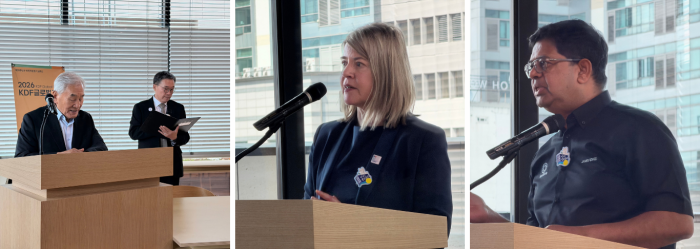
Mr Lee Jae-Oh, President, KDF, welcomed the participants and opened the Forum. He urged democratic communities to leverage forums such as this to share experiences, build new friendships and strengthen cross-border cooperation. Following this remark, Ms Leena Rikkilä Tamang, Regional Director of the Asia-Pacific Programme, International IDEA, grounded the discussion on five universal democratic demands that were highlighted across the GDC regional forums: accountability, citizen participation, financial transparency, structural inclusion and a democratic system capable of governing future challenges. Finally, Dr James Gomez, Regional Director, Asia Centre, pointed out the rise in democracy actors in Asia amidst a reduction of resources, and called for cross-coordination to reduce the duplication of efforts and to ensure limited resources are pooled.
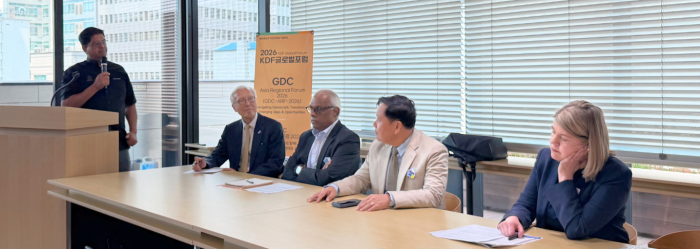
The first panel discussion, “Democracy Promotion in Asia: Stakeholders and Their Roles”, moderated by Dr Gomez, discussed the roles of “democratic actors” – political parties, parliamentarians, former ambassadors and inter-governmental organisations.
- Senator Mardi Seng, Senate of Cambodia, President of the Khmer Will Party and Former Chairperson, Council of Asian Liberals and Democrats (CALD), discussed the relevance of political parties in countries like Cambodia in contemporary times. To stay relevant, he said, political parties must build solidarity with the people at the national level, gain entry into regional networks and partner with international organisations working on democracy.
- Mr Charles Anthony Santiago, former Malaysian Member of Parliament and co-chair of ASEAN Parliamentarians for Human Rights, emphasised that, while parliaments and parliamentary committees can put certain policy issues on the table for discussion, the key challenge remains the recruitment of parliamentarians who are prepared and willing to speak up on issues related to democracy and human rights.
- Ambassador Kak-Soo Shin from South Korea and co-representative of the newly launched Indo-Pacific Democracy Forum (IPDF), said that governments in democratic societies can look into allocating a budget to support democracy promotion activities overseas. Acknowledging this importance, IPDF has been lobbying the Korean government to move in this direction. He also highlighted that IPDF members are active in the Sunnylands Initiative to support and advance democratic norms in Asia.
- Ms Leena Rikkilä Tamang discussed the role of electoral institutions – that, while the technical capacity to organise elections in the Asia-Pacific region has greatly improved, public trust in such bodies is eroding. Additionally, due to ongoing conflicts, International IDEA member states are prioritising and redirecting their financial budgets toward security. The challenge is trying to persuade governments to see the connection between democracy and security, as well as to get countries such as the Republic of Korea and Japan (presently an observer) to become full members.
In the following panel, “From Democratic Stress to Democratic Renewal: How is Asia Rebuilding Democracy”, GDC Steering Group member Dr Tran Quoc Hung, Coordinator, Alliance for Vietnam’s Democracy, moderated the session. The panel emphasised that a healthy democracy depends on three essential, reinforcing pillars: freedom of expression, free and fair elections and freedom of association.
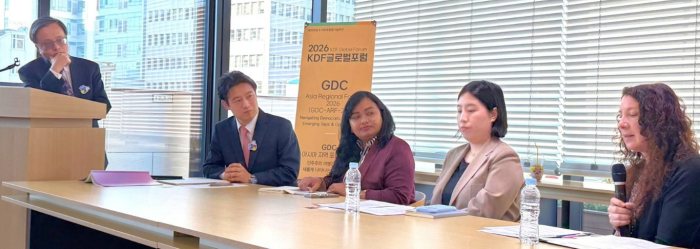
- Mr Sakurai Shu, former Japanese Member of Parliament and former Executive Secretary, Japanese Diet’s Caucus for Universal Values in the Indo-Pacific, advocated for moving beyond infrastructure-focused initiatives to promote universal democratic values. In doing so, he noted the need for multi-partisan caucuses in parliaments across the region.
- Ms Aklima Ferdows Lisa, Director, Policy Analysis and Research Initiative, Bangladesh, described the country’s post-2024 protest landscape. Despite the toppling of the authoritarian regime, the country is facing challenges regarding law and order, mob violence and the difficulty of translating protests into structural reform.
- Dr Tran emphasised that democratic renewal in restricted societies and countries involves building and maintaining “underground” democratic and civil society networks in the shadows. This maintenance can focus on capacity-building on digital tools and systems to bypass firewalls and provide solidarity to activists in-country.
- Ms Jeonghyun Kim, Programme Manager, International Republican Institute, addressed the dilution and politicisation of human rights. She used a case study of South Korea, where there is a growing challenge in raising North Korea’s human rights issues among younger people, as it is framed as a political matter rather than human rights concerns.
- Ms Ileana Marin, Program Officer for Democracy around the Globe, Charles F. Kettering Foundation, stressed that democratic renewal requires more than just money. It requires intergenerational dialogue, the preservation of collective memory and finding a common language to bridge political polarisation.
Day 2 of the Forum began with panel three, “Navigating Democratic Transitions in the Age of AI”. The session was moderated by Dr Sook Jong Lee, Co-founder, Asia Democracy Research Network and Senior Fellow, East Asia Institute. The panel highlighted the risks posed by Artificial Intelligence (AI), but pointed out that AI offers opportunities for democracy through augmented deliberation, enhanced administrative transparency and safer communication tools for activists.
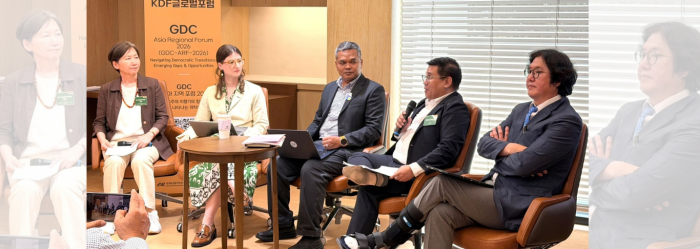
- Dr Chanroeun Pa, President, Cambodian Institute for Democracy, argued that AI is a double-edged sword. AI governance must include the voices of civil society and the general public rather than leaving its development to private companies. An example of inclusion was demonstrated in Cambodia, where a coalition of twenty (20) non-governmental organisations (NGOs) successfully advocated to the government to allow civil society input on its national AI strategy.
- Mr Celito Arlegue, Executive Director, CALD, addressed the challenges AI poses to democratic processes and institutions. While democracy relies on open processes and social trust, the rise of an “algocracy” threatens to relegate decision-making, leading citizens to trust algorithms over elected representatives. This shift is compounded by AI business models that can erode public trust, yet technology also holds the potential to positively transform societies by fostering mass deliberation and collective intelligence.
- Dr Sunghack Lim, Professor, University of Seoul and member of IPDF, said AI weakens citizens’ independent thinking. To counter this, civil society must reclaim ownership of technology by using AI to foster public deliberation, bridge political divides, and enforce strict democratic auditing on high-risk public systems.
- Ms Hannah Bowley, Senior Programme Manager, Asia Pacific, Westminster Foundation for Democracy, drew attention to the gap between technological advancement and the political landscape. She said parliaments are struggling to keep up with the pace of industry advancement. Meanwhile, as executive branches rapidly adopt AI, they are also at the same time falling behind in integrating these digital tools into their own internal operations.
Following the panel, a keynote presentation was made by Mr Lee Seong-hoon, South Korea’s Ambassador for Human Rights, Peace and Democracy, appointed in May 2026. Mr Lee outlined five core lessons for democratic resilience: active citizen organisation, non-violent resistance, peacetime civic education, youth inclusion and the indivisible link between human rights, peace and democracy. He also touched on AI: to safeguard these values against the global duopoly of the market-driven US and state-controlled Chinese AI models, he proposed a “Digital Bandung” coalition of middle-power nations and ASEAN states.
By broadening partnerships across civil society, international bodies like International IDEA, labour unions and progressive municipal mayors, this alliance aims to establish an inclusive, sovereign and democratic framework for technology. Furthermore, he highlighted the shortage of funding in promoting democracy in Asia and called for Japan, South Korea and Taiwan to form a collective foundation to support consolidated democracy.
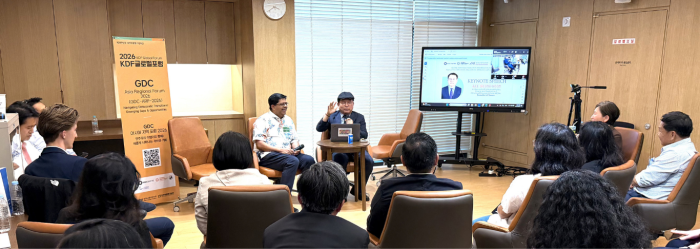
After the keynote speech, the participants were divided into four small groups to brainstorm future directions for GDC in Asia. The session, “Towards an Asia Democracy Forum: Future Role and Activities”, provided the discussants with the following guiding questions:
- While democracy may be “backsliding”, the growth of democracy NGOs and networks in Asia has been exceptional. How can we encourage coordination and economies of scale for the promotion of democracy in Asia?
- We are increasingly hearing of the role of AI in politics. In what practical way can we leverage AI for democracy promotion work?
- International development funding is becoming scarce for work in Asia. Should we start focusing on sources in Asia? Where should we look? What should we say to prospective donors?
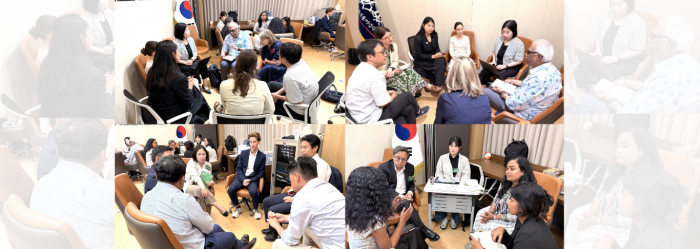
After the discussion, the four groups shared the following inputs:
- Japan, as the largest economy in the region, needs to take a proactive role in regional democracy, in collaboration with South Korea and Taiwan, to form alliances in the region. It can consider reallocating resources from bodies like the Japan International Cooperation Agency to fund NGOs and pro-democracy activists.
- Japan and South Korea should be more involved in International IDEA. Japan should consider upgrading its status from an observer to a full member. South Korea can officially enter the process to join as a member (or at least an Observer) within the next two years.
- Regarding the use of AI, activists in authoritarian settings can use AI tools for voice-overs and blurring faces to protect their identity while speaking out. AI monitoring can be used to scan online text and create spaces safe from hate speech.
- Organisations and networks can consider engaging with entities like the Asian Venture Philanthropy Network – currently funding standard economic development, but holding massive capital required – to shift towards democratic institutions.
- For democracy advocates and organisations to utilise cost-sharing models, targeting wealthy pro-democracy philanthropies and to explore loans from multilateral development banks.
These inputs, among others, are expected to be integrated into a global position paper on democracy by the GDC Secretariat and discussed by coalition members at the GDC Global Forum in October 2026 in Athens, Greece.
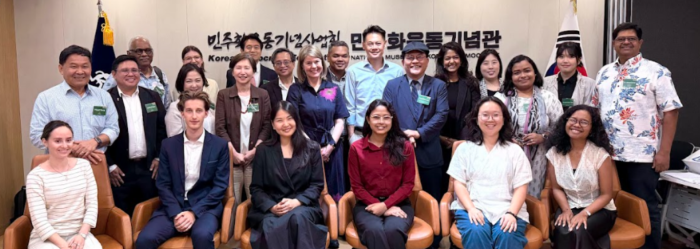
In closing, Dr Gomez thanked all panellists, participants, co-organisers, and sponsors, Global Democracy Coalition (GDC), International IDEA, Korea Democracy Foundation (KDF), Indo-Pacific Democracy Forum (IPDF) and Charles F. Kettering Foundation, for their kind coordination, cooperation and support.
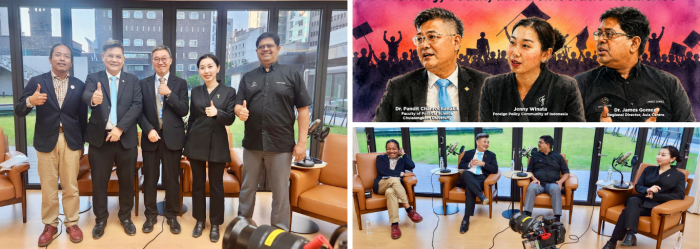
In addition, on 10 June 2026, on the sidelines of the main event, Dr Gomez and KDF delegates recorded a special podcast episode (YouTube, Spotify) of the Malaysia-based The Tiger Show hosted by Amin Iskandar. The episode examined how Asia safeguards democracy in an increasingly complex and polarised world. Dr Gomez commented that strengthening democracy in Asia should be driven by local resources and initiatives to foster a more sustainable democratic development. This comment was picked up by Malaysia media Astro Awani. Read the report in Malay here.

In the lead-up to the GDC ARF 2026 in Seoul, South Korea, the GDC Secretariat organised the GDC Asia Pre-Forum Webinar: Democratic Openings Without Democratic Consolidation (YouTube) on the 4th June 2026. The webinar featured Ika Ningtyas, Fact-Checking Coordinator / Journalist, Tempo Indonesia, Advisory Board Member, Southeast Asia Freedom of Expression Network (SAFEnet), Jeremiah Tomas, Former Youth Chair, Council of Asian Liberals and Democrats (CALD), Narayan Adhikari, South and East Asia Lead, Accountability Lab Nepal, Ananya Kundu, Founder & Executive Director, White Dot Solidarity Network, and was moderated by Dr James Gomez, Regional Director, Asia Centre with Elisenda Balleste Buxo, GDC Programme Manager as discussant. The session examined Asia’ democratic paradox, where popular mobilization frequently disrupted authoritarian governance and elite capture but often failed to achieve durable democratic consolidation. Panelists emphasize that long-term democratic resilience requires regional movements to bridge the gap between reactive mobilization and structured organization. Ultimately, the panellists argued that democratic transition hinges on translating public anger into proactive policy, establishing sustainable mentorship pipelines, and fostering genuine power-sharing between veteran leadership and the younger generation.
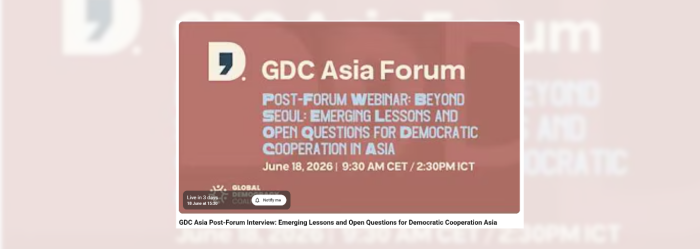
Following the 2026 GDC Asia Regional Forum held in Seoul on 10–11 June, the GDC Asia Post-Forum Interview: Emerging Lessons and Open Questions for Democratic Cooperation in Asia (YouTube), has been planned for 18th June, 9:30AM CEST / 2:30PM ICT. It will feature Ms. Nandini Raj, Program Manager, Communications, Association for Democratic Reforms (ADR), Mr. Celito Arlegue, Executive Director, Council of Asian Liberals and Democrats (CALD), and Dr. Chanroeun Pa, President, Cambodian Institute for Democracy (CID), and will serve as a conceptual entry point to address the region’s shifting political landscape. This dialogue aims to address the mobilization gap, explore why powerful popular movements in South Korea, Bangladesh, Sri Lanka, and Indonesia have been able to successfully challenge authoritarianism, yet still struggle to translate those explosive moments of democratic opening into durable, long-term consolidation. The interview will frame deeper regional conversations centered on democratic renewal, institutional resilience, and the evolving nature of civic practice across Asia.
The 2026 GDC Asia Regional Forum is a partnership between Asia Centre and the GDC. Since 2024, the Asia Centre has been collaborating with GDC on projects promoting and protecting democratic integrity in the Asia-Pacific. In the third Summit for Democracy in March 2024, Dr Gomez participated as a panellist in several GDC-supported panels. Also in 2024, Asia Centre undertook the #ThankYouDemocracy campaign in the Asia-Pacific region to raise public awareness about the state of democracy, with a particular focus on youth engagement in democratic processes. This included a regional dialogue, “Youth Voices, Strong Choices: Political Participation in the Asia-Pacific”, in November 2024 that featured 12 speakers from across the region and hosted over 30 participants. In April 2025, Asia Centre co-hosted the 2025 GDC Asia Regional Forum, “Youths, Democracy & Electoral Legitimacy in Asia”. The Forum brought together nearly 100 participants from across Asia. During the Forum, participants worked to develop a roadmap for sustained youth engagement and democratic participation. The event concluded with a call for collaboration, resource-sharing and consistent efforts to overcome challenges and improve youth participation.
Asia Centre’s Dr James Gomez is currently serving as a member in the GDC’s Steering Group for a 2-year period (2025 to 2027). He was elected by members of the GDC in 2025.