
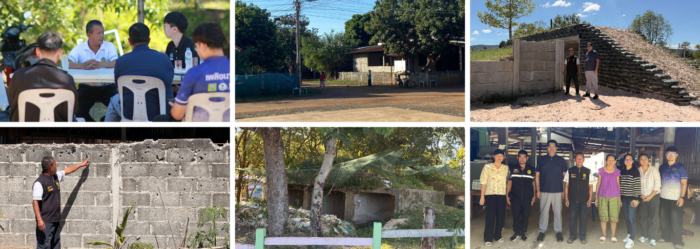
From 21 to 23 November 2026, Asia Centre’s delegation, comprising its Regional Director, Dr. James Gomez, Centre Manager Patcharee Rattanarong and Research Associate Natthachai Khampeerapap made a trip to Ubon Ratchathani province, Thailand for discussions with partners and site visits.
On 22 November, the delegation visited three villages, Ban Thung Somdet, Ban Sam Wai, and Ban Na Samakkee, situated in Dom Pradit sub-district of the Nam Yuen district. The delegation was accompanied by Natchada Malee, Community Researcher and Programme Coordinator at the Nature Care Foundation, with coordination support from Dr Kingkan Sumnuanyen, Lecturer and Researcher at Ubon Ratchathani University.
The Centre’s overall assessment is that, despite the gradual return to normality, residents across the three villages continue to face security concerns, economic uncertainty and psychological distress. Almost everyone is determined to stay in their homes rather than relocate. However, inadequate protective infrastructure and limited recovery assistance leave them vulnerable to renewed hostilities. Hence, a key request of the residents is for an improved safety infrastructure that includes accessible and reinforced bunkers.
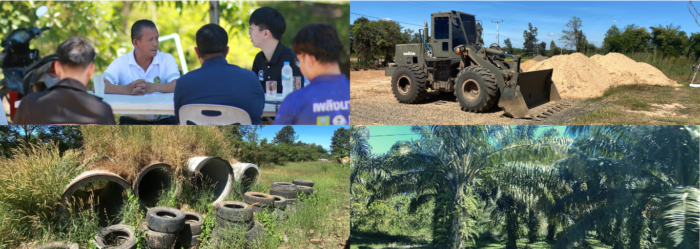
Top Left: Talks with Residents, Top Right: Construction Machinery, Bottom Left: Temporary Bunker, Bottom Right: Palm Tree Plantation.
According to the village head of Ban Thung Somdet, Boontan Promkhot, more than 18,000 families in Dom Pradit sub-district alone had been affected, alongside more than 60,000 families across seven provinces along the Cambodia–Thailand border. He identified two immediate priorities: adequate bunkers to protect residents during renewed hostilities and financial assistance to sustain household livelihoods, particularly for agricultural communities.
During the visit, the delegation identified four recurring concerns across the villages.
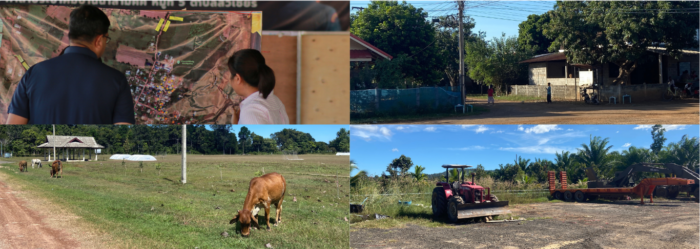
Top Left: Talks with Residents, Top Right: Kids Playing in the Village Street, Bottom Left: Farm Lands and Cattle, Bottom Right: Roadwork Machinery.
First, residents remain committed to staying in their communities and restoring their daily lives. Despite previous hostilities and damage to residential properties, residents expressed a strong preference to remain in their homes, maintain their livelihoods and continue working on their land. Essential public facilities and services, including schools and community infrastructure, remain operational. Agricultural activities have also resumed, although the threat of renewed conflict continues to create uncertainty for households dependent on farming and livestock.
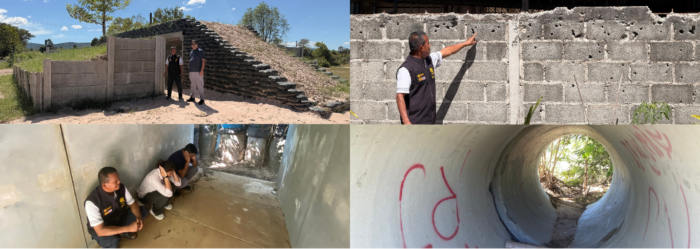
Top Left: Bunker, Top Right: Gunshot Marks in a Wall, Bottom Left: Bunker Drill, Bottom Right: Inside Bunker Tunnel.
Second, existing protective infrastructure remains inadequate. In Ban Thung Somdet, the delegation inspected bunkers and houses damaged by artillery fire and shrapnel. Available bunkers remain insufficient to accommodate residents during emergencies. In Ban Sam Wai, the delegation visited the village’s only bunker, located within a school and equipped with anti-drone netting. Residents expressed concerns about potential drone attacks, particularly kamikaze drones. Households have also prepared emergency evacuation backpacks containing essential supplies, demonstrating their reliance on individual preparedness in the absence of sufficient public protective infrastructure.
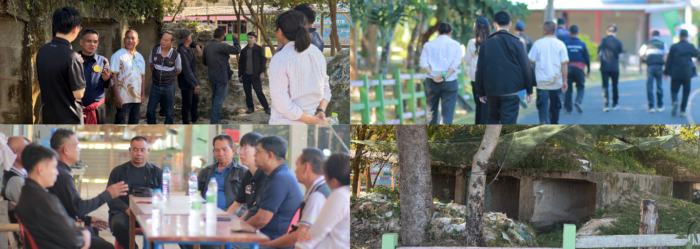
Top Left: Talks with Residents, Top Right: Walk with Residents, Bottom Left: Talks with Residents, Bottom Right: Bunkers.
Third, village volunteers require greater protection and operational support. Volunteers play an essential role in safeguarding community property, responding to emergencies and assisting elderly residents and people with limited mobility. However, they lack basic protective equipment, particularly bulletproof vests and helmets. The volunteer unit receives a monthly allocation of THB 5,000 (approximately USD 150 as of November 2026), which members collectively use to purchase food and other necessities. This allocation remains insufficient to support their broader responsibilities and operational needs.
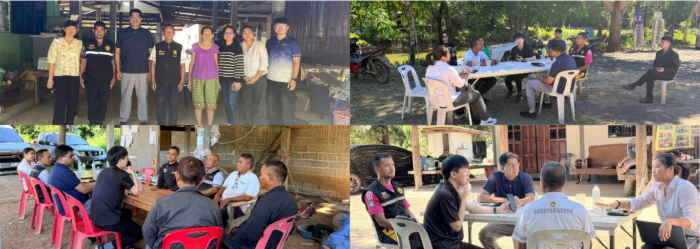
Group Photos and Talks with Residents of the Villages.
Fourth, continued conflict uncertainty discourages long-term investment and livelihood development. Although residents remain committed to staying in their communities, concerns over the possibility of renewed hostilities have made them reluctant to expand or invest in their homes and agricultural activities. Some households have instead taken individual initiatives to construct makeshift bunkers beside their homes, reflecting both their determination to remain in place and the need to protect their families without relocating.
These observations demonstrate that the gradual return to normality should not be mistaken for full recovery. Communities in all the affected provinces including Ubon Ratchathani, continue to bear the consequences of the conflict, with inadequate bunkers, protective equipment, livelihood assistance, compensation and psychological support leaving households vulnerable to renewed security disruptions.
Asia Centre delegation’s overall impression is that residents remain determined to rebuild their lives without relocating. However, recovery must extend beyond restoring physical infrastructure to include civilian protection, psychosocial assistance, livelihood opportunities and meaningful compensation. Without sustained institutional support, affected communities will continue to manage the consequences of conflict largely on their own, caught between the desire to resume normal life and the fear of renewed hostilities.