Foreign Interference Laws in Southeast Asia: Deepening the Shrinkage of Civic Space

Download Foreign Interference Laws in Southeast Asia: Deepening the Shrinkage of Civic Space reviews developments in laws that seek to curb the role of international actors and their support for CSOs that work on democracy and human rights issues. To set the context, the report examines the rhetoric of ‘foreign interference’, the characteristics of ‘foreign interference laws’ being introduced in both democratic and non-democratic countries and how authoritarian regimes’ use of such laws impacts the operation of both INGOs and national CSOs. Focusing on the emerging trends in Southeast Asia, the report reviews the laws’ in the region and how they impact civic space in terms of shutting down INGOs and NGOs; blocking international funding; engaging in public rebuke of foreign governments, INGOs, CSO and individuals; the shift by international actors to government partnerships; and relocating their offices to other countries and adopting remote working. To address the impact of foreign interference laws on civic space, the report provides a set of recommendations for stakeholders. It includes ending unsubstantiated and negative rhetoric of foreign interference, repealing, amending, or clarifying foreign interference laws. Additionally, UN human rights mechanisms should seek clarity from member states regarding foreign interference laws, and INGOs and CSOs should call transgressions of foreign interference laws and strive to become self-sustainable.

Youth and Disinformation in Malaysia: Strengthening Electoral Integrity

Download Full Report Youth and Disinformation in Malaysia: Strengthening Electoral Integrity identifies the potential risks from disinformation that youths are likely to face in the 15th General Election (GE15) to be held latest by September 2023. A review of media reports and studies that referenced the last 5 general elections, revealed 5 recurring patterns of disinformation clustering around: sexual orientation and promiscuity; corruption; electoral integrity; women politicians and foreign interference. To date, legal and non-legal measures remain largely ineffective against political disinformation. Provisions in existing laws are vague and place authority in the hands of the government who can use these laws against critics. Meanwhile, non-legal measures by government agencies, government-linked companies and politicians lack the involvement of other stakeholders. The report recommends that legislation criminalising disinformation be compatible with international standards, and not restrict freedom of expression nor silence critics. And that the development of non-legal measures, such as media and digital literacy, involve non-government stakeholders and be promoted at an early age among the youth. In turn, these recommendations can strengthen the integrity and trust in Malaysia’s electoral system.

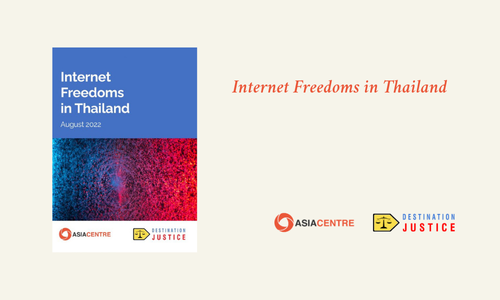
Internet Freedoms in Thailand

Download Full Report Internet Freedoms in Thailand reviews and analyses legislation that impacts internet freedoms in Thailand. These include provisions in the Constitution, Penal Code, the Computer Crime Act, the Cybersecurity Act, and the Emergency Decree. As this report shows, many provisions under these laws contain vague language enabling wide interpretation, impose harsh punishment, and give far-reaching power to the authorities. Today, internet freedoms in Thailand remain under threat, a product of continuous restrictions accelerated since the 2014 coup. These laws are used to justify removing or blocking content criticising the monarchy and establishment, prosecuting internet users, and harassing activists, individuals, journalists, and human rights defenders. This has led some sectors of Thai society to practise self-censorship, while others choose to defy the regime. Recommendations on upholding internet freedom in Thailand provided in this report include: to amend or repeal provisions containing vague language and imposing harsh penalties; decriminalise defamation and place it within the civil code; and limit the application of the Emergency Decree strictly as necessary.

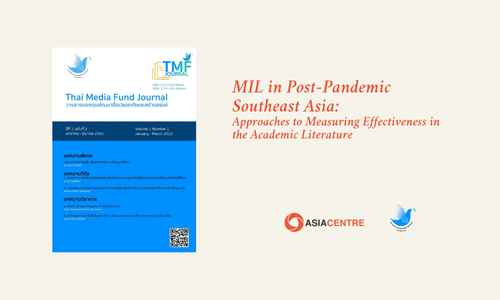
MIL in Post-Pandemic Southeast Asia: Approaches to Measuring Effectiveness in the Academic Literature

Download Full Report Dr. James Gomez and Dr. Robin Ramcharan, Directors of Asia Centre, authored an article “MIL in Post-Pandemic Southeast Asia: Approaches to Measuring Effectiveness in the Academic Literature” in Thai Media Fund Journal. The article reviews scholarship on the effectiveness of media information literacy (MIL) to distil its models and assesses its utility as a concept. Based on the review, eight questions regarding MIL are expanded upon in the article to provide a framework for policymakers, civil society programmers and researchers in their effort to design stronger MIL programmes.

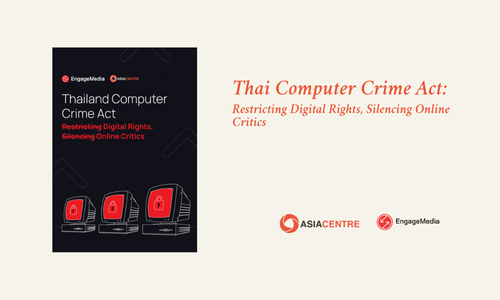
Thailand Computer Crime Act: Restricting Digital Rights, Silencing Online Critics

Download Full Report Download (in Thai) Thailand Computer Crime Act: Restricting Digital Rights, Silencing Online Critics reviews the provisions of the 2007 Computer Crime Act (CCA) and its 2017 amendment, as well as their impact on digital rights in Thailand. Containing harsh penalties and vaguely-worded provisions subject to extensive interpretation by authorities, the CCA removes critical content from the internet, harasses and prosecutes those who speak out and puts pressure on ISPs and tech companies to carry out orders. Instead, the report recommends that the Thai government review and amend rights-infringing sections of the CCA and ensure they comply with international human rights standards. Tech companies and local CSOs must also maintain a firm stance on safeguarding freedom of expression online.  

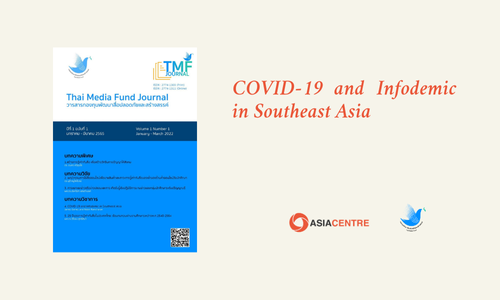
COVID-19 and Infodemic in Southeast Asia

Download Full Report In the academic article “COVID-19 and Infodemic in Southeast Asia” published in the first issue of Thai Media Fund Journal, Dr. James Gomez and Dr. Robin Ramcharan examine COVID-19 related ‘infodemic’ from 2020 to mid-2021. They take stock of how the ‘infodemic’ has adversely disrupted access to accurate public health information in Southeast Asia by and assess existing non-legal measures that have been used in response to the infodemic. Strategies reviewed in the article include: information sharing, fact checking, responses of technology companies, quality journalism and media information literacy (MIL) – each with shortcomings of their own. The situation in the region calls for a concerted effort to develop MIL education as a long-term guarantee against infodemic; while other strategies noted in the article must also be developed to accompany MIL. See other articles (in Thai) in the first issue of TMF’s Journal here.

COVID-19 and Infodemic in Southeast Asia

Download Full Report In the academic article “COVID-19 and Infodemic in Southeast Asia” published in Thai Media Fund Journal, Dr. James Gomez and Dr. Robin Ramcharan examine COVID-19 related ‘infodemic’ from 2020 to mid-2021. They take stock of how the ‘infodemic’ has adversely disrupted access to accurate public health information in Southeast Asia by and assess existing non-legal measures that have been used in response to the infodemic. Strategies reviewed in the article include: information sharing, fact checking, responses of technology companies, quality journalism and media information literacy (MIL) – each with shortcomings of their own. The situation in the region calls for a concerted effort to develop MIL education as a long-term guarantee against infodemic; while other strategies noted in the article must also be developed to accompany MIL.

Media Freedom in Southeast Asia: Repeal Restrictive Laws, Strengthen Quality Journalism

Download Full Report Media Freedom in Southeast Asia: Repeal Restrictive Laws, Strengthen Quality Journalism examines the use of fake news legislation to crack down on legitimate journalistic expression. Seeking to control the flow of information in the online space, governments have enacted these laws to monitor and control the internet infrastructure over which information critical or unflattering of the government can be disseminated. The laws contain vaguely-worded provisions penalising the act of spreading disinformation or information that authorities consider harmful to national security, public order and social harmony. While the negative dimensions of online content are of concern, the increased use of these legislation erodes media freedom. Instead, the report recommends that the focus should be on promoting the responsible use of online media platforms that can empower credible actors to counterbalance online disinformation through verified information and strengthen quality journalism.

Media Freedom in Southeast Asia: Repeal Restrictive Laws, Strengthen Quality Journalism

Download full report Media Freedom in Southeast Asia: Repeal Restrictive Laws, Strengthen Quality Journalism examines the use of fake news legislation to crack down on legitimate journalistic expression. Seeking to control the flow of information in the online space, governments have enacted these laws to monitor and control the internet infrastructure over which information critical or unflattering of the government can be disseminated. The laws contain vaguely-worded provisions penalising the act of spreading disinformation or information that authorities consider harmful to national security, public order and social harmony. While the negative dimensions of online content are of concern, the increased use of these legislation erodes media freedom. Instead, the report recommends that the focus should be on promoting the responsible use of online media platforms that can empower credible actors to counterbalance online disinformation through verified information and strengthen quality journalism.

Harmony Laws in Southeast Asia: Majority Dominance, Minority Repression

Download full report Harmony Laws in Southeast Asia: Majority Dominance, Minority Repression analyses the legal framework and the impact on Freedom of Religion or Belief (FoRB) and racial discrimination in Malaysia, Myanmar, Philippines and Singapore. Colonial era-laws are being supplemented with “harmony” and other laws to manage communal tensions. All four countries are ethnically and religiously diverse with colonial histories and primarily make use of legal provisions to maintain public order and internal stability while appeasing the ethno-religious majority. These legal measures often compromise FoRB and the airing of grievances of minority communities. In Malaysia, the divide between the Muslim majority and the rest of the country remains strong. In Myanmar, the Bamar-Buddhist nationalism contributes to the communal tension, which has been exacerbated by the 2021 military coup. In the Philippines, there is little state-mandated religious discrimination, but prejudices remain as the influence of Catholicism continues to be strong. In Singapore, appeals to social harmony and secularism obscure the privileges enjoyed by the Chinese majority even as minorities find it legally restrictive to voice their grievances. This report demonstrates how the use of legislation affects FoRB and racial equality and suggests measures to improve the situation.

© 2015 ASIACENTRE, BANGKOK, THAILAND. – INFO@ASIACENTRE.ORG