Introduction: Democracy and Human Rights in Southeast Asia

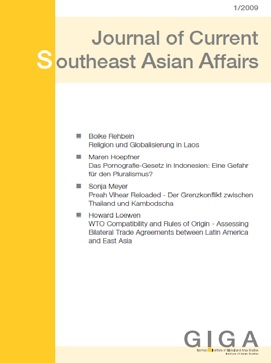
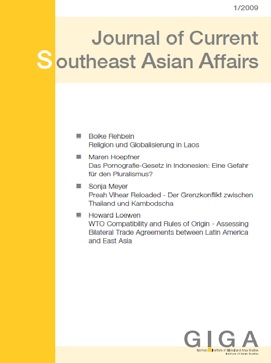
Gomez, James, and Robin Ramcharan (2014), Introduction: Democracy and Human Rights in Southeast Asia, in: Journal of Current Southeast Asian Affairs, 33, 3, 3–17. Abstract Southeast Asia has been undergoing a transition to more democratic forms of governance over the last two decades. The 2007 Charter of the Association of Southeast Asian Nations (ASEAN) stated that henceforth ASEAN would pursue democratic forms of governance, the rule of law and the attendant fundamental human rights, which are the hallmark of liberal democratic states. This major normative evolution is one chapter of ASEAN’s post-Cold War efforts to deepen its members’ interactions in the economic, politico-security and socio-cultural realms. ASEAN has been engaging in “community-building” in these areas. A community presupposes the development of common values among its member-states and among all of their citizens. It has been argued by constructivist scholars, for example, that in the politico-security realm a security community has been forged via a diplomacy of accommodation, or the “ASEAN Way”, that respects the core principle of non-interference in the internal affairs of states. An ASEAN Economic Community (AEC) envisages a liberalised economic space through free trade and the creation of an integrated production platform. The new democracy and human rights order aims to create a more “people-centred” ASEAN. [row] Full Text: PDF (ENGLISH)
The Protection of Human Rights in Southeast Asia, Improving the Effectiveness of Civil Society. Asia-Pacific Journal on Human Rights and the Law

James Gomez & Robin Ramcharan, The Protection of Human Rights in Southeast Asia, Improving the Effectiveness of Civil Society. Asia-Pacific Journal on Human Rights and the Law (2) (2012) 27-43 1. Introduction A nascent human rights regime is emerging in Southeast Asia, one equipped with an institutional body, the ASEAN Inter-governmental Commission on Human Rights (AICHR) and a normative framework enshrined in the ASEAN Human Rights Declaration (AHRD). While advocacy Civil Society Organizations (CSOs) are playing a vital shadowing role that confronts ASEAN governments with the need to craft a credible protection mechanism, the lack of formal consultation with the current legal frameworks reflects the marginalization of CSOs within the member states. Beyond marginalization of CSOs in crafting the AICHR, States have sought to limit the impact of CSOs’ advocacy activities through selective engagement of government approved CSOs. The adoption of the AHRD on 18 November 2012 and the inability of civil society to effectively influence its drafting is the latest phase in the human rights story in Southeast Asia. It is symptomatic of the tension that has existed between civil society and States in this region since the end of the Cold War. [row] Full Text: PDF (ENGLISH)
Asia Centre at the Asia Pacific Youth Exchange Career Fair 2017

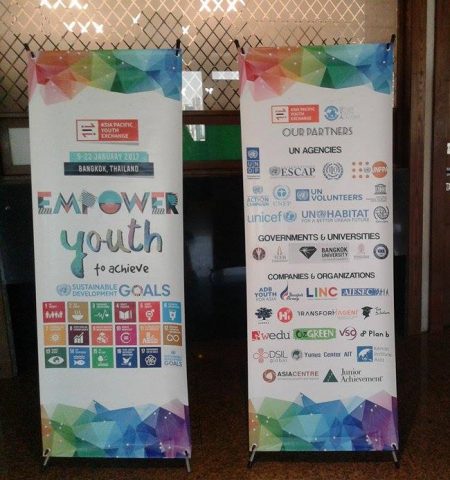
Asia Centre’s operations as a social enterprise and its programmatic focus on education and human rights attracted considerable attention at the Asia Pacific Youth Exchange (APYE) Career Fair held on 20th January 2017 at Bangkok University. The fair was part of the 3rd APYE organised by the Urban Youth Academy in conjunction with the Asian Development Bangkok and multiple UN agencies, with the objective of empowering youth to achieve the Sustainable Development Goals.The career fair attracted some 130 international APYE delegates along with students from Bangkok based universities, keen to explore internship and career opportunities.
Briefing on ASEAN to Korea University Students

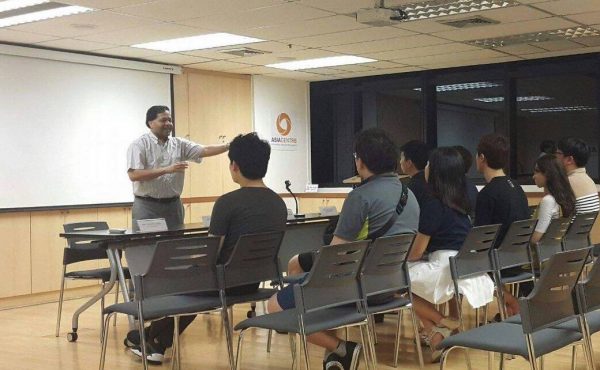
Students from Korea University received a briefing at Asia Centre on Tuesday, 17 January 2017, on contemporary challenges facing ASEAN. Dr. Robin Ramcharan lectured the undergraduates on regional geopolitical affairs, on ASEAN integration challenges and on the regional human rights mechanisms. The students were keenly interested in China’s engagement with ASEAN and in Thaland’s history, culture and political system. The students were accompanied Dr. Park Bun Soon of Korea University. Asia Centre welcomes such exchanges and looks forward to further exchanges with students and academics from Korea.
2nd Benedict Anderson Memorial Roundtable: Nationalism, Citizenship and Statelessness

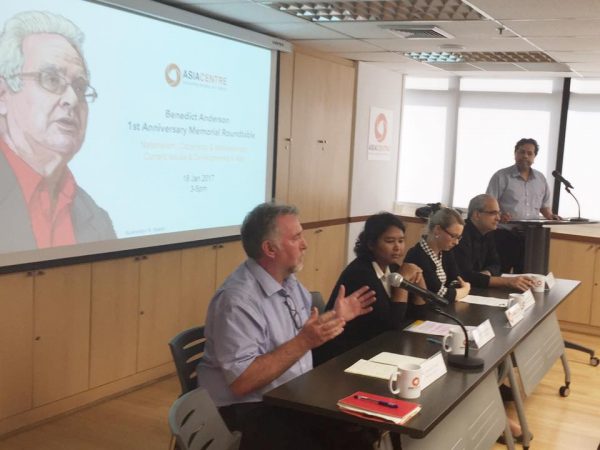
The Benedict Anderson 1st Anniversary Memorial Roundtable was a tribute to the life and legacy of the late professor. Centring on the topic Nationalism, Citizenship and Statelessness: Current Issues and Developments in Asia, the discussion attracted an audience of some 65 people, and featured a panel of diverse expertise. This event follows our inaugural memorial Debating Imagined Communities: A Tribute to Benedict Anderson held on 30 January 2016, and will be an annual feature in the Asia Centre calendar. Professor Kenneth Christie of Royal Roads University in British Columbia, Canada, and an expert on peace, development and security, provided an overview of Anderson’s concept of “imagined communities”. The point was made that the nation-state and nationalism are modern constructions. Citizenship entailed a sense of shared community among diverse peoples with common values and rights. The construction of shared communities was a global phenomenon as Anderson sought to show in his comparisons of nationalist experiments around the world. Ms Chontida Auikool, a lecturer from Thammasat University’s ASEAN-China programme provided insight into the Indonesian Chinese community’s struggle for inclusion and integration, and how anti-Chinese sentiment plays out in contemporary developments. Maritime nomadic communities in the region who face inter-generational statelessness are often rendered invisible according to Asia Pacific Refugee Rights Network (APRRN) Senior Programme Officer Ms. Helen Brunt. Using a case study of the communities in the Sulu Zone, she argued that migration flows in the region predate the development of nation states, a legacy that contributes to statelessness. Their lack of documentation and being labelled ‘illegal migrants’ condemns them to continued discrimination. Dr. Kevin Downey, a lecturer at Thammasat University and expert on political development, identity, civil society, and democratization in South and Southeast Asia discussed the lack of causal explanations for negative views on immigrants, ‘the other side of statelessness’. He went on to offer a hypothesis premised on the notion of insecurity and precarity in the era of globalisation, which features many dislocations and rising economic inequality. In the question and answer period moderated by Asia Centre’s Dr. Robin Ramcharan, potential flashpoints were mentioned. The two that were highlighted are: Rakhine State in Myanmar and the rise of intolerance in Indonesia. These are areas to monitor going forward, despite progress in democratizing both countries. A Life Beyond Boundaries The event also saw the Bangkok launch of Anderson’s memoir A Life Beyond Boundaries. Anderson defied his contemporaries by “globalizing” the study of nationalism and engaging in comparisons of seemingly disparate nation-states. In this work he also critically assesses the nation-state as a unit of analysis, noting that people globally formed communities around a great variety of interests that transcended boundaries and nations. A limited number of copies is available at Asia Centre for 450 Baht, if you are interested in getting a copy you can drop us an email at info@asiacentre.co.th. You can view images from the event here.
Asia Centre partners with Stenden University to teach ASEAN Studies

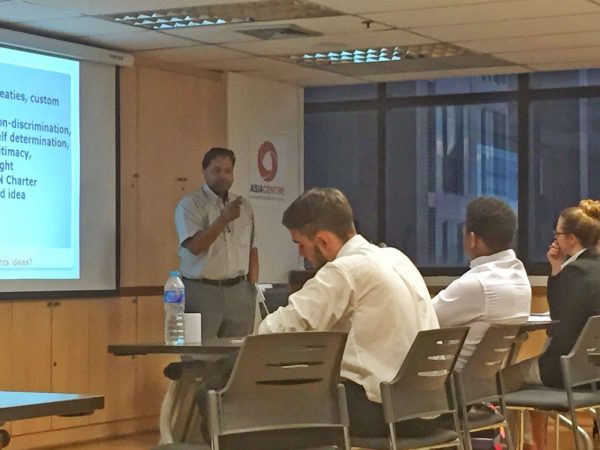
Asia Centre delivered a series of lectures on ASEAN and its international relations as the teaching partner of Stenden University’s, Thailand campus. Known as Stenden University of Applied Sciences, the Dutch university was created from the merger of CHN University Netherlands and Drenthe University, two premier institutions of higher education in the northern part of the Netherlands. The Thailand campus is part of Stenden’s overseas branches in South Africa, Qatar and Indonesia. The Asian Centre lectures complemented Stenden University’s ASEAN studies module in Thailand and were designed to provide a diverse class of international relations and business students with an introduction and insight to the regional association. The delivery of lecturers was part of Asia Centre’s education programme through which it partners with higher education institutions and think tanks to provide teaching services. These include specially designed curricula and tailored courses on a range of topics, from international relations to media and business and entrepreneurship. In total 3 lectures were delivered for Stenden and included in-class discussions, which allowed students to clarify their understanding of the issues and to attempt to critically analyse ASEAN’s security and human rights frameworks. Asia Centre and Stenden University are currently exploring further opportunities for educational partnership.
The Universal Periodic Review of Southeast Asia: Civil Society Perspectives

Buy Now Abstract The Universal Periodic Review of Southeast Asia: Civil Society Perspectives provides a stakeholder analysis of human rights protection on the ground. The book reviews Southeast Asia’s civil society engagement with the Universal Periodic Review (UPR) of the United Nations Human Rights Council during the first (2008-2011) and second (2012-2016) cycle. Through evidence-based research the book identifies gaps in human rights reporting and advocacy during the UPR, notably on civil and political issues such as the right to life, freedom of expression, freedom of religion and belief, extrajudicial killings, arbitrary detention, territorial autonomy and separation. The book highlights the need for more civil society engagement on civil and political issues during the third cycle of the UPR in 2017-2020. Failing which, the UPR process risks being reduced to a platform where civil society only engages on issues that States are willing to cooperate on. More pressure needs to be put on States to follow-up and implement recommendations. The book is the first regional appraisal of the UPR in Southeast Asia. It is based on the human rights programme of the Asia Centre. Table of Contents Introduction: The Universal Periodic Review of Southeast Asia: A Regional Mapping. James Gomez and Robin Ramcharan Chapter 1: Addressing Human Rights Protection Gaps: Can the Universal Periodic Review Process Live up to its Promise? Michael White Chapter 2: Universal Periodic Review on South East Asia Norm Building in Transition: A Hermeneutic Approach. Theodor Rathgeber Chapter 3: The Abolition of the Death Penalty in Southeast Asia: The Arduous March Forward. M Ravi Chapter 4: LGBTIQ Rights in Southeast Asia: Implementing Recommendations from the Universal Periodic Review. Destination Justice Chapter 5: Singapore’s Universal Periodic Review: Civil Society Perspectives. James Gomez and Michelle D’cruz Chapter 6: The Universal Periodic Review of Timor-Leste: Achieving Justice for Past Human Rights Abuses Under Indonesian Rule. Cristian Talesco and Brigette S. Valentine Chapter 7: Freedom of Religion and Belief in Indonesia: Raising Awareness through Universal Periodic Review. Hesty Dewi Maria Siagian Chapter 8: Non-Confrontational Human Rights Advocacy: Experiences from the UPR Process in Myanmar. Francesca P. Traglia Chapter 9: Can NHRis Bridge the Implementation Gap? Assessing SUHAKAM’s Effectiveness in Malaysia’s Universal Periodic Review. Khoo Ying Hooi Chapter 10:The UPR and Its Impact on the Protection Role of AICHR in Southeast Asia. Celine Martin Conclusion: Southeast Asia’s Third UPR Cycle: Moving from Process to Implementation. James Gomez and Robin Ramcharan
Spark Sessions #1

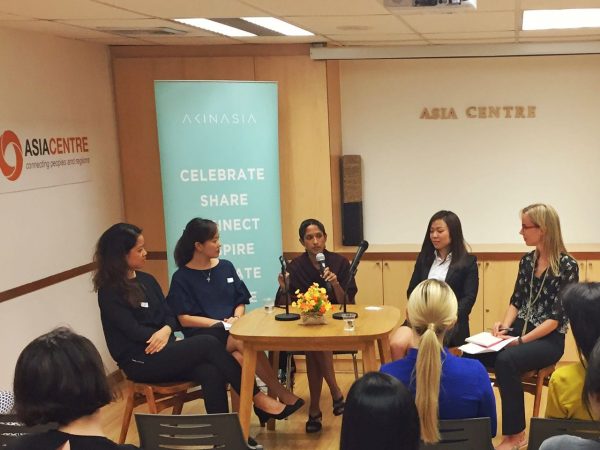
Spark Sessions: An Alternative Networking Event proved to be Asia Centre’s most popular event to date with over 70 participants taking part. This is the Centre’s new platform for connecting and exploring collaboration among civil society. Held on evening of 25 November at Asia Centre’s premises, the event also provided youth participants with the opportunity to talk with representatives from NGOs and civil society about volunteer and internship opportunities. It was also an opportunity to learn about the key projects that these organisations have lined up for 2017. Spark Sessions provided a much needed civic space for members of the Bangkok community to converse, connect and engage with organizations such as ALTSEAN-Burma, UNESCO Bangkok, Amnesty International Regional Office, Forum-Asia, IOM-X, The Thai Committee for Refugees Foundation and Boat People SOS. The programme was designed to to create relaxed atmosphere to let ideas flow, and for people to mix and talk easily. The main activities consisted of information sharing and networking through each organization’s stands which displayed brochures, movies, books and campaigns along with information on areas for youth involvement and collaboration. In keeping with the inclusive and celebratory tone of the event, Asia Centre created a photo corner where participants got creative with props and signs in the hopes of winning the best photo of the night award. Spark Sessions is a new format of event for Asia Centre, on that is centred on interactive exchange, community building and youth involvement. From the buzz in the air and eagerness to embark on the next step of engagement through volunteering, internships and collaborative ventures, Spark Sessions is set to become a regular feature on the Asia Centre calendar. Stay tuned for the next instalment!
The 2016 US Elections: Change At Last?

On the eve of the historic vote, Asia Centre convened a roundtable to discuss perspectives and predictions on the outcome of the US Presidential Elections. Entitled, “The 2016 US Elections: Change At Last?” the event was held in partnership with the Asian American Journalists Association (AAJA). The roundtable panel featured a former US ambassador, academics of various nationalities and disciplines and a journalist. All discussants provided their insight and analysis on the campaign period, what they saw as key determinants of the election and the impact the results would have on Asia. Margaret MacMillion, Former Ambassador of the United States to Rwanda discussed the foreign policy implications. Kevin Downey form Thammasat University and Jerimiah Morris from Mahidol University International College, both American nationals living and teaching in Thailand, discussed the political system in the US and political discourse in a “post-fact” world. Pablo Ramirez, Bangkok University, a Mexican national, examined campaign rhetoric towards hispanics and its meaning for Mexico – US relations. Mike Raomanachai from AAJA shared his experiences covering the Democratic convention during previous elections and discussed the role that media coverage and social media in particular has played. Salient points raised during the discussion included: The dissonance between the elites and the electorate; The inherent two-party nature of the US electoral system and the adaptability of the Republican Party despite current internal difficulties; As during the Brexit debate in the UK, the American electoral campaign discourse was far removed from facts on the ground; The pressures imposed by populist forces on the independence of media in a post-fact world; The global uncertainty that would accompany a Trump presidency in the form of a more isolationist and burden sharing relationship with US allies and The disaffection with the United States felt across Latin America in light of the anti-hispanic and anti-Mexican rhetoric that was crassly exploited for political gain. During the Q&A session, participants pondered the impact of FBI investigations into Hillary Clinton’s emails, how the rhetoric of the campaign was being received outside US and the continued viability of a two party system given Trump’s candidacy on the Republican party. Much attention was also focused on the rise of highly populist political discourse in an age of austerity and the willingness of the disaffected and disenfranchised middle classes to accept post-factual discourse, often driven by a “fake news” originating over social media. Consistent with polling, panelists at the Asian Centre roundtable predicted a Trump defeat. However, the result has shown otherwise. The Centre will continue to monitor the impact of the Trump presidency in Asia.
UN human rights review is largely toothless – but it’s giving a boost to Asian civil society groups

A United Nations initiative reviewing human rights records of countries around the world is indirectly strengthening civil society organisations in Southeast Asia by allowing them to participate in the process. But the groups are still blocked from ensuring human rights are meaningfully protected in their countries. The UN General Assembly established its Human Rights Council and introduced the universal periodic review of the human rights situation in member countries in 2006. The ten Southeast Asian countries that make up ASEAN – Brunei Darussalam, Myanmar, Cambodia, Indonesia, Laos, Malaysia, Philippines, Singapore, Thailand, Vietnam – have now undergone two cycles of review, while a few remaining nations are awaiting the second round. Under the process, states report to the commission every four-and-a-half years and receive its recommendations. Reviews focus on the evolution of human rights in that state, and its implementation of previous recommendations. The state under review may either “accept” or “note” the suggestions. Recommendations that states tend to accept are those around improving gender equality, accessibility for those with disabilities, and children’s rights, which has gained particular prominence during the review. Recommendations that aren’t as acceptable tend to involve hard political issues related to civil and political liberties. Unsurprisingly, it’s usually the latter that are detailed in submissions by civil society organisations. A role for civil society Civil society participation in the universal periodic review of ASEAN countries has increased markedly over the two cycles. Some 592 such organisations participated in the first cycle in 2008-2012, with 188 submissions; the second cycle (2012-2016) saw a strong increase, with 811 groups submitting 310 reports (personal, unpublished research). The rise has put civil society groups at the centre of the UN human rights improvement process. But this isn’t the first time such groups have been at the heart of human rights advocacy in the region. Civil society groups, such as the coalition known as the Working Group for an ASEAN Human Rights Mechanism, helped push individual countries to join the 2009 ASEAN Inter-Governmental Commission on Human Rights (AICHR), and the 2012 ASEAN Declaration on Human Rights. But since the establishment of the AICHR, civil society has disappeared from the process. Instead, the commission follows a secretive peer-review process in which such groups have no formal role. Although AICHR is supposed to be engaged in human rights promotion and protection work, in reality it is unable to provide any actual protection. It is not mandated to receive complaints on human rights abuses, and does not have the power to investigate and hold perpetrators accountable. In fact, the bulk of AICHR activities revolve around meetings, discussions and research that have a consensual approach. Similarly, national human rights institutions also cannot realistically contribute to the region’s protection arsenal. Research shows that, just like the AICHR, national institutions are not able to perform their protection function effectively. These weak mechanisms raise the question of whether national human rights institutions in Southeast Asia can fill the protection gap. They also make human rights protection in the region weak, and in dire need of improvement and enhancement. Given the weakness of AICHR and national human rights institutions, engagement with the universal periodic review is critical to the advancement of human rights in Southeast Asia. Being clever about it Since the establishment of the universal periodic review process, civil society groups in the region have been receiving training, preparing submissions, and even making their way to Geneva. In 2015, for instance, five civil society groups from Singapore went on a trip to Switzerland to discuss human rights in the city-state. Civil society groups have become involved in monitoring state recommendations and their implementation, as well as speaking on the review process itself. Many have attracted international donor funding and support for this work. US-based The Carter Center, for instance, has published a document titled Universal Periodic Review: Training Manual for Civil Society. While states in the region espouse the rhetoric of engagement with civil society groups over the review process, they are, at the same time, cautious of them. Governments often only pay lip service to human rights mechanisms and the periodic review is no different. This issue was raised in 2015 by local civil society groups against the Laos government, over the disappearance of activist Sombath Somphone and persecution of Lao Christians. Overall it seems that states favour the current arrangement because they can use it to control the participation of civil society organisations in the process. They can create legal obstructions, target organisations, place restrictions on civil society activities, and harass and intimidate activists. In a 2015 report, civil society body CIVICUS discussed cases from Cambodia, Malaysia, Philippines and Vietnam, in which governments have responded with misinformation, arranged for voluminous submissions by government-organised NGOs, and conducted consultations only with partisan groups, while refusing to work with civil society groups that are more critical of government policy. Some have enrolled supportive organisations to speak during sessions at the adoption of the working group report by the commission. While others, such as Vietnam, have objected to the granting of consultative status to some NGOs. Nonetheless, for Southeast Asian civil society groups, the review has been an effective mechanism for putting human rights issues on the agenda and engaging their governments in conversation about critical issues, such as LGBTI rights in Indonesia. But systemic problems remain for engaging others. These include following up on recommendations and the review’s ability to address difficult political issues, such as the lese majeste law in Thailand, which forbids citizens from defaming or insulting the kind, and other freedom of expression issues. To have the review make a real impact, civil society organisations will need to think about what they’ve been doing and develop more strategic approaches for the third cycle, which begins in 2017. They will need to go beyond coalition-building and organising submissions to determining how they can make human rights protections actually enforceable. Dr. James Gomez- Executive Director, Asia Centre & Pro Vice Chancellor, Canadian University of Bangladesh Reproduced from The Conversation: https://theconversation.com/un-human-rights-review-is-largely-toothless-but-its-giving-a-boost-to-asian-civil-society-groups-65644