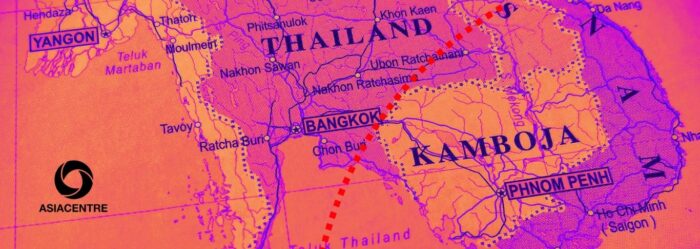
Rising societal polarisation, paired with mounting regulatory and political pressures, has made cross-border discussions on peacebuilding and depolarisation between the people of Thailand and Cambodia increasingly difficult. Despite these hurdles, civil society organisations (CSOs) and independent media in both nations continue to drive peacebuilding efforts at the country level. Genuine cross-border initiatives, however, remain challenging, under-resourced and need to be prioritised.
These were the insights that emerged from consultations conducted by Asia Centre between August and October 2026 with twenty-four CSOs and independent media outlets in Cambodia and Thailand. The engagements included bilateral meetings in Thailand with four CSOs and four independent media outlets and in Cambodia with five CSOs and three independent media outlets, as well as a group meeting each in Thailand with seven representatives from three CSOs, one independent media actor, as well as in Cambodia with ten representatives from four CSOs and four independent media outlets.
The consultations aimed to gather Cambodian and Thai perspectives on the border conflict, as well as document and assess ongoing peacebuilding efforts. The discussions revealed the desire for engagement on both sides remained strong, but participants highlighted the continuing challenges arising from a restrictive political environment and risk of nationalist backlash. Overall the consultations demonstrated the need for an independent third-party facilitator to sustain dialogue among them.
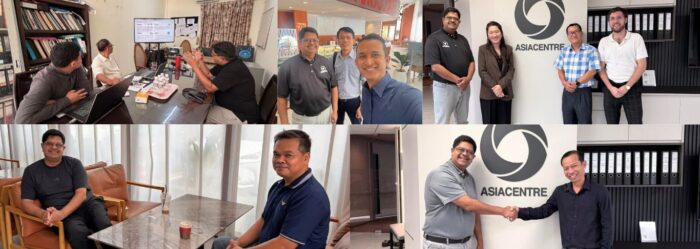
Asia Centre’s Regional Director, Dr. James Gomez, with representatives from Cambodia’s civil society organisations (CSOs): Community Legal Education Centre (Top Left), Youth For Peace (Top Middle), Women Peace Makers (Top Right), Cambodia Institute for Democracy (Bottom Left), and Cambodian Center for Human Rights (Bottom Right).
In Cambodia, CSOs stressed the need to build trust between both countries, by leveraging grassroots networks to counter the growing polarisation. As nationalist narratives and online hostilities shift the dispute towards a people-to-people conflict, incentivising inclusive community consultations and neutral third-country facilitation was seen as helpful for constructive dialogue. They also emphasised the responsibilities of tech companies to counter online hate speech and disinformation and encouraged Thai CSOs to engage more actively in cross-border dialogue, due to its relatively less restrictive information environment.
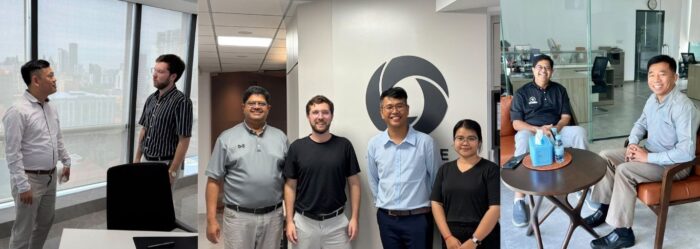
Asia Centre’s Regional Director, Dr. James Gomez, and team with representatives from Cambodian media organisations: Communication and Media Promotion Organisation (Left), Cambodianess (Middle), and CamboJA (Right).
Cambodian media pointed out the need to maintain balanced reporting during periods of heightened conflict and nationalist sentiment. They pointed to the presence of significant difficulties for conflict sensitive reporting in Cambodia due to the polarised information environment and strong governmental oversight. Several of the media present said they participated in one cross-border media dialogue but it was a one-off event. There was a strong emphasis placed on cross-border media dialogue initiatives to rebuild trust and support more balanced public discourse. Hence, neutral third-party sustained facilitation was viewed as a potential means of creating space for cross-border media cooperation and dialogue.
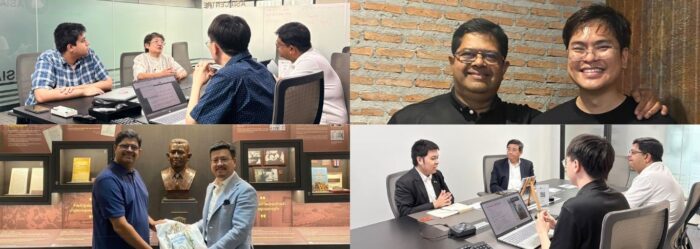
Asia Centre’s Regional Director, Dr. James Gomez, and team with representatives from Thailand’s civil society organisations (CSOs): Campaign for Democracy and Peace (Top Left), People’s Empowerment Foundation (Top Right), Pridi Banomyong Institute (Bottom Left), and Thai-Cambodian Friendship Association (Bottom Right)
Thai CSOs similarly mentioned the deepening polarisation but highlighted its occurrence among young people, particularly in the border provinces. The social consequence was an environment hostile to open and peace-promoting discussions. They pointed to Thailand’s fragmented social and political environment, including strongly conservative views among sections of society, which were complicating efforts to facilitate cross-border dialogue. It has led many Thai CSOs to censor themselves in order not face severe public backlash. Despite these challenges, several organisations emphasised that many Thai CSOs are advocating for cross-border dialogues in which civil society groups from both countries can interact to halt the conflict.
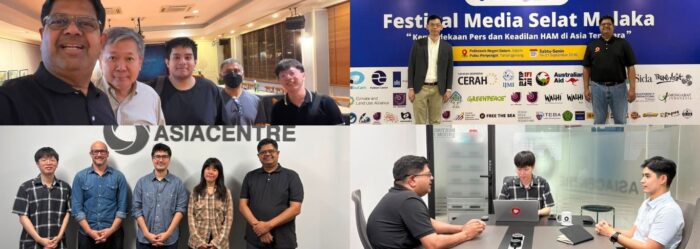
Asia Centre’s Regional Director, Dr. James Gomez, and team with representatives from Thailand media organisations: Khaosod English (Top Left), HaRDstories (Bottom Left), Prachathai (Top Right), 101World (Bottom Right)
Thai independent media representatives acknowledged the growing polarisation among the Thai population. They also pointed to the impact of conservative leadership in the publishing industry and internal divisions within the media sector as factors hindering journalistic efforts to mitigate polarisation. They too mentioned participating in a one-off cross media dialogue and thus welcomed joint journalist workshops and cross-border engagement in neutral third-party countries. Such activities brokered by a third party, they felt, can support journalistic intervention in depolarisation efforts.
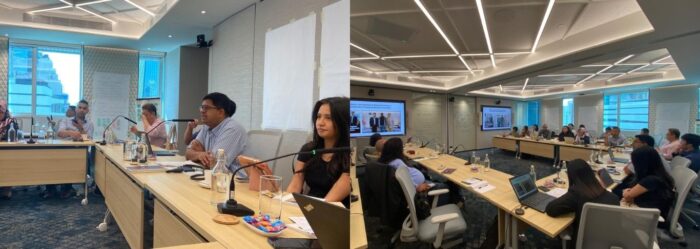
Following these consultations, on 3 September 2026, Asia Centre presented its findings at The Asia Foundation’s “Strengthening Regional Networks for Conflict Prevention” workshop. The regional workshop convened civil society representatives and practitioners to examine conflict prevention mechanisms and foster collaborative cross-border strategies for addressing rising regional tensions.
In that meeting, Regional Director Dr. James Gomez shared that there was rising societal polarisation from the border conflict but that third-party facilitated cross-border dialogues can come up with strategies and action plans to reduce polarisation among communities in Cambodia and Thailand. What is needed are sustained safe spaces where civil society actors, journalists, and other relevant stakeholders can exchange solution ideas across borders without being constrained by the political sensitivities and nationalism surrounding the conflict.
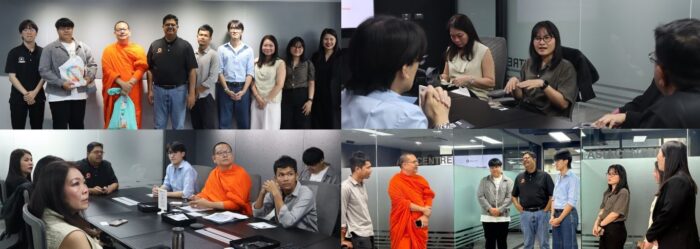
Asia Centre’s Regional Director, Dr. James Gomez, and team with representatives from Thai CSOs & media organisations (Top Left: From Left to Right): Asia Centre Staff, Representatives from Institute of Buddhist Management for Happiness and Peace Foundation, Asia Center’s Regional Director, an Independent Freelance Journalist, Neo Momentum, Representatives of World Vision Foundation and a Lecturer from Srinakharinwirot University
Following the regional briefing, on 17 October 2026, Asia Centre also held a group discussion on the cross-border tensions with seven representatives from Thai CSOs and independent media in Bangkok, Thailand. Several participants shared they had engaged in bilateral peacebuilding activities, but these were single activities rather than sustained, long-term programs. The participants revealed that in their peacebuilding efforts they often had to navigate Thai organisations and media that were nationalistic in nature. The Thai attendees welcomed Asia Centre as an independent, third-party facilitator of conversations between civil society and independent media from both countries.
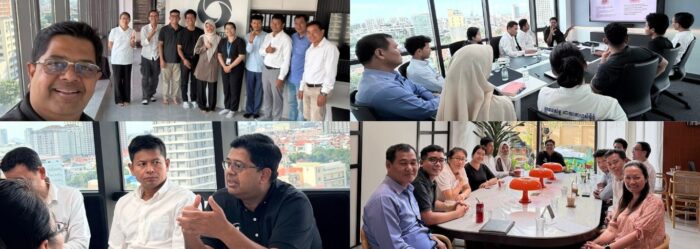
Asia Centre’s Regional Director, Dr. James Gomez, and team with representatives from Cambodian CSOs & media organisations (Top Left: from Left to Right): Asia Centre’s Regional Director, Alliance for Conflict Transformation, Communication and Media Promotion Organisation, CamboJA News, Kiripost, Women Peace Makers, Cambodianess, Alliance for Conflict Transformation, Continue Learning Organization and The Coalition for Integrity and Social Accountability.
Later, on 29 October 2026, Asia Centre hosted another group discussion this time with ten Cambodian representatives from various CSOs and independent media actors in Phnom Penh, Cambodia. During the discussion, the topic of religion, especially the role of monks as peace builders emerged as a key theme. In the Cambodian context, the participants informed that peacebuilding initiatives have remained one sided due to fear of nationalist backlash against potential cross-border engagements between monks from both countries. The attendees expressed support for a third-party dialogue convener between civil society, independent media as well as faith-based groups from Cambodia and Thailand.
Beyond documenting and assessing ongoing peacebuilding efforts among CSOs and independent media in both countries, the individual and group consultations helped identify a key entry point for dialogue – which is the role of a neutral and independent facilitator. It is clear that CSOs, independent media, faith-based groups and others have a role to play to rebuild trust and counter hostility in both countries. Without mitigating voices, the conflict will continue to evolve and solidify into one where antagonism and hate between the two people will be normalised.
The consultations undertaken by Asia Centre suggest the importance of regularising safe spaces for dialogue to support informed solutions driven discussion. Even though border tensions have strained public trust, civil society, media, and local networks remain vital to counter hostility despite political and informational challenges. Asia Centre will continue to contribute to rebuilding trust, reducing polarisation, and help promote long-term peace between the people of Cambodia and Thailand.