The protection of religious freedom remains a critical human rights challenge across Asia. While freedom of religion or belief (FoRB) is recognised as a fundamental human right under Article 18 of the Universal Declaration of Human Rights, its practice is challenging. Communities across the region continue to face restrictions, discrimination, social hostilities and evolving threats to their ability to freely practice, express or change their religion or beliefs, as well as advocate for their rights to do so.
Ensuring meaningful enjoyment and protection of such rights requires strengthened commitments from governments, civil society, faith-based organisations, media and other stakeholders to uphold rights-based approaches that place fairness and equality at the centre of discussions on religious freedom. This is particularly important in Asia, where rights-based frameworks remain underemphasised despite their importance in ensuring that FoRB is not only practised but also protected as a human right rather than a matter of conditional acceptance.
Another important and emerging concern is the security of FoRB advocates and victims of discrimination. Increasingly, gatherings such as conferences, meetings and training sessions are both monitored and infiltrated. Security agency personnel directly, or through those embedded in embassies, news agencies, think-tanks, universities and their informants, actively source information such as attendance lists, photos, videos and audio recordings of participants at gatherings in order to identify individuals and organisations as well as what transpired from such discussions to strategise and take action against them.
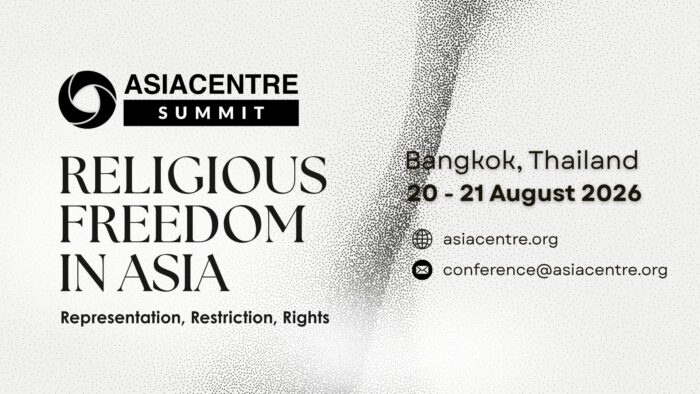
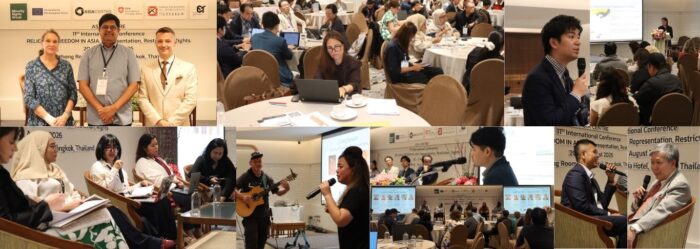
These were some of the issues raised during Asia Centre Summit 2026, “Religious Freedom in Asia: Representation, Restriction, Rights”, held from 20 to 21 August 2026 in Bangkok, Thailand.
The Conference brought together more than 70 representatives from across Asia, Australia, Europe and North America from civil society organisations (CSOs), faith-based organisations, human rights groups, media organisations, legal institutions and academia. Over two days, participants engaged in seven panels, two breakout sessions and a fireside chat. Discussions focused on identifying intersectional threats to religious freedom, strengthening effective responses and developing grounded strategies to advance FoRB as a justiciable human right.
This year’s Conference was supported by the Office of the United Nations High Commissioner for Human Rights (OHCHR) Regional Office for South-east Asia, the European Union (EU), the Swiss Ministry of Foreign Affairs, the Taiwan Foundation for Democracy, Minority Rights Group, and Eugene LLP.
Day 1 (20 August 2026)
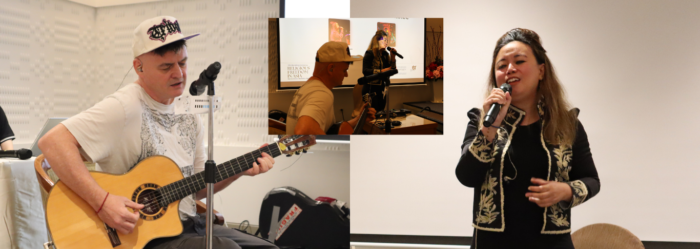
The Conference was kicked off with a live music performance from the London-based alt-pop duo “Ooberfuse”, whose music sought to amplify marginalised voices, challenge prejudice, and create spaces for dialogue, solidarity, peace and religious harmony.
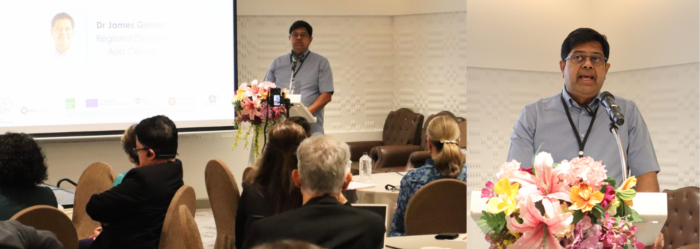
The performance was followed by welcome remarks from Dr James Gomez, Regional Director, Asia Centre, who highlighted how concepts like tolerance and harmony are often misused to suppress dissent, necessitating a shift toward a truly rights-based framework. He also situated this Conference in the landscape of weakening CSO independence due to funding pressure and the erosion of civic space through surveillance, which require a renewed commitment to self-reliance and new security protocols. To read Dr Gomez’s opening remarks, click here.
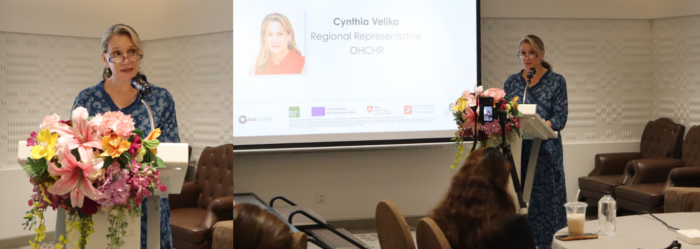
His speech was followed by Cynthia Veliko, Regional Director of OHCHR Regional Office for South-east Asia, who congratulated Asia Centre for bringing together such a diverse group of representatives from around the world. She acknowledged the need for such discussions to ensure a solid path towards long-term coexistence and solidarity, and stressed how FoRB violations stretch far beyond religious belief practices, impacting access to education, employment, social services and overall quality of life. Ms Veliko emphasised the need for continued international action to ensure protections for FoRB and human rights defenders across the globe, underscoring the importance of UN human rights mechanisms and initiatives such as OHCHR’s Faith for Rights to combat discrimination and reinforce the principles of universal human rights. To read Ms Veliko’s opening speech, click here.
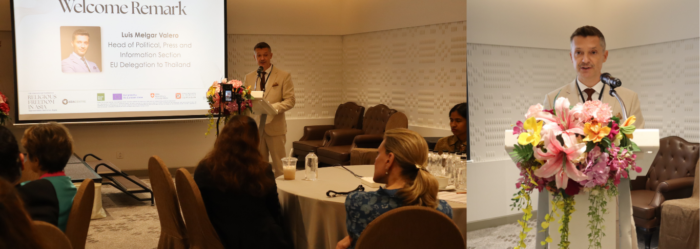
Lastly, Luis Melgar Valero, Head of Political, Press and Information Section, Delegation of the EU to Thailand, pointed out that FoRB violations remain an interconnected issue that directly impacts the daily experiences of individuals and communities. Mr. Valero complimented Asia Centre for dedicating its 2026 Summit to religious freedom and expressed the EU’s strong support for this valuable initiative, which marked a values-based approach to protect community rights. He reaffirmed the EU’s commitment to FoRB’s advancement, including the relevance of Global Gateway in promoting FoRB, stressing that the exchange of views and the creation of practical responses are crucial for building better societies. To read Mr Valero’s opening speech, click here.
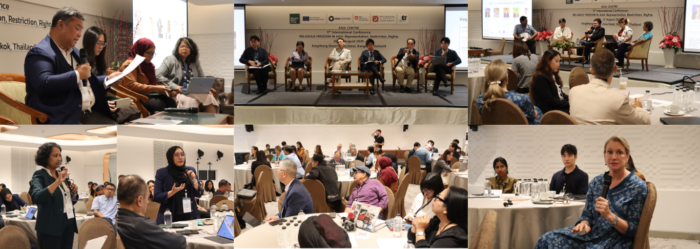
The first day’s programme featured four sessions. Panel 1 (Middle East Conflict and Impact on FoRB in Asia) discussed the consequences of the Middle East crisis in Asia through FoRB lenses, exploring the compounded links among religion, politics, security and human rights. Panel 2 (FoRB in East Asia) saw FoRB advocates who are now citizens of the USA and Canada share their experiences as they continue to face direct and indirect threats and repression from their countries of origin. Panel 3 (Legal, Political and Social Issues Concerning Religion in Contemporary Japan) provided an overview of the multiple facets of FoRB in Japan, spanning from ambiguities in the separation of politics and religion to the consequences of FoRB violations across the social fabric. Panel 4 (FoRB and Ethno-Religious Minorities) concluded the first day of discussions by highlighting the overlapping barriers faced by ethno-religious minorities and those who live at the crossroads of multiple identities and restrictions.
Day 2 (21 August 2026)
The second day continued discussions on the evolving challenges affecting religious freedom across the region, focusing on the intersections of FoRB with other rights, the impact of restrictive legal frameworks, and the role of civil society in documenting abuses, advocating for reform and strengthening protections for FoRB.
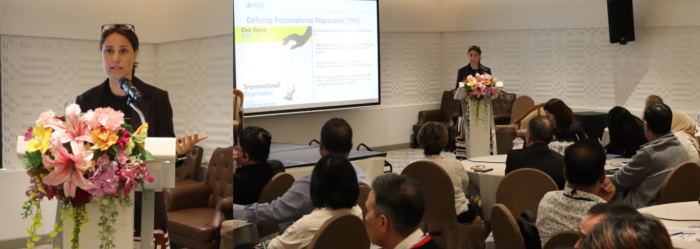
The day was opened with remarks from Laura Mancini, Human Rights Officer, OHCHR Regional Office for South-east Asia, who underlined the importance of adequate international responses against transnational repression (TNR), best understood as a collective pattern of violence rather than isolated incidents against dissidents and exiles. Ms. Macini also highlighted the emerging patterns of TNR taking place in Asia, including cross-border disappearances and abductions, refoulement and forced returns, and examples of digital and security cooperation, setting the context for the following panel discussions.
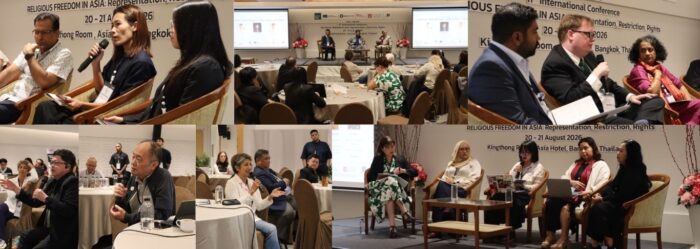
The second day’s programme included six sessions, comprising three panels, two breakout sessions, and a fireside chat. Panel 5 (Transnational Repression of FoRB Activists and Asylum-Seekers) drew on Ms. Macini’s remarks and deepened the discussions surrounding transnational repression by identifying its systemic patterns and overlooked implications for vulnerable individuals across Asia. Panel 6.A (Legal Restrictions on FoRB in Asia: Challenges and Opportunities) focused on how national laws and administrative loopholes can be leveraged by state authorities to control and restrict their citizens’ religious life, with limited accountability before international mechanisms. Panel 6.B (Breakout Session on Myanmar FoRB) explored how conflict and the consolidation of military power have affected FoRB in Myanmar, pointing to the distressing consequences of repression for diverse religious communities, both within and outside state borders. Panel 7.A (Hate Speech & Women FoRB Defenders) examined the extent of the relationship between religious authority, conservatism, and gender-based violence, providing valuable experiences from South-east Asia. Panel 7.B (Breakout Session on Mekong FoRB) focused on the emergence of sophisticated tools of transnational repression in the region, exposing patterns of infiltration and policing across refugee communities, with a particular focus on FoRB activists and exiles.
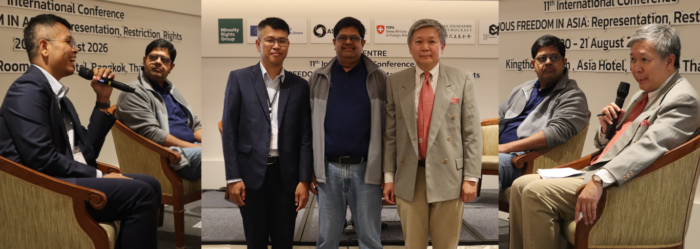
The last session for the day was a fireside chat entitled “Cambodia-Thailand Border Conflict: Politics or Religion?” Asia Centre’s Dr. James Gomez moderated the conversation between Pravit Rojanaphruk, senior staff writer and columnist at Khaosod English, and Sao Phal Niseiy, editor-in-chief at Cambodianess. The discussion explored the complex relationship between political and religious identities and the role of peace journalism in depolarising the conflict. The event was posted on Khaosod English’s social media and was widely shared and commented on. See the post here.
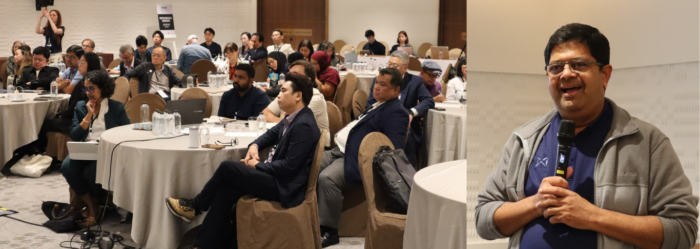
Dr Gomez officially closed the Conference by expressing Asia Centre’s appreciation to all speakers, partners and participants for contributing to meaningful discussions on religious freedom and human rights in Asia. He highlighted the importance of continued collaboration between civil society, policymakers, legal experts, media and other stakeholders to strengthen advocacy and accountability. He then unveiled Asia Centre’s newest idea – the Freedom of Religion or Belief Policy Initiative. This initiative aims to strengthen Asia-level advocacy, convening, research and security to ensure a rights-based approach to FoRB.
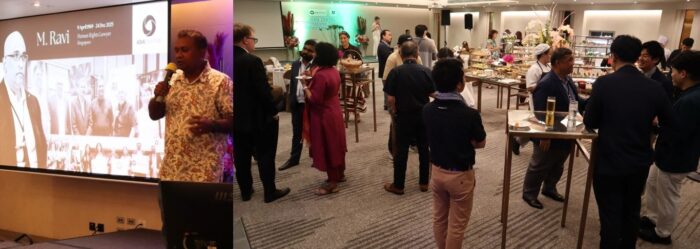
Thereafter, the participants adjourned for the Networking Session where they had an opportunity to speak to each other informally and get to know each other’s work better. During this time, Eugene Thuraisingham delivered a short memorial address to commemorate the work of Singaporean lawyer M Ravi, who was a regular at Asia Centre annual conferences and last attended the 2025 convening.
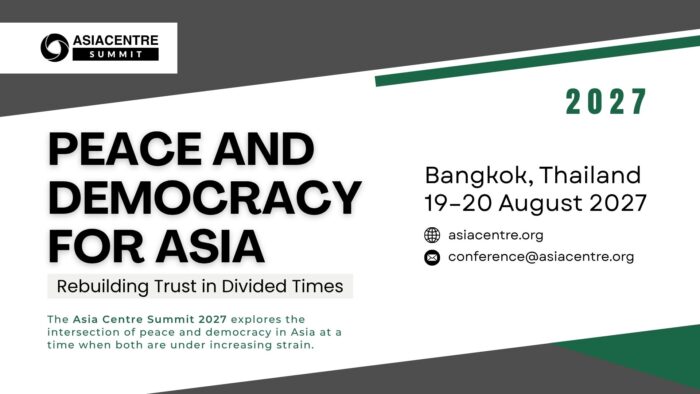
The 2026 Summit concluded with a warm invitation to join Asia Centre at its 2027 Summit: “Peace and Democracy in Asia: Rebuilding Trust in Divided Times”, to be held in Bangkok, Thailand, on 19-20 August 2027.
Watch highlights of the Conference here.
Asia Centre’s Summit is its flagship annual gathering, designed to bring partners together to present outcomes, share expertise and develop future collaborations. Over the years, it has become a trusted space for open dialogue on democracy and human rights in Asia.
Asia Centre Summit 2027 is titled “Peace and Democracy in Asia: Rebuilding Trust in Divided Times” (19–20 August 2027). If you would like to become a Conference partner or collaborate with the Centre, please send an expression of interest to conference@asiacentre.org.
Asia Centre is a civil society research institute in Special Consultative Status with the United Nations Economic and Social Council. Asia Centre undertakes evidence-based research as well as provides capacity-building training for end beneficiaries. Follow Asia Centre’s social media channels for updates.