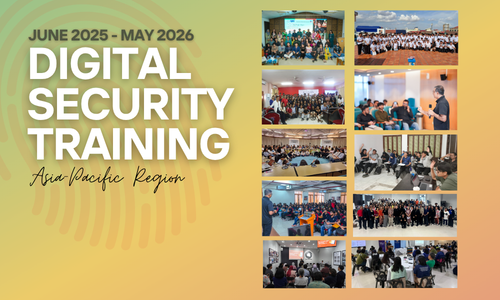
Between 17 October 2025 and 23 May 2026, Asia Centre successfully delivered a series of Digital Security Training (DST) sessions in Malaysia, directly engaging a total of 172 participants and end-beneficiaries. This strategic training aimed at strengthening digital resilience, promoting safer online practices, and enhancing awareness of digital threats among university students, lecturers, civil society actors, and grassroots communities. Conducted in collaboration with university partners and community networks, the programme sought to equip participants with practical digital security knowledge and skills needed to navigate an increasingly complex online environment marked by cyberattacks, misinformation, surveillance, scams, and online harassment.
The training also aimed to develop a wider network of digitally aware individuals who could promote safer online practices within their own communities and institutions. Through interactive discussions, practical demonstrations, and knowledge-sharing sessions with digital security experts, participants gained greater awareness of online risks and learned strategies to better protect their personal data, communications, and digital presence.
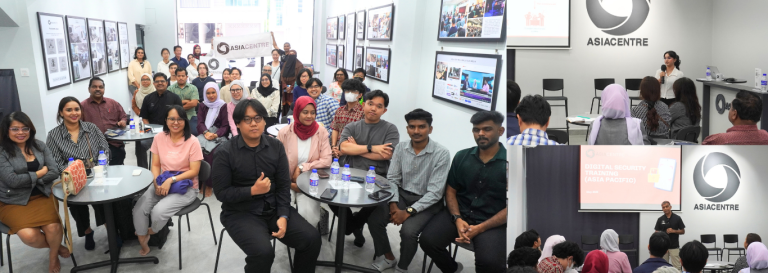
On 23 May 2026, a Digital Security Training session for End Beneficiaries (EB) was conducted at the Asia Centre Media Hub in Iskandar Puteri, Johor, Malaysia during the convening of “Establishing A Southern Region CSO Network.” Conducted by Asia Centre’s Media Intern Kimberley Cassandra with support from Programme Manager Sanjay Gathia. The session engaged 26 participants, primarily members of civil society organisations (CSOs), youth groups, media initiatives, women activists, and grassroots communities. The training highlighted the growing importance of digital safety for civil society actors, who are increasingly vulnerable to cyber threats due to their advocacy and community engagement work. Participants were introduced to practical approaches to online safety, including secure communication practices, password protection, recognising phishing attempts, identifying misinformation, and protecting sensitive information online. By strengthening digital awareness and resilience, participants were better prepared to protect both their digital presence and the communities they serve.
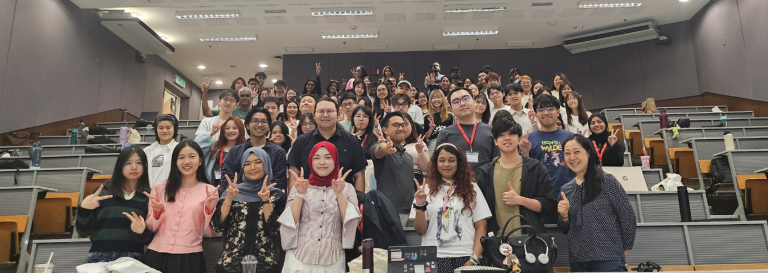
On 1 April 2026, a Digital Security Training for End Beneficiaries (DST-EB) session was conducted at the University of Reading Malaysia. Led by Asia Centre’s Dr Kiyono Hasaka, the session brought together 90 participants, with 20 participants expressing interest in becoming master trainers. The training equipped university students with greater awareness of cybersecurity risks and provided practical guidance on protecting online accounts, safeguarding personal information, and responding to digital threats responsibly. Participants were encouraged to promote safer digital practices among their peers and contribute to building more digitally resilient campus communities.
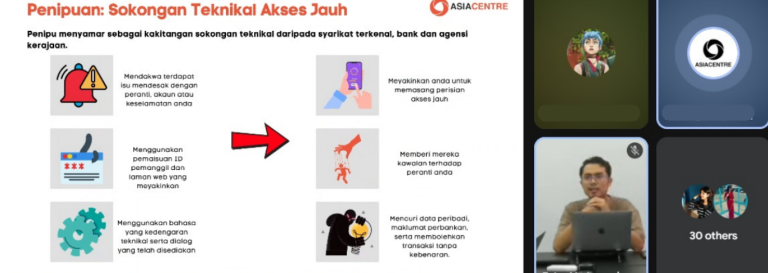
On 14 March 2026, a Digital Security Training session for End Beneficiaries (EB) was conducted online in Malay by Asia Centre’s Media Officer, Muhammad Fahmi, in collaboration with Management and Science University (MSU). The session engaged 34 participants, including students and lecturers, with 17 participants expressing interest in becoming future master trainers. The training focused on practical approaches to digital safety, including secure communication, data protection, responsible social media practices, and awareness of emerging online threats. Participants also explored methods to verify online information and identify common cyber scams increasingly affecting digital users in Malaysia. The session strengthened participants’ understanding of how digital security practices can be integrated into both academic and everyday online activities.
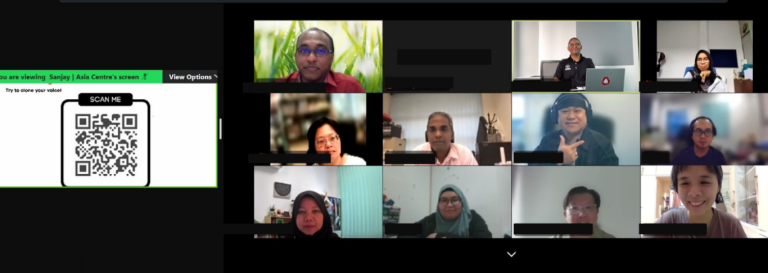
The 2026 Digital Security Trainings built upon Asia Centre’s earlier training initiatives conducted in Malaysia in 2025. On 17 October 2025, the first Training of Trainers (ToT) session was organised in partnership with Universiti Malaysia Sarawak (UNIMAS). Conducted online by Asia Centre’s Programme Manager, Mr Sanjay Gathia, the session brought together 22 lecturers who were interested in sharing the knowledge with their students and local communities. The ToT session focused on equipping participants with both foundational digital security knowledge and facilitation skills, enabling them to effectively share digital safety practices within their respective academic and professional communities. Participants were also introduced to methods for conducting peer learning sessions, promoting awareness of digital security, and building digital resilience among wider audiences.
The collaborations with universities and community partners played an important role in expanding the reach of digital security awareness initiatives among young people, educators, and civil society actors across Malaysia. By working closely with academic institutions and grassroots networks, Asia Centre was able to encourage wider conversations on digital literacy, responsible technology use, and online safety in today’s rapidly evolving digital environment.
As digital threats continue to evolve in Malaysia and across the region, initiatives such as the Digital Security Trainings remain increasingly important in strengthening public awareness, building community resilience, and supporting safer digital participation. Through these trainings, Asia Centre continues to contribute towards fostering informed, secure, and digitally resilient communities capable of navigating online spaces more safely and responsibly.