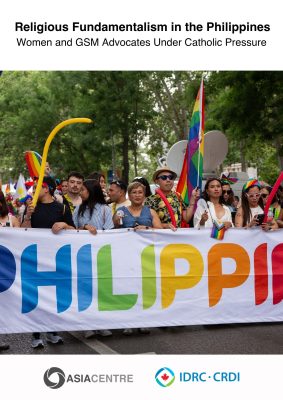
In the Philippines, the enduring influence of Catholic fundamentalism and conservative religious networks has constrained civic space and intensified backlash against women and gender and sexual minority (GSM) advocates. This influence is embedded throughout institutions, local patronage and public morality, allowing anti-rights actors to present equality claims as threats to family, faith and social order rather than as democratic needs. A key target of this backlash has been defenders of reproductive rights, gender equality and broader gender justice. Their advocacy is frequently framed as immoral, anti-family or contrary to traditional Catholic values. Religious Fundamentalism in the Philippines: Women and GSM Advocates Under Catholic Pressure shows the coordinated nature of this repression, with Catholic fundamentalist narratives fueling state legal repression, verbal and online hate, physical violence, and red-tagging across WGSM advocacy groups. It also traces how the dominance of Catholic fundamentalism has forced women’s and GSM rights advocates to adopt fragmented action strategies, including digital security measures, support networks and reliance on international intervention. To date, however, these efforts remain reactive, unevenly resourced, and insufficient relative to the scale and persistence of the fundamentalist mobility. The report recommends that the Filipino government, international aid organisations, international non-governmental organisations, civil society actors and WGSM rights organisations confront the ideological fundamentalist roots of repression. They must adopt an intersectional approach while addressing the structural links between religious fundamentalism, gender hierarchies, political conservatism and religious doctrinal amplification to counteract these threats.